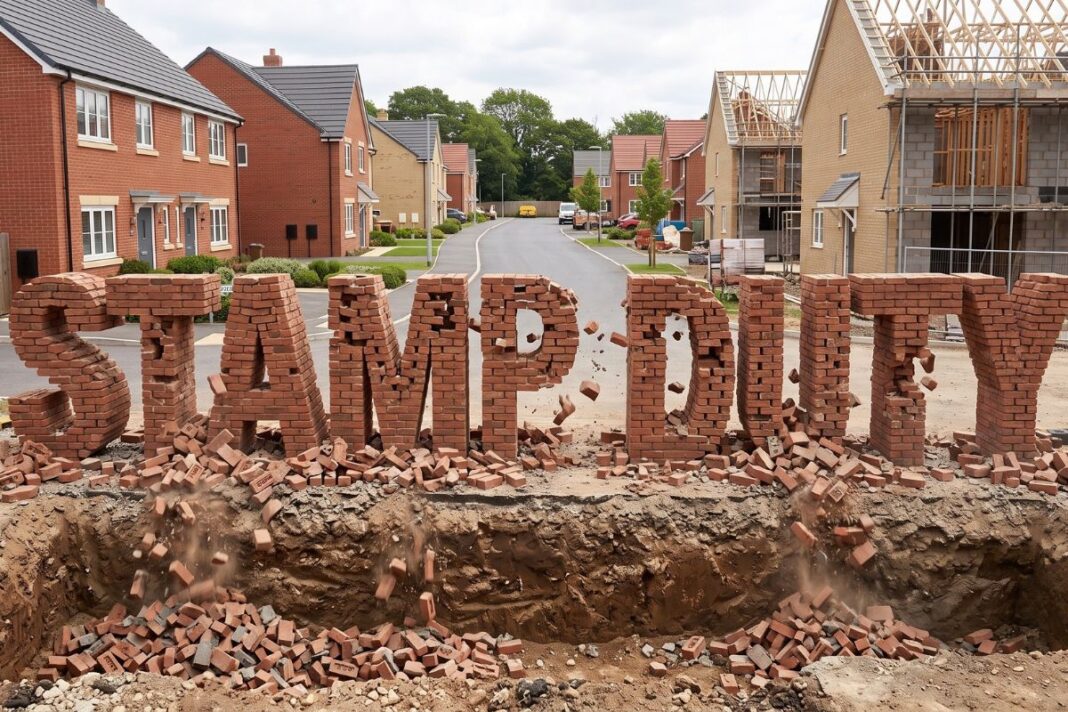
Almost half of over-65s view stamp duty as a barrier to moving, prompting calls for targeted tax relief to encourage older homeowners to move into more suitable properties.
A Family Building Society survey of more than 1,800 over-65s found that 49.5% regarded Stamp Duty Land Tax as a reason not to move, despite nearly six in 10 considering purchasing a smaller home in the future.
The findings accompany a report from the Radix Big Tent Housing Commission proposing a stamp duty relief scheme for later-life buyers similar to that available to first-time buyers.
The commission estimates that removing barriers to “rightsizing” could release as many as 870,000 family homes and two million spare bedrooms into the wider housing market.
LATER-LIFE RELIEF PROPOSED
Under the proposal, buyers above an agreed age threshold – suggested as 65 – would receive stamp duty relief when replacing their main residence.
Homeowners buying before selling would be able to claim a refund once their previous residence had been sold. The relief would not be available to owners of second homes or buy-to-let properties.
A shortage of suitable alternatives remains another major obstacle, with 53% of respondents citing the lack of appropriate housing as a reason not to move.
The report says approximately 5,000 specialist later-living homes are being constructed annually out of around 200,000 new homes nationwide, with survey respondents highlighting a particular shortage of bungalows.

Alex Notay, Chair of the Radix Big Tent Housing Commission, says: “Rightsizing can provide comfort, safety and health benefits to later-life movers, as well as unlocking properties with more bedrooms, less suitable for older couples and single occupants, for larger families in need.”
POSITIVE AND PREVENTATIVE
The commission also called for a cultural change away from portraying later-life moves solely as “downsizing”, which can be associated with loss and disruption.
Instead, it wants rightsizing presented as a positive and preventative decision that can support physical and mental wellbeing while reducing pressure on health and social care services.

Alistair Nimmo, Director of marketing at the Family Building Society, says the proposed measures could help older homeowners secure more appropriate accommodation while releasing family-sized properties.
“There is clearly a desire for many over-65s to find a more appropriate home to live well in for the later stages of their lives,” he adds.
Ben Rich, chief executive officer of Radix Big Tent, says: “Even with Burnham’s renewed push to provide more council housing, the Government is going to get nowhere near meeting its 1.5 million housing target in this Parliament.
“We have to be more radical if we are really going to get the housing market moving again, which means incentivising older people to find homes better suited to their needs.”
“A bitter pill to swallow.”

Gaia Dart, associate solicitor at Morr & Co, says: “Cutting stamp duty for over 65s would likely encourage some people to downsize but may not be the silver bullet hoped to revitalise the property market.
“Paying stamp duty for a smaller property is likely a bitter pill to swallow. However, it is the emotional attachment to a family home, which is often where someone has spent the majority of their adult life, that typically discourages people from downsizing.
“Linking a stamp duty saving to age may also inadvertently discourage people from selling their property – for those approaching the age of 65 it would be far more tax efficient to wait for the requisite age.
“It could be an unpopular move to provide a tax break to what is arguably the wealthiest generation.
“Retirees in possession of large family homes often have mortgages paid off and the benefit of a sizable property value uplift.
“It would be simpler for the money earmarked for this tax break to instead be used to encourage developers to build more family homes.