The fundamental failure in housing policy has been a failure to follow cause and effect. Taxation, regulation, investment, supply and demand are interconnected, but policy too often treats them as separate issues.
The result is an extraordinary paradox: tenants can be paying unaffordable rents while landlords are receiving inadequate returns. Both can be true at the same time.
Take a fairly ordinary London example. A £600,000 property with a 75% mortgage and rent of £2,500 a month produces £30,000 a year. After £18,000 of mortgage interest and £3,000 of other costs, the landlord has made £9,000 before tax. Yet because of Section 24, a higher rate taxpayer can face a £7,200 tax bill. That is an effective tax rate of 80% on the actual profit, leaving just £1,800 a year from £30,000 of rent.
The tenant wonders how the landlord can possibly complain when they are paying £2,500 a month. The landlord wonders why they are taking the risk of owning a £600,000 asset to make £150 a month. That disconnect tells you almost everything that is wrong with the system.
MORE LANDLORDS TO SELL
It is hardly surprising that new investment is drying up. The danger is that the full extent of the contraction is being masked by a weak sales market.
Many landlords who want to leave simply cannot currently sell at a price they are prepared to accept. They have not changed their minds. Their exit has been deferred.
If the sales market recovers, we could therefore see a significant release of that pent up supply and an acceleration of landlords leaving the sector. Nearly one household in five in England depends upon private renting. The Government cannot simply step in and replace that capacity, particularly when its own 1.5 million homes target already looks extraordinarily difficult to achieve.
SHRINKING PRS ADDS PRESSURE ON STATE PROVISION
And when those tenants cannot find homes, the cost does not disappear. It moves to housing benefit, temporary accommodation, homelessness services, councils and ultimately the taxpayer.
We are taxing and regulating private housing provision in ways that risk making the state responsible for providing more of it itself. That is not joined up policy. It is a feedback loop.
The public finances are already under enormous pressure.
Welfare spending is rising and the tax burden is approaching historic highs. There is a limit to how often government can respond to increasing expenditure simply by looking for somebody else to tax. Capital, investment and taxpayers respond to incentives.
LANDLORD TAXES
There was a time when landlords joked that HMRC was effectively their business partner because it took a large share of the profit.
For some leveraged landlords today, the relationship is beginning to look almost feudal: the landlord provides the capital, takes the debt and risk, maintains the property, complies with the regulation and collects the rent, but can be left with only a tiny fraction of it.
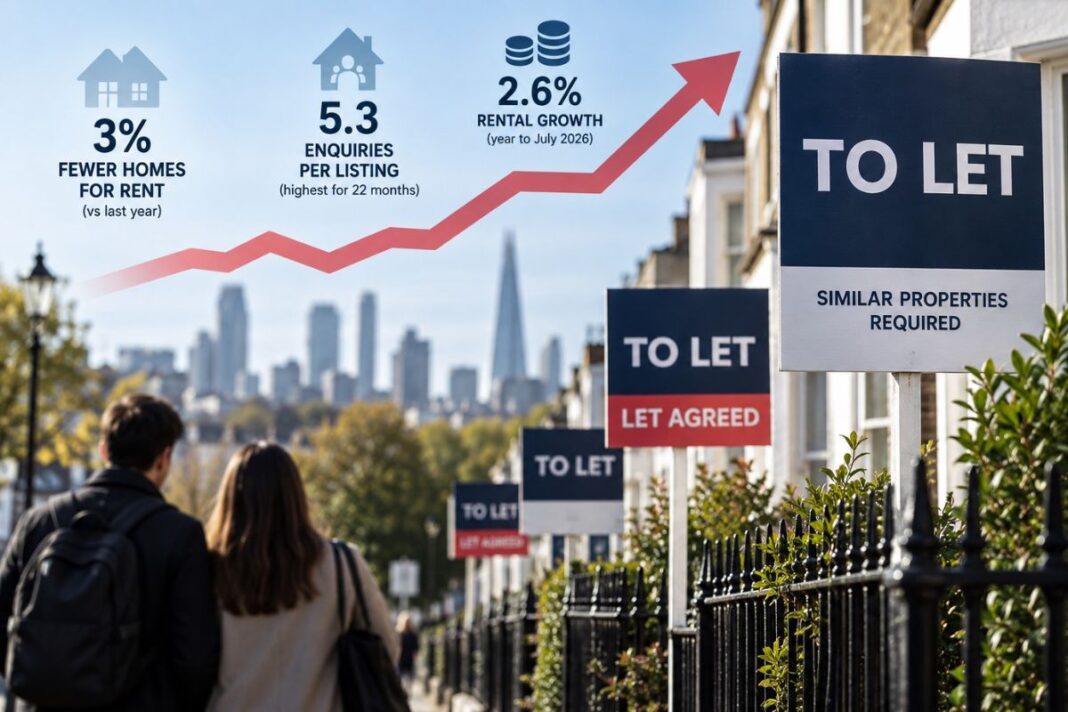
Landlords are anticipating yet another tax rise coming in 2027, adding even more fuel to the fire. The real concern is in areas like London, which have already hit their affordability ceiling. If costs can’t be passed on, landlords will inevitably be forced to sell, which is no doubt why the decline in supply in London is twice the national average.
If there is no adequate return for providing rented housing, investors will eventually stop providing it. Government can dislike that reality, but it cannot regulate away the laws of economics.
The longer we treat the symptoms rather than understanding the causes, the greater the eventual intervention will have to be, and the taxpayer will ultimately pick up the bill.