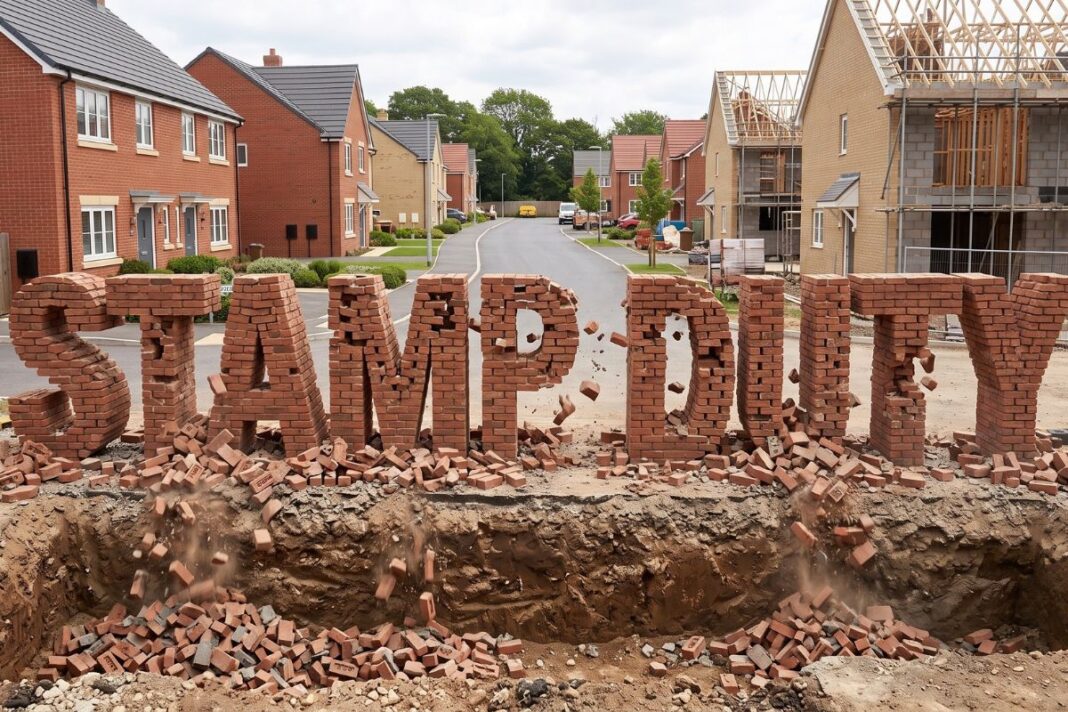
Increasing housing supply would do more to improve the long-term health of the property market than reducing stamp duty according to a GetAgent survey of estate agents.
Almost half of respondents, 46%, said building more homes should be the Government’s priority, compared with 32% who favoured reducing the tax burden on buyers. A further 22% considered both equally important.
The research follows speculation that Stamp Duty Land Tax could be replaced by an annual charge based on property values, although Prime Minister Andy Burnham has since ruled out changes in the forthcoming Budget.
Agents were divided over the proposed alternative, with 43% opposing an annual property tax and 35% supporting it.
ABOLITION WOULD STIMULATE DEMAND
Despite reservations about its replacement, 80% of agents believed abolishing stamp duty would increase buyer demand.
First-time buyers were considered the group most likely to benefit, cited by 30%, followed by buy-to-let investors at 26%, existing home movers at 22% and downsizers at 20%.
However, 55% of agents believed higher house prices would be the biggest potential downside of replacing stamp duty with an annual charge.
A further 28% warned that stimulating demand without increasing available stock would place additional pressure on the country’s constrained housing supply.
Six in 10 expected house prices to rise during the 12 months following any abolition, including 42% anticipating moderate growth and 18% forecasting a significant increase.
“Supply has to remain the priority.”

Colby Short, co-founder and chief executive officer of GetAgent, saysreducing or removing the upfront tax would encourage more people to move.
“The concern isn’t that tax reform is a bad idea – it’s that demand-side measures alone rarely solve the underlying problem,” he said.
“If you encourage more people to buy without increasing the number of homes available, competition intensifies and prices come under upward pressure.”
Short points to the pandemic stamp duty holiday as evidence that reducing transaction taxes could produce a rapid increase in market activity.
However, he says improving affordability over the longer term depended on constructing enough homes to meet demand.
“Whether stamp duty is reformed in the future or remains unchanged, lasting improvements to affordability and market health will only come when we’re building enough homes,” he adds.