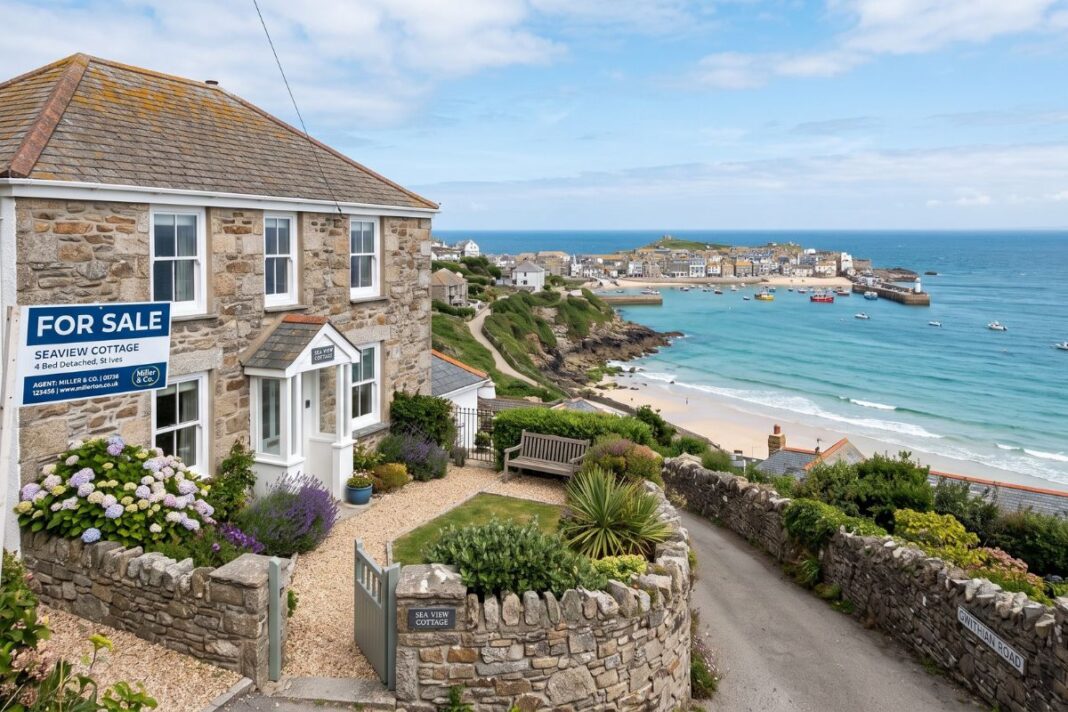
The average asking price of a British home with a sea view has increased by 27% since 2019, Rightmove analysis reveals.
Sea-view properties now carry an average asking price of £298,810, up from £235,635 seven years ago and ahead of the 22% growth recorded across the wider market.
Rightmove examined more than 200 coastal locations, comparing homes marketed as having sea views with other properties in the same seaside areas.
The largest increases were recorded away from traditionally expensive southern markets, with prices rising by more than 50% in both the East Midlands and Yorkshire and the Humber.
REGIONAL PRICES DIVERGE
Average sea-view asking prices in the East Midlands climbed by 55%, from £228,083 in 2019 to £352,789 in 2026.
Yorkshire and the Humber recorded growth of 53% over the same period, taking its average from £160,771 to £245,119.
The South East remains the most expensive region in which to buy a sea-view home, with an average asking price of £416,375. It is followed by the South West at £398,764 and the East of England at £355,319.
Scotland offers the most affordable sea-view properties, averaging £166,068, although prices there have risen by just 4% since 2019.
ESSEX LEADS SEA-VIEW PREMIUMS
West Mersea in Essex has Britain’s largest sea-view premium. Properties overlooking the water carry an average asking price of £655,479, compared with £433,185 across the wider local coastal market.
That represents an additional £222,294, or 51%.
Nearby Frinton-on-Sea records the second-largest percentage premium at 36%, with sea-view homes averaging £492,344—£130,699 more than the local coastal average.
Broadstairs in Kent and Littlehampton in West Sussex both command premiums of 32%, while buyers pay 29% more for a sea view in Newquay.

Colleen Babcock, Property Expert at Rightmove, says: “A sea view has long been seen as one of the most desirable features a home can offer, and our latest analysis shows buyers are willing to pay a significant premium for one.
“While some of Britain’s most prestigious coastal locations continue to command the highest prices, we’re also seeing notable growth in more affordable seaside areas, suggesting that sea-view homes are becoming increasingly valuable across a wider range of the market.”
WORKPLACE FLEXIBILITY

Ian Harris, President of NAEA Propertymark (National Association of Estate Agents), says: “The pandemic prompted many people to reassess what they wanted from their home, with lifestyle, wellbeing and access to outdoor spaces becoming increasingly important considerations.
“Whilst the market has since stabilised, those changing priorities have left a lasting legacy, and many coastal locations continue to attract buyers who value quality of life alongside their property investment.
“Greater workplace flexibility has also widened the appeal of living by the coast, making it a realistic option for more people than it was before 2020.
“At the same time, many coastal communities have a limited supply of homes, meaning sustained demand can have a noticeable impact on property values, particularly where sought-after features such as sea views are concerned.
“However, buyers should always look beyond the view alone. Factors including local amenities, transport links, flood resilience, insurance costs and future resale potential all contribute to a property’s long-term value.
“A knowledgeable local Propertymark Protected agent can help buyers and sellers understand these local market dynamics and make well-informed decisions.”