


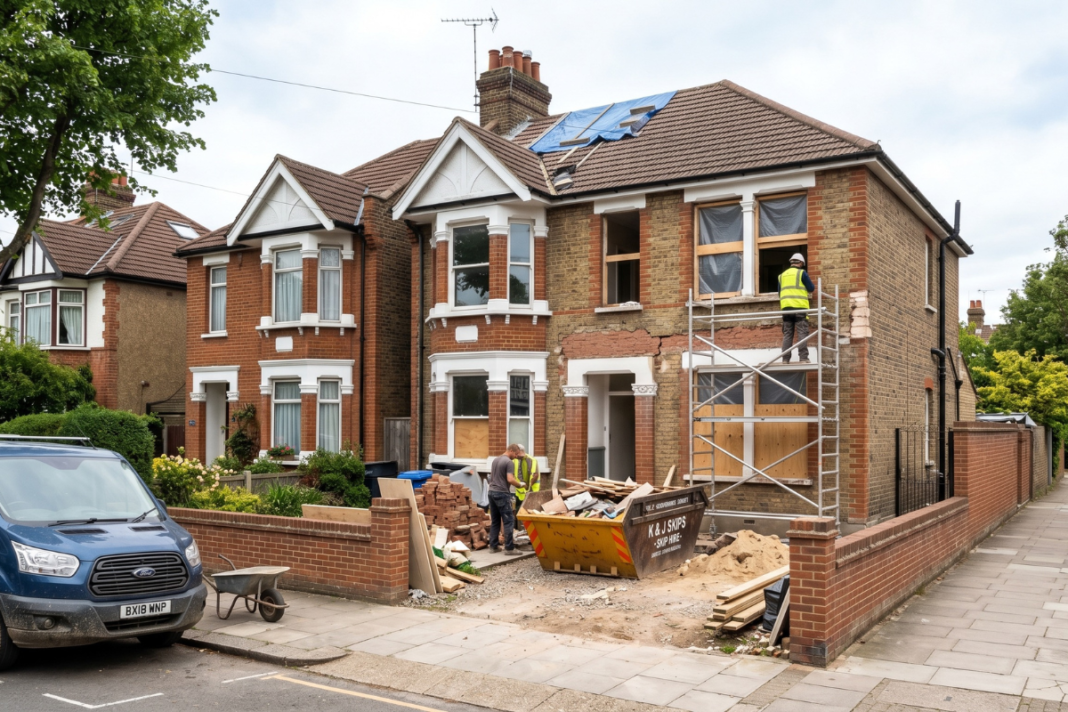
The cost of bringing the UK’s long-term vacant homes back into use has climbed to £34bn highlighting the growing scale of the country’s underused housing stock.
New research from BuildLoan shows the total has risen 19% year-on-year, driven by rising renovation costs and an increase in the number of empty properties.
There are around 361,000 long-term vacant homes across the UK, according to analysis of data from the Office for National Statistics, up around 15% from 315,000 a year earlier.
The average cost of renovating an uninhabitable property now stands at roughly £70,000, rising to £95,000 for long-term vacant homes, reflecting ongoing pressure from materials, labour shortages and wider economic conditions.
PANDEMIC DISRUPTION
The increase comes as the market continues to deal with the after-effects of the pandemic, which disrupted transactions and delayed renovation activity, leaving more properties sitting empty for longer.
At the same time, affordability pressures are pushing more buyers – particularly first-time buyers and young families – towards renovation projects as a route into homeownership.
The figures underline the scale of opportunity within the existing housing stock, particularly as the UK continues to fall short of new build targets.
UNTAPPED RESOURCE

Chris Martin, Head of Product Development and Lender Relationships at BuildLoan, says: “Our analysis suggests the number of long-term vacant properties in the UK has increased since 2025, having already risen steadily for a number of years.
“That represents a huge, untapped resource for the housing sector – one that could potentially help solve the housing crisis.”
BuildLoan has launched a new range of renovation finance products aimed at properties deemed uninhabitable by traditional lenders, an area typically reliant on bridging finance.
Martin adds: “Given how little progress we have made on building new homes over the last fifty years, renovating vacant properties should be part of the equation as we look to tackle the housing crisis.”
The data suggests that bringing empty homes back into use could play a more significant role in addressing supply shortages, particularly as build costs and planning constraints continue to limit new development.