


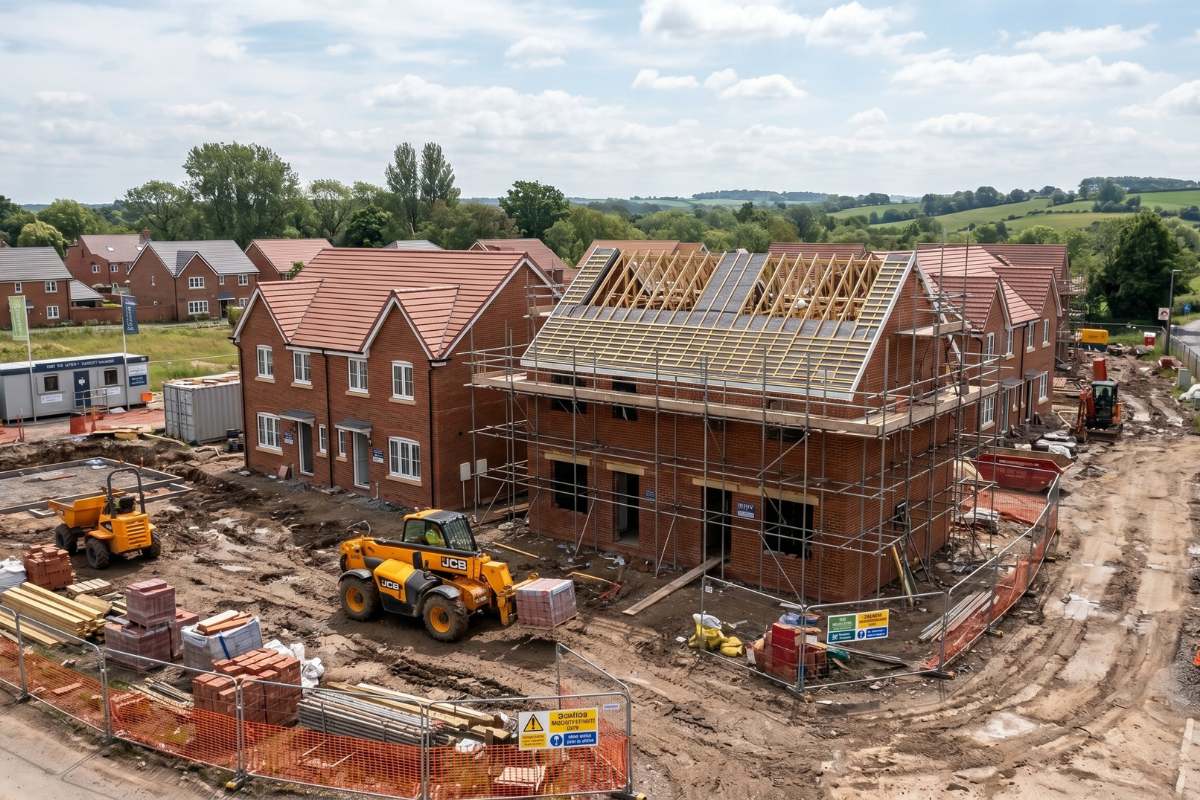
UK construction activity fell at its fastest rate in six years during May, with housebuilding remaining the weakest-performing sector as higher borrowing costs, inflationary pressures and economic uncertainty continued to weigh on demand.
The latest S&P Global UK Construction PMI fell to 38.2 in May from 39.7 in April, marking the seventeenth consecutive month that activity has remained below the 50.0 no-change threshold. Excluding the disruption caused by the pandemic, the latest decline was the sharpest since March 2009.
Residential construction was the hardest hit segment of the market, with its activity index falling to 36.0. Survey respondents cited weak market conditions and the continued impact of elevated mortgage and borrowing costs on buyer demand.
Commercial construction also deteriorated, with activity falling to 39.0 as clients delayed investment decisions amid rising inflation concerns and geopolitical uncertainty. Civil engineering output also declined, although at a slightly slower pace than the previous month.
FAST FALL IN NEW BUSINESS VOLUMES
The survey found that new business volumes fell at the fastest rate since the pandemic, with firms reporting fewer tender opportunities, delayed projects and tighter client budgets. Some respondents also pointed to ongoing political uncertainty as a factor affecting investment decisions.
At the same time, cost pressures intensified. Construction companies reported the fastest rise in input prices since June 2022, driven by higher energy costs, fuel surcharges and transportation expenses. Supplier delivery times lengthened for a third consecutive month, with firms citing international shipping delays and shortages of some raw materials.
The combination of weaker workloads and falling order books also led to further reductions in staffing levels and purchasing activity across the sector.
Despite the difficult conditions, businesses remain cautiously optimistic about the year ahead, although confidence has weakened considerably. Around 31% of firms expect activity to rise over the next 12 months, while 25% forecast a decline.
INFLATION AND MIDDLE EAST CONCERN

Tim Moore, Economics Director at S&P Global Market Intelligence, says the Middle East conflict, rising inflation and higher borrowing costs had contributed to the sharp fall in activity and new orders.
He adds that concerns over shrinking order books and weaker economic prospects had pushed business confidence close to levels seen ahead of last autumn’s Budget, highlighting the increasingly challenging outlook facing the construction sector.