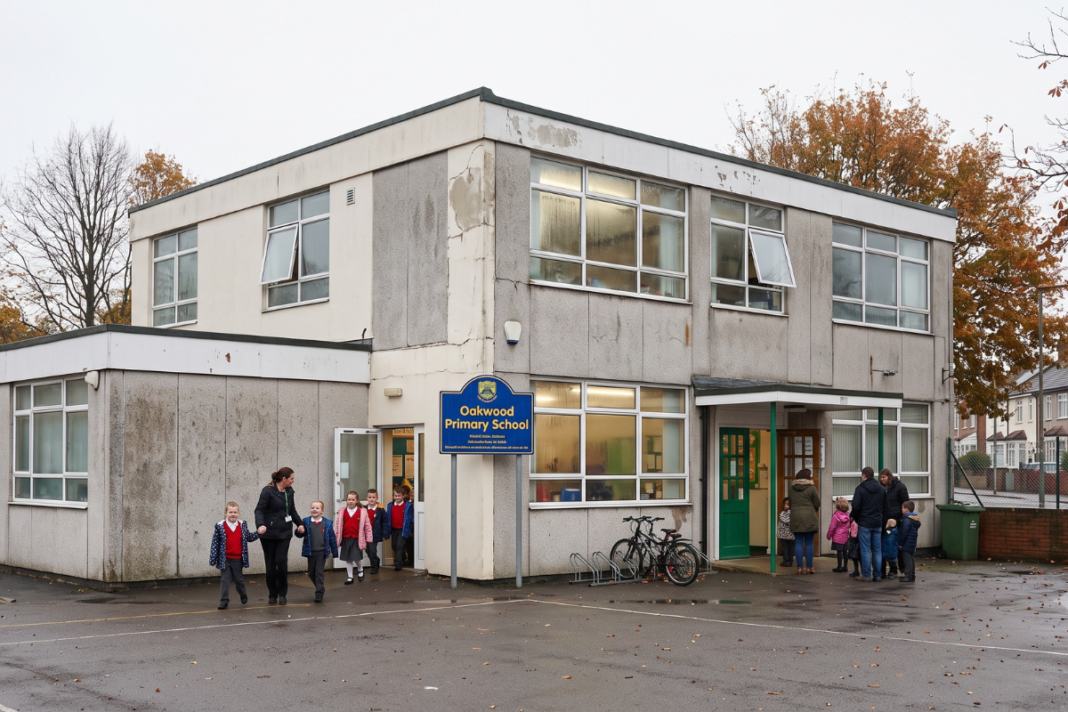
England’s reinforced autoclaved aerated concrete (RAAC) crisis has entered a new phase, with the Government increasingly focused on long-term remediation and evidencing building safety rather than identifying new affected sites.
Analysis by Property Inspect, based on Department for Education data, shows that 237 education settings in England were ultimately confirmed to contain RAAC, with primary schools accounting for around half of those affected.
The East of England experienced the greatest concentration of affected buildings, representing 38% of all confirmed cases, followed by the South East, London and the North West.
The Department for Education stopped publishing new lists of affected schools in October 2024 after confirming the final total, with more recent updates instead concentrating on rebuilding progress and the long-term resilience of the education estate.
MITIGATION MEASURES
According to the department, more than half of affected schools and colleges were either free from RAAC or progressing through permanent remediation by September 2025. So far, RAAC has been permanently removed from 62 schools and colleges, while 71 schools are being rebuilt through the School Rebuilding Programme.
The Government has committed £211 million towards mitigation measures, structural surveys, temporary accommodation, repairs and rebuilding work.
Property Inspect said the change in emphasis reflected a broader shift in estate management, with organisations increasingly expected to demonstrate how building risks are identified, monitored and resolved over time.
REAL TEST

Sián Hemming-Metcalfe, Operations Director at Property Inspect, says: “The RAAC crisis has shown that identifying a building defect is only the beginning. The real test is whether those responsible for an estate can show that the risk has been assessed, controlled, monitored and resolved.
“As schools move from emergency measures into long-term remediation, responsible bodies need an accurate and current picture of their buildings.
“They should be able to see where risks remain, what temporary measures are in place, when those measures were last reviewed and who is responsible for the next action.”
TRACEABLE RECORD
And she adds: “That evidence cannot be pieced together only when an auditor, regulator or governing board asks for it. Inspection findings, structural advice, photographs, approvals, repairs and proof of completion need to form one clear and traceable record.
“The Building Safety Act does not place the same formal golden-thread duties on every school, but it has raised expectations around how building safety information is recorded, maintained and used.
“The latest school estate standards reflect the same principle. Good estate management is not simply about responding when something fails. It means understanding building condition, prioritising work according to risk and being able to show that important actions have not been missed.
“RAAC brought these issues into sharp focus, but the lesson applies across the public estate. Knowing that work has been completed is important. Being able to evidence what was identified, what was decided and how the risk was closed is what creates lasting confidence.”