The rise of the “15-minute neighbourhood” is increasingly shaping buyer and tenant demand across London with areas offering access to everyday essentials within walking distance now commanding strong appeal in the capital’s property market.
According to Portico, part of LRG, the shift reflects changing lifestyle priorities following the widespread adoption of hybrid working, with many Londoners now placing greater value on local amenities and community infrastructure than proximity to a daily commute.
The concept of the 15-minute neighbourhood was developed by Carlos Moreno, professor at the Sorbonne in Paris, and centres on the idea that residents should be able to access the essentials of daily life within a 15-minute walk or cycle from home.
In practice, this means neighbourhoods offering a combination of housing, local workspaces, retail, healthcare, education and leisure facilities, all within a compact local area.
KEY DEMAND DRIVER
Portico says the concept has evolved from urban planning theory into a key driver of property demand and value resilience in 2026.
Among the six core functions buyers and tenants now prioritise are quality housing, flexible working spaces, local shops, healthcare facilities, schools and green spaces alongside a vibrant social and cultural offering.
Several London districts are emerging as leading examples of the trend.
BLOOMSBURY
Bloomsbury was highlighted as one of London’s most walkable neighbourhoods, benefiting from its concentration of cultural institutions, universities and green spaces.
The area currently has an average asking price of £873,137 and average monthly rents of £3,386, delivering an average gross rental yield of 4.7%.
CAMDEN
Camden also featured strongly due to its combination of live music venues, independent retail, Regent’s Canal and strong transport links. Average asking prices currently stand at £794,228, with rents averaging £3,020 per month.
BATTERSEA
In south west London, Battersea’s Northcote Road area was cited as a textbook example of the model, offering a strong community feel, boutique retail, green space and highly-rated schools.
The area currently delivers one of the strongest average rental yields among the locations highlighted at 5.6%.
ISLINGTON
Islington’s established café culture, independent retail scene and Low Traffic Neighbourhood initiatives have also helped reinforce its position as one of London’s most established 15-minute neighbourhoods.
STRATFORD
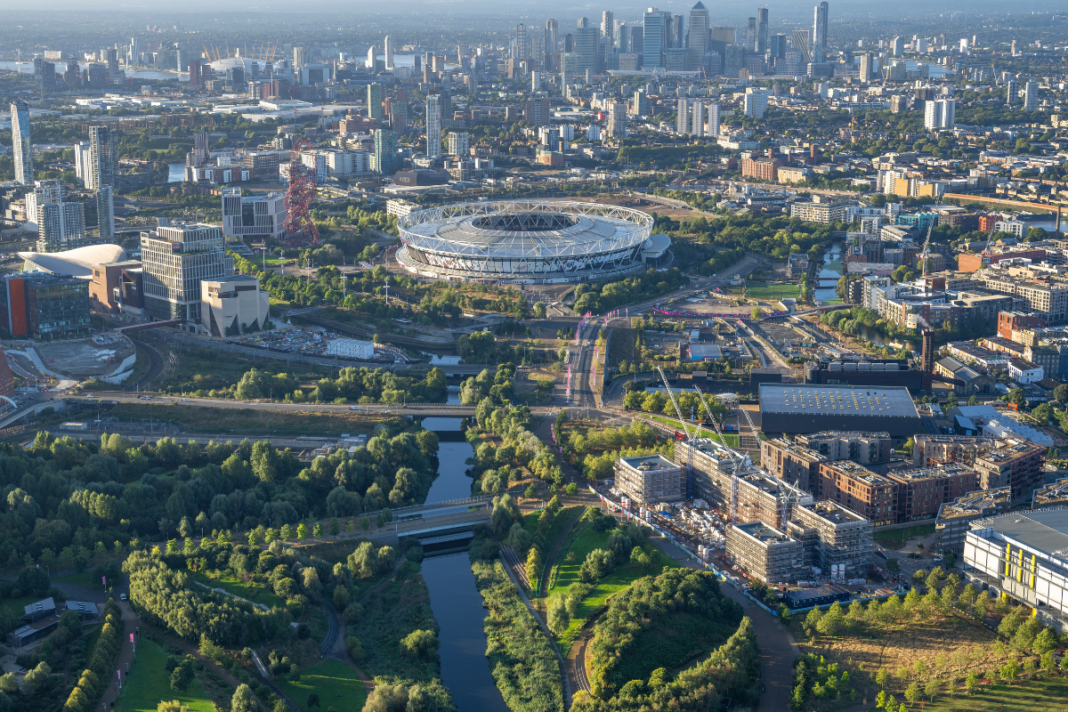
Meanwhile Stratford (main picture) represents one of the capital’s clearest examples of large-scale planned regeneration designed around the concept.
Portico noted that Stratford’s transformation following the 2012 Olympics has created a highly integrated community centred around transport, retail, leisure and cultural facilities, with the area currently producing the strongest average rental yield among the locations analysed at 6.1%.
NOT JUST A TREND

Allison Thompson, Chief Lettings Officer at Portico, part of LRG, says: “The rise of the 15-minute neighbourhood reflects a real shift in tenant priorities.
“Renters are still looking for good transport links, but they are increasingly placing equal value on what is immediately around them – independent shops, green space, good schools, healthcare, gyms, cafés and places to work locally.
“It is safe to say that the 15-minute neighbourhood isn’t just a trend. Properties in 15-minute neighbourhood areas tend to hold their value better during economic downturns because the convenience they offer is always in demand.”