


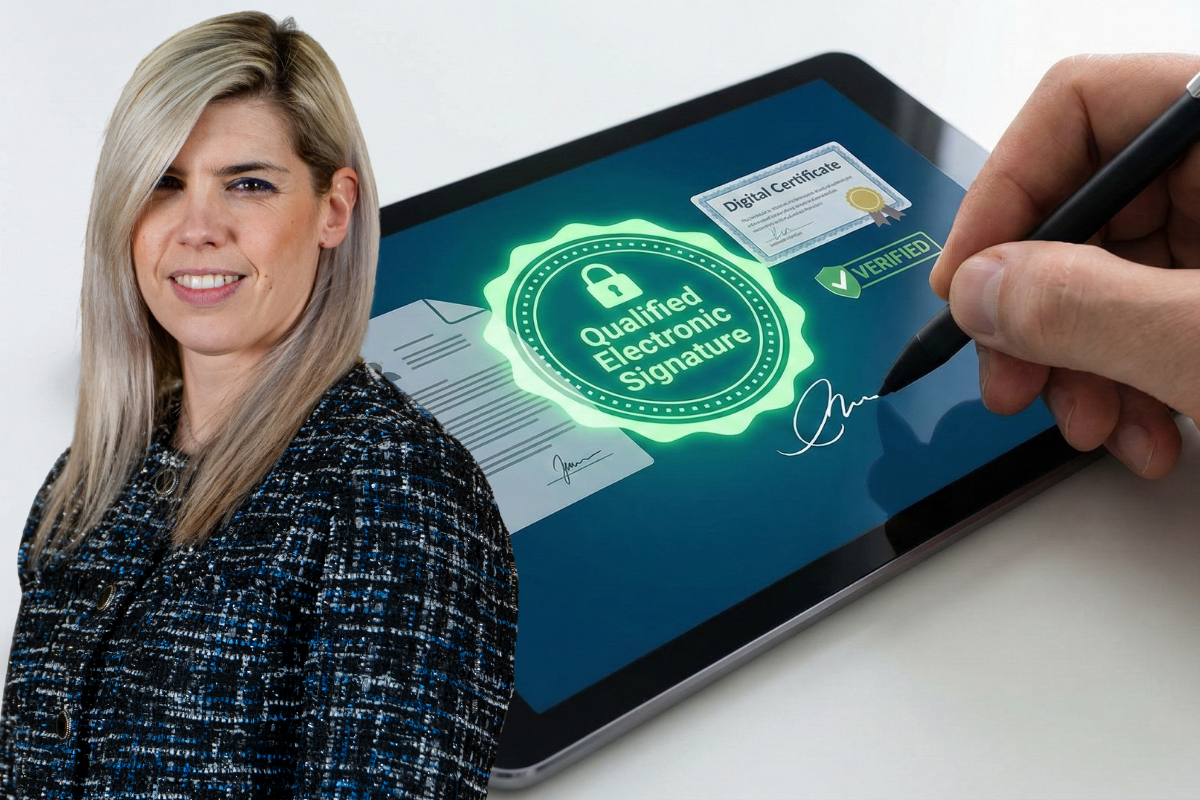
The adoption of Qualified Electronic Signatures (QES) at HM Land Registry remains extremely limited, with just five e-signatures recorded during the first quarter of 2026.
The figures, obtained by transformation consultancy Novus Strategy through a Freedom of Information request, show that only two additional organisations have begun submitting QES since HM Land Registry opened the service to conveyancers and other users in August 2025.
By the end of last year, only a single e-signature had been recorded.
While the numbers remain low, Novus Strategy argues they reflect the complexity of wider industry transformation rather than resistance to new technology.
CONFIGURATION CONUNDRUN
Claire Van der Zant (main picture. inset), Chief Executive Officer of Novus Strategy, said: “You can’t just flick a switch and start using QES tomorrow. QES is just one of the components that unlocks interoperability in the property transaction.”
She said firms first need to address internal processes, data sharing and customer journey design before they can fully benefit from technologies such as electronic signatures.
“This is the configuration conundrum all firms are having to navigate,” she said. “It’s less about whether the technology is fit for purpose, and much more about redesigning the customer journey to leverage new digital components, Smart Data and orchestration infrastructure.”
BROADER CHALLENGES
Novus believes the slow take-up highlights a broader challenge facing the property sector, where lenders, conveyancers, brokers and estate agents must work together to improve interoperability and data sharing.
Van der Zant says: “This isn’t a question of willingness to adopt, it’s a symptom of ability to adapt.”
She also pointed to the limited number of digital identity providers currently integrated with QES solutions as another barrier to wider adoption.
Despite the slow start, Novus expects usage to accelerate as the market matures, drawing comparisons with Open Banking, which also experienced gradual adoption before gaining momentum.
“What you’re witnessing here is the birth of a new way of executing the most complex consumer transaction on Earth, and QES is just one small part of that,” Van der Zant adds.