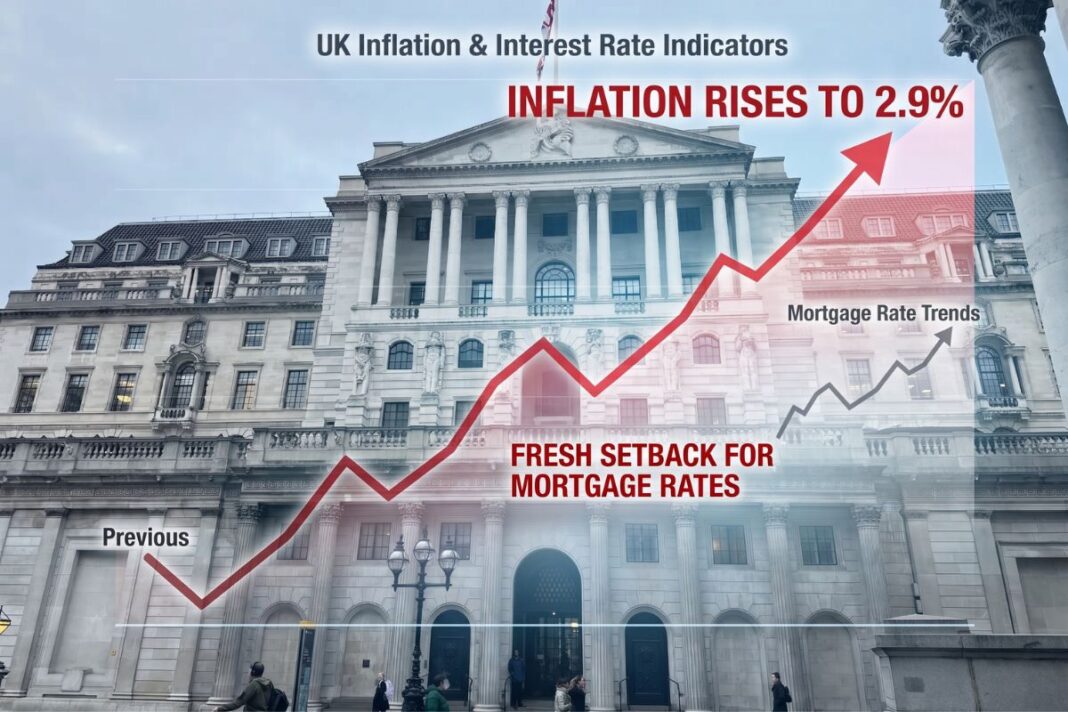
UK inflation rose to 2.9% in July, dealing a fresh setback to homebuyers and borrowers hoping for lower mortgage rates.
The Consumer Prices Index increased from 2.6% in June, moving further above the Bank of England’s 2% target, according to the Office for National Statistics.
The rise follows a 13% increase in Ofgem’s household energy price cap from 1 July, reflecting higher wholesale gas prices linked to the continuing conflict in the Middle East.
Bank Rate remains at 3.75% after the Monetary Policy Committee voted by six to three to hold it in July. The three dissenting members wanted an increase to 4%.
MORTGAGE CUTS MAY TAKE LONGER
Bank Rate does not directly determine fixed mortgage pricing but expectations for inflation and monetary policy influence the swap rates used by lenders.
The latest increase may therefore prolong uncertainty for buyers and homeowners approaching the end of fixed-rate deals, particularly if lenders conclude that Bank Rate will remain higher for longer.
A Reuters poll conducted before the inflation announcement found that 56 of 64 economists expected Bank Rate to remain at 3.75% throughout the rest of 2026.
The Bank must balance renewed energy-driven inflation against a weakening labour market and slowing private-sector wage growth. This makes an imminent rate increase far from certain, although an early reduction now appears less likely.
Its next decision is due on 17 September.
HOUSEHOLD COSTS RISE AGAIN
The Ofgem price cap rose by 13% for a typical dual-fuel household paying by direct debit between July and September. Customers on fixed energy tariffs are unaffected.
The National Institute of Economic and Social Research expects the Bank to hold rates in September but warns that further inflation increases could raise the possibility of action later this year.

Nathan Emerson, Chief Executive Officer of Propertymark, says: “Today’s news may bring a renewed level of concern to many individuals and families, especially over the coming months regarding household outgoings.
“Significant fiscal uncertainty, both in the UK and globally, including concerns on energy prices over coming months, is potentially likely to keep inflation rates above pre-2021 levels for now, continuing to potentially impact affordability for existing homeowners and prospective buyers as the year progresses.”
Inflation falling would not mean prices were declining. The increase to 2.9% means average prices are rising more quickly than they were in June.