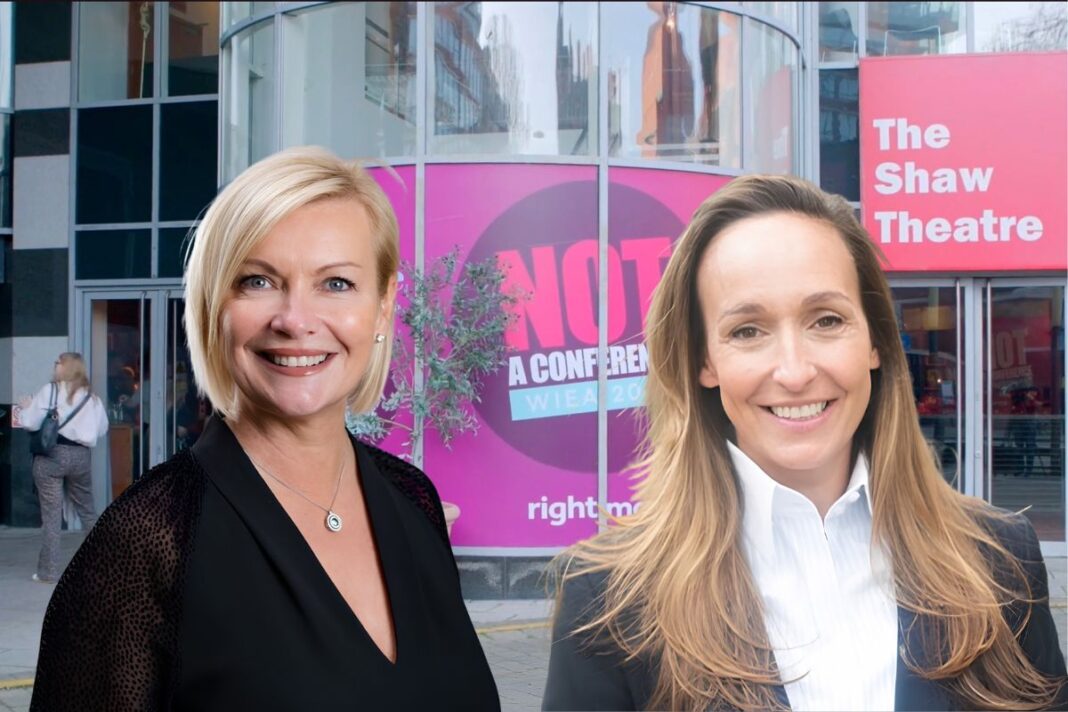
Dean Leslie and Matt Glazer (main picture, left and right), close friends since childhood, had spent years talking about starting a business together. They considered technology ventures and apps, none of which got beyond the idea stage.
They eventually decided to establish an agency specialising in investment and development. Their first instruction was a site in Totteridge with permission to build two houses and a bungalow.
They had borrowed £10,000 each to launch GLPG, and the first sale helped fund the business through its early months. A decade later, the firm they started in their early twenties advises on property sales, real estate finance and affordable housing across all asset classes.
GLPG has transacted on more than £2.5 billion of real estate since its launch, with £650 million in 2026 alone. Leslie says its revenue and profit for 2026 had already exceeded the previous record year’s totals by August of this year.
DIFFERENT STROKES
The founders are still close friends, and their different professional backgrounds have helped shape the business. Leslie came from estate agency; Glazer qualified as an accountant after working at Deloitte.
They did not see many firms specialising in investment and development agency and thought they could establish one themselves. GLPG opened in January 2016, months before the Brexit referendum.
Leslie remembers their first client clearly. While working for another agent, he had been asked to conduct a house viewing. The prospective buyer was a developer; they got on, the buyer completed the purchase and the two stayed in touch. When the developer later secured planning permission for the Totteridge site, he trusted Leslie and Glazer to sell it.
BUILDING THROUGH A CHALLENGING MARKET
Glazer sees a benefit in having launched just before a period of political and economic upheaval.
In a buoyant market, he argues, a landowner might have handed an instruction to one of the established property firms. A more difficult market gave two newcomers an opening if they could work harder for the business.
“We’re a young, hungry team, partner led, great service, we’re proactive, we work hard, we graft, we pick up the phone, and embrace technology” he says. “That’s really been our strength.”
Today the agency arm has roughly a dozen people and, according to Leslie, sells five or six sites and buildings a month, predominantly in London and the southeast.
About 35 agency transactions were going through legal work at the time of our conversation.
The finance and affordable housing teams work across the country, advising on projects from build-to-rent schemes in Leeds to student accommodation in Nottingham.
The expansion into capital advisory, spearheaded by GLPG’s third partner, Nick Swerner, was driven partly by the need for closer oversight of buyers’ funding after a sale had been agreed. A bank statement or a lender’s letter indicating support in principle could provide initial reassurance, but did not show how the financing would progress through to completion.
“In reality, we certainly didn’t have oversight for the rest of the process,” Leslie says.
GLPG established a capital advisory team to arrange debt and advise clients on financing property investments and developments. It is a separate business line, serving clients beyond those introduced by the agency, but it has also changed the questions the agents ask.
Even when another adviser is arranging the loan, they have a better grasp of what evidence of funding means and which hurdles remain.
Where GLPG handles both parts of a transaction, it can tell the seller whether the valuation is booked, the lender’s lawyers are progressing and a credit decision is approaching.
That oversight matters when a delay or change in costs can undermine an agreed price.
GLPG’s third strand, affordable housing consultancy, addresses a similar problem.
Rather than applying a broad percentage to the market value of affordable homes in a scheme, its specialists work out what that element could realistically command and whether there is a purchaser for it.
THE FACTORY THAT NEEDED A NEW PLAN
Leslie points to a former hat factory in North Warwickshire as an example of the work now required to sell a site.
The owners wanted to dispose of the land, which had permission for an extra-care development. The agency team approached developers and operators but the consented scheme did not attract interest at a price that worked for the owners.
The project moved to GLPG’s affordable housing team. Its proposal was to amend the planning consent to make the extra-care scheme wholly affordable.
Working with the owners, their planning advisers and other stakeholders, the team pursued a Section 73 variation.
It then brought together a housing association that wanted the finished homes and a contractor willing to build them, allowing the landowners to achieve their required land value through a package transaction.
The original planning permission had value only if somebody could deliver and pay for the scheme it allowed. Changing the proposal and assembling a buyer and builder created an exit that had not existed when the site was first marketed. It also meant dealing with several parties beyond the landowner and purchaser, including Homes England and the Canal & River Trust, Leslie recalls.
“Gone are the days where we’re just instructed on a building or a site, we put it on the market, the phones just ring, you collect all of the offers and you just choose,” Leslie says. Each deal, he argues, now demands close attention to the legal position, planning, finance and the buyer’s likely return.
The firm is active in office conversions, saying it sold seven office buildings in the last three months. Glazer and Leslie also point to interest in co-living, completed apartment blocks offered at a discount to the value of their individual flats, and smaller housing schemes in good locations. Leslie cites strong competition for two recently marketed residential sites, including one in Ilford.
Existing buildings have a particular attraction. An office can be refurbished and let again, converted to housing where permitted, or potentially put to another use. The buyer has options and some value in the structure already standing. Bare land offers fewer ways to recover if the original development plan no longer works.
An attractive brochure is only the start. GLPG models construction costs, likely sales values, yields, the time needed to sell and the risks of gaining or implementing consent.
Leslie says the firm sometimes has to tell owners that, even on optimistic assumptions, the price they want cannot be justified. The challenge is helping them understand that assessment before a failed sale proves it.
THE VIABILITY SQUEEZE
The difficulties are cumulative. A residential developer must allow for planning obligations, affordable housing, biodiversity requirements, construction costs and the price of debt. Taller schemes face additional building safety approvals. All of those commitments have to be carried until the finished homes can be sold or refinanced, in a market where buyers’ confidence is far from assured.
“It is a leap of faith,” Leslie says of the decision to buy land and start building now. Yet he says the developers and investors registered with GLPG have not withdrawn from the market. They are still looking for opportunities, even if the margin for error has narrowed.
When we spoke on Friday last week, both founders wanted the government to do more to stimulate demand for new homes, particularly among first-time buyers.
Leslie argued that a purchaser entering at the bottom of a chain enables others to move into larger or smaller homes. They would welcome an incentive resembling Help to Buy, while acknowledging the criticism that such schemes can push up prices. What mattered to them was giving developers confidence that buyers would be there when a project was finished.
The following day, the government announced plans for Your First Home, an equity loan scheme for first time buyers in England, to be confirmed at the Autumn Budget. It expects eligible buyers to be able to purchase a newly built home with a 2.5% deposit and a government backed equity loan worth 20% of the price, with an initial interest free period.
The proposal addresses the founders’ call for support for new homes, although its terms remain to be settled. Household income and local property price caps will apply, with the thresholds, costs and timetable due at the Budget. The length of the interest free period has not been specified, and developers will be expected to contribute to costs. Whether those terms give builders the confidence Leslie wants remains to be seen.
THE NEXT GENERATION
Leslie and Glazer see a longer-term shift towards renting, especially among younger people who value the ability to move city or country.
That is one reason they are interested in co-living. Glazer recalls graduates arriving in London when he worked at Deloitte and ending up in house shares of uneven quality. A well-run co-living building, he suggests, can offer a furnished room, shared amenities and the flexibility to move without the commitments of ownership.
He argues that comparisons with a conventional flat should include utilities and facilities as well as headline rent. Whether the model can be delivered at scale will still depend on the land price, planning and funding. It is an area where the property and capital advisory sides of GLPG’s business meet.
Planning is another frustration. The founders argue that some committees’ discussions fall short of the detailed understanding needed to decide complex applications, even where a proposal has been designed around local policy. They see room for reform, although their own growth has come from navigating the system as it stands.
GLPG says its team had completed over £650 million of transactions so far in 2026 when we spoke.
The figure covers transactions and capital arranged across the firm’s different workstreams, rather than company revenue. Leslie says the firm has increased both revenue and net profit each year since launch.
Leslie says his family moved repeatedly while he was growing up and that housing insecurity was part of his own childhood and that in itself lends the affordable housing division a meaning beyond another source of fees.
“Our business today, while we’re extremely proud of it, we don’t take any of it for granted,” he says.
For all the growth, the founders resist treating GLPG as a finished product.
“We still treat it as a startup,” Leslie says. “Every day, we’re challenging ourselves.”
Ten years on, their business still rests on persuading owners, buyers and lenders that it understands how to get a difficult transaction done.