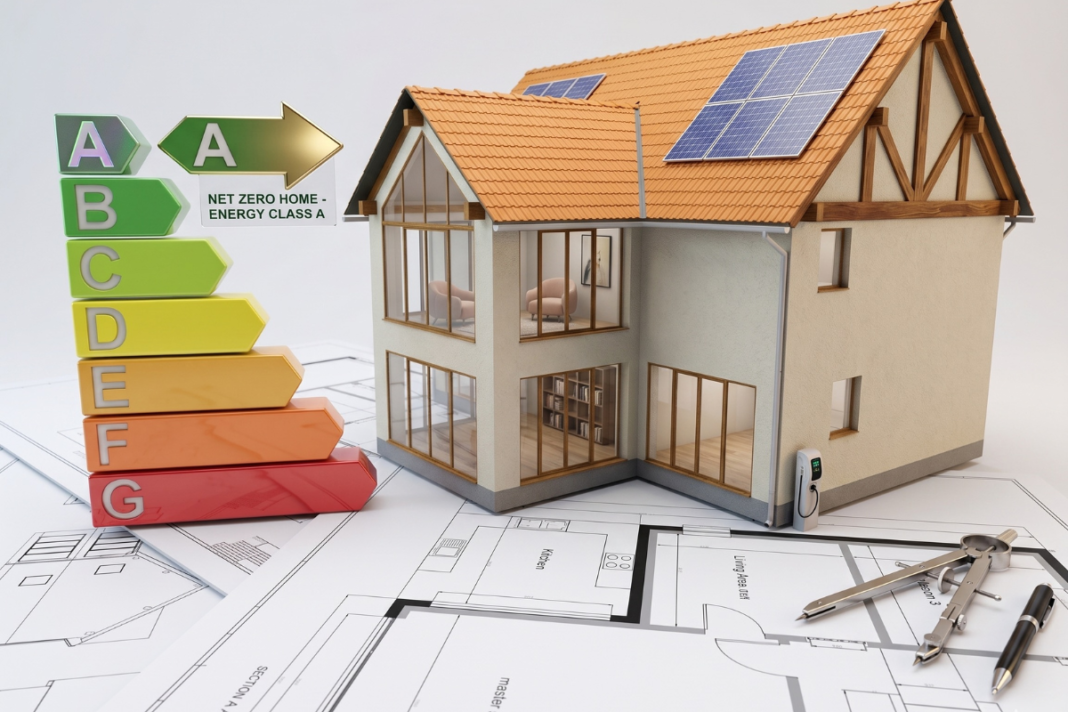
Energy-efficient homes command only a modest price premium in the owner-occupied market despite growing awareness of sustainability and lower running costs, according to latest research from Nationwide.
The building society found that homes with an EPC rating of A or B sell for an average of 1.6% more than comparable properties rated D, equivalent to around £4,500 based on average house prices in England.
The findings suggest that while buyers increasingly value energy efficiency, it remains only one of many factors influencing purchase decisions.
The contrast with the buy-to-let market is far more pronounced. Nationwide’s analysis found that landlords are prepared to pay a 12.2% premium for highly energy-efficient properties, reflecting growing regulatory pressure and the prospect of tighter minimum EPC standards in the private rented sector.
ENERGY PERFORMANCE
The research comes as the Government continues efforts to improve the energy performance of Britain’s housing stock as part of its net zero ambitions.
Nationwide estimates that 53% of owner-occupied homes are now rated EPC A to C, up from just 21% a decade ago, helped by the delivery of more energy-efficient new-build homes.
However, older housing continues to present a significant challenge. Around one in four homes built before 1919 remain rated E to G, while the average cost of upgrading a property to EPC C is estimated at £7,500.
Nationwide calculates that improving England’s existing housing stock could require investment of around £81 billion.
CHANGING ATTITUDES

Andrew Harvey, Senior Economist at Nationwide, says: “Decarbonising and adapting the UK’s housing stock remains critical if the UK is to meet its net zero target by 2050.
“Our analysis suggests that a more energy-efficient property rated A or B attracts a modest premium of 1.6% compared to a similar property rated D.”
Consumer attitudes appear to be changing, even if house prices have yet to fully reflect that shift.
Nationwide found that 77% of homeowners believe EPC ratings will be important when buying their next home, rising to almost half (49%) of buyers aged between 25 and 34 who described energy efficiency as “very important”.
Despite this, more than half (54%) of homeowners admitted they did not know the EPC rating of their own property.
SOLAR UPGRADE
Among those who have invested in improving their homes, solar panels proved the most popular upgrade, followed by better insulation and more energy-efficient windows and doors.
Reducing energy bills was the main motivation for carrying out improvements, with almost three-quarters of homeowners saying the work had lowered their household energy costs.
For those yet to make improvements, the biggest obstacle remains affordability, with 54% citing the upfront cost as the main barrier.
The findings suggest that while buyers increasingly recognise the benefits of greener homes, market values have yet to fully reward improvements in energy performance, leaving lower running costs rather than higher sale prices as the primary financial incentive for most homeowners.
PRACTICAL SUPPORT

Ian Harris, NAEA Propertymark President, says: “There is a growing interest from buyers in a property’s energy efficiency, particularly where improvements such as solar panels, battery storage and other green upgrades are already in place. These features are increasingly viewed as a practical way to reduce household running costs.
“However, while a strong EPC rating and green improvements can help a property stand out, they are typically one factor among many in the homebuying decision. Location, affordability and property condition remain the key drivers of value.
“The findings also reinforce the need for practical support to help homeowners improve the energy performance of their properties, especially where upfront costs remain a significant barrier.”
| EPC Rating | Owner Occupier Premium |
| A/B vs D | +1.6% |
| F/G vs D | -1.4% |
| Buy-to-let A/B vs D | +12.2% |