


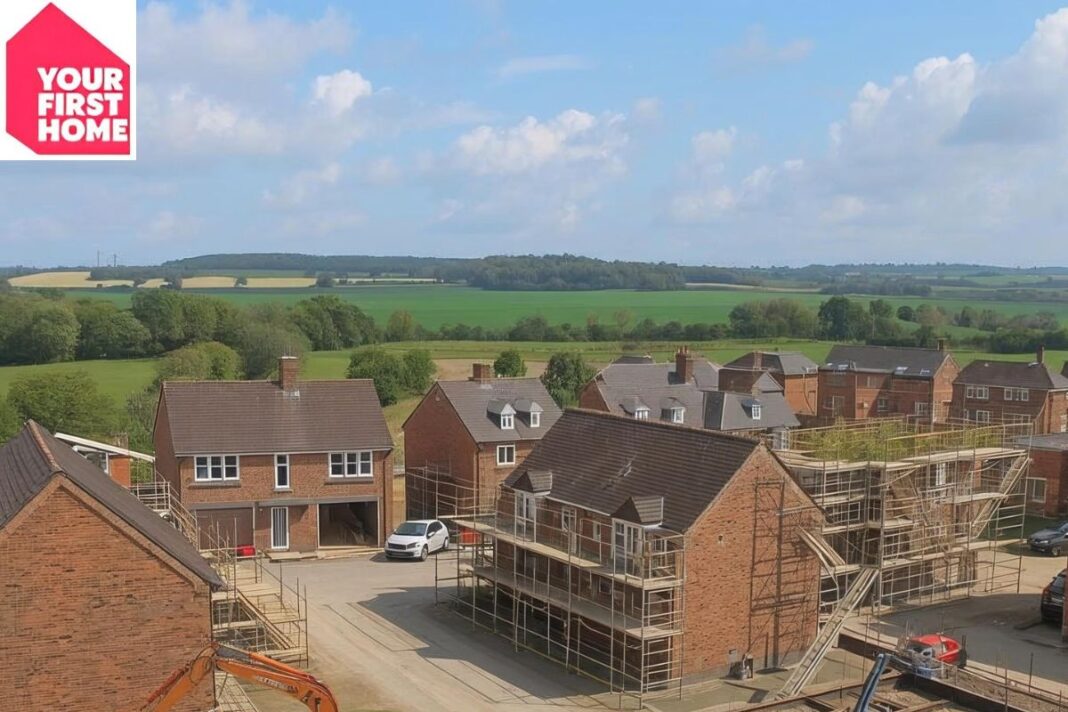
Lower earners using the Government’s Your First Home scheme could still need mortgages above 4.5 times their income in three-quarters of major English cities, despite putting down a deposit of just 2.5%.
Analysis by Tembo found buyers earning at the lower end of local salaries would require borrowing above 4.5 times income in 13 of the 17 cities it examined.
Even buyers earning the median local salary would need to exceed that level in eight cities, while higher earners would do so in four.
The findings suggest the Government’s new first-time buyer scheme could significantly reduce the time needed to build a deposit while shifting the affordability problem towards the amount buyers need to borrow.
BORROWING BARRIER
Your First Home will allow eligible first-time buyers to purchase participating new-build homes with a 2.5% deposit and a 20% government equity loan, leaving 77.5% to be financed with a mortgage.
Tembo calculates the scheme would cut the typical time required to save a deposit across the 17 cities from 34 months to 18 months.
But a lower earner buying an average qualifying new-build in London would require a mortgage equivalent to 9.9 times their income.
The equivalent multiples were 8.7 times in Leeds, 8.4 times in Newcastle and 8.2 times in Leicester.
Only Birmingham, Stoke-on-Trent, Liverpool and Southampton kept the required borrowing below 4.5 times income for lower earners.
Lenders can offer mortgages above 4.5 times income, although availability is more restricted and individual affordability assessments also take account of borrowers’ circumstances and expenditure.
NEW-BUILD PREMIUM
Tembo also identifies the scheme’s restriction to new-build homes as a potential affordability problem.
Across the cities analysed, the average first-time buyer new-build cost £236,750 – £9,809, or 4.3%, above the average first-time buyer property.
The difference was considerably greater in some otherwise affordable markets.
Tembo’s modelled Your First Home purchase price in Newcastle was 67% higher than the city’s average first-time buyer home, while in Leeds it was 50% higher. Bradford recorded a 52% difference and Derby and Hull 45%.

Richard Dana, Chief Executive Officer and Founder of Tembo, says: “For anyone who has spent years struggling to save, a 2.5% deposit sounds like a game-changer, and our analysis shows Your First Home could cut more than a year off the time it takes.
“But a smaller deposit is only one part of the equation. In three-quarters of the cities we analysed, lower earners would still need to borrow well beyond 4.5 times their income, where lending options become far more limited.
“The challenge simply shifts from saving enough to borrowing enough.”
Dana says the Government needs to address affordability if the scheme is to broaden access to homeownership rather than primarily increase the purchasing power of buyers already capable of securing larger mortgages.