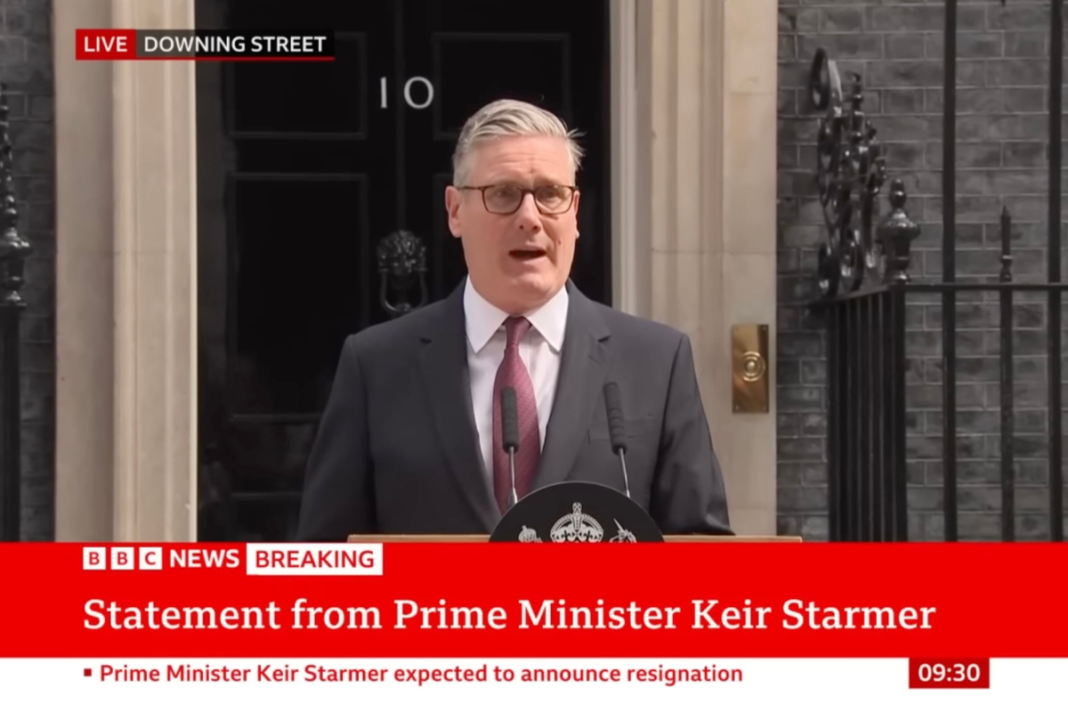
The resignation of Prime Minister Keir Starmer has created fresh uncertainty for the property sector, raising questions over the future direction and timing of major housing reforms announced just days ago.
Starmer confirmed he will step down after less than two years in office, paving the way for a Labour leadership contest that is widely expected to be won by Andy Burnham, the newly elected MP for Makerfield and former Mayor of Greater Manchester.
For estate agents, landlords, developers and homebuyers, the immediate concern is whether momentum behind the Government’s recently unveiled Home Buying and Selling Reform Roadmap can be maintained.
The proposals include mandatory sales packs, earlier binding agreements, digital property logbooks, a new code of practice for agents and potential mandatory qualifications for estate and letting agents.
PLANNING REFORM
The wider housing sector is also awaiting further details on planning reform, housing delivery targets and rental sector legislation, all of which could be affected by a change in leadership.
While Labour remains in government and no immediate policy reversals have been signalled, periods of political transition often result in delays as ministers and departments await direction from a new administration.
The UK is now preparing for its seventh Prime Minister in a decade, extending a period of political instability that has seen housing policy repeatedly reshaped by changes at the top of government.
Financial markets reacted relatively calmly to the news, suggesting investors had largely anticipated the move.
However, analysts say the longer-term implications will depend on the priorities of Starmer’s successor and whether housing remains central to the Government’s growth agenda.
INDUSTRY REACTION

Nathan Emerson, CEO at Propertymark, says: “Housing must remain at the heart of the political agenda. Landmark reforms continue to progress through Westminster, and they must deliver on their promises.
“We have seen some of the most significant changes to the rental sector in over 30 years with the implementation of the Renters’ Rights Act, alongside a commitment to build 1.5 million new homes to meet growing demand.
“Meeting future housing requirements requires clear political ambition and consistent leadership, especially as we embark on further reforms to the home buying and selling process.
“Propertymark will continue working closely with the UK Government to help deliver positive change for current and future generations. However, concentrating on the ‘here and now’ and ensuring consistency must be the core priority as any leadership transition proceeds.”
POLITICAL INSTABILITY

Adam Jennings, Head of Residential at Chestertons, says:: “Sir Keir Starmer’s resignation marks yet another chapter in a prolonged period of political instability for the UK, with the country set to have its seventh Prime Minister in a decade.
“In the short term, we may see property sellers and buyers adopt a ‘wait and see’ approach until there is greater clarity on the direction of government policy, particularly around housing, planning reform and the broader economy.
“The devil will very much be in the detail in the coming weeks – not only in terms of who succeeds Sir Keir Starmer, but also the priorities they set out and the speed at which they are implemented.
“With this being said, London’s housing market has shown remarkable resilience through previous periods of political upheaval.
“This latest uncertainty has arrived at a time when activity typically begins to slow ahead of the summer holidays, so there will be hope across the industry that a resolution is reached well before the busy autumn and pre-Christmas market.
“The priority for any incoming Prime Minister will be to provide a stable and consistent policy environment that supports investment, encourages development and gives buyers the confidence to make long-term decisions.”
SPECULATION RISK

Tom Bill, Head of UK Residential Research at Knight Frank, says: “In a similar way to last year, the biggest risk for the residential market over the next few months is speculation.
“Further uncertainty around wealth and property taxation means buyers and sellers may hesitate while the content of the next Budget and the identity of the next Chancellor remains unclear.
“The reality is that policies like a fundamental overhaul of stamp duty is not something a government on the financial back foot with two and a half years before the next scheduled general election can manage.
“Bond markets have priced in a Burnham victory to some extent, but mortgage costs could be pushed higher if investors read stories that point to higher taxes and untargeted spending.”
SHORT HANDOVER

Jeremy Leaf, north London estate agent and a former RICS Residential Chairman, says: “I am sure what Andy Burnham and Keir Starmer could agree on is the importance of additional activity in the housing market, which is not only good for property but the wider economy in view of its multiplier effect.
“The key element which has been holding back activity has been lack of confidence and instability.
“After a promising start, unfortunately Starmer seems to have lost touch with what people on the ground want and need from their housing.
“What we are looking for is the shortest possible handover of power to reduce that instability and transition towards a more growth-orientated agenda where prospective owners and tenants can more readily aspire to homeownership and better rentals.
“Unfortunately, the lack of direction has prompted too many people to sit on their hands rather than getting on with their lives when it comes to their properties.”
NO SURPRISE

Mark Harris, CEO of mortgage broker SPF Private Clients, says: “Starmer’s resignation comes as no surprise, reflected in the marginal change in Swap rates, which underpin the pricing of mortgages, with a small rise of 1 to 2 basis points following the announcement.
“With Wes Streeting now apparently backing Burnham, it seems a coronation rather than a contest will happen, which will hopefully be smoother.
“Burnham has previously made comments about not being a slave to the bond markets but we suspect he will have to row back on that once he is Prime Minister.
“If talk of further borrowing in his speeches comes to pass, gilts and bonds will become more expensive, leading to higher Swap rates and accordingly mortgage rates.
“The markets will also be nervous about the next Chancellor. They are comfortable with Reees but should a more left-leaning PM and Chancellor be installed, this will have an upwards impact on pricing.”