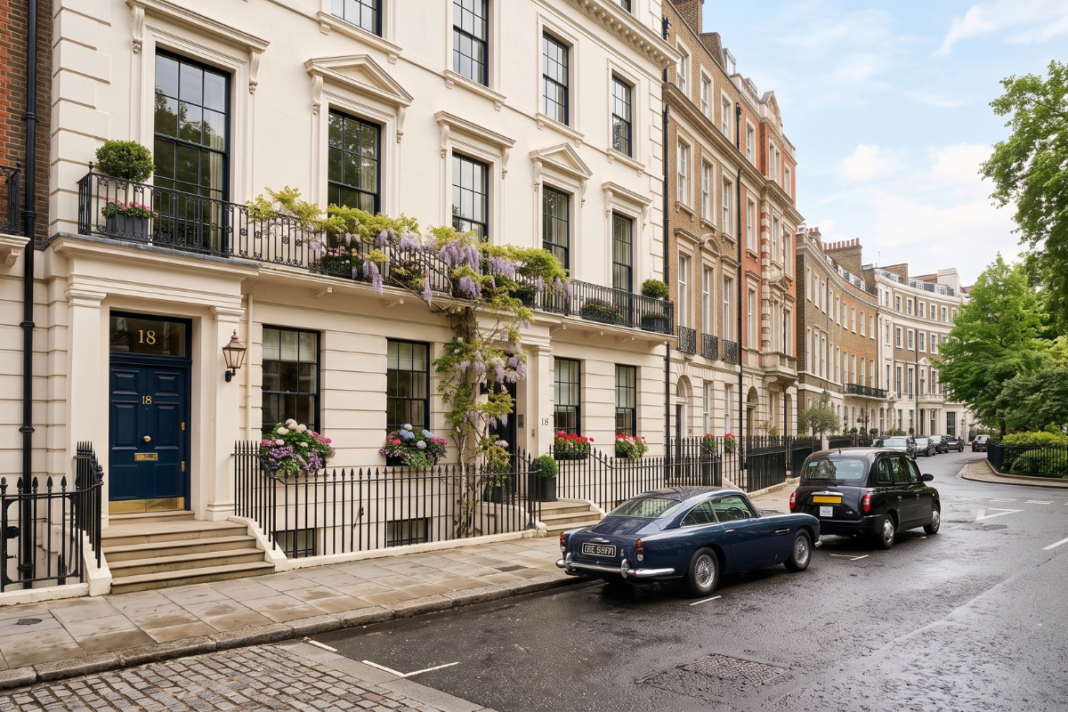
Prime London house prices recorded their sharpest annual decline since the aftermath of the global financial crisis during the second quarter, according to LonRes.
Its Prime London Sales Index fell by 7.5% year on year during Q2, the largest reduction since 2009. Prime central London performed even more weakly, with achieved prices down 9%.
Sales volumes were 10% higher than in Q2 2025 but remained 4% below the ten-year quarterly average. Across the first half of 2026, transactions were 11.4% lower than during the equivalent period last year.
The number of properties going under offer increased by 9% annually in Q2, suggesting buyer demand remains present. However, LonRes says fall-throughs and slow conveyancing are preventing that interest from translating into completed transactions.
BUYERS SECURE DOUBLE-DIGIT DISCOUNTS
Prime London buyers negotiated an average discount of 10.4% against asking prices during the first half, up from 8.3% a year earlier.
Properties took an average of 186 days to sell, compared with 178 days during the first half of 2025.
Available stock was 3% higher annually at the end of June and 64.7% above its pre-pandemic level at the end of 2019. Every month of 2026 has also recorded at least 50% more price reductions than the corresponding long-term average.
New instructions rose by 0.8% annually during Q2 and were 21.1% above the ten-year average.
SUPER-PRIME SALES FALL BACK
Transactions above £5m fell by 14.7% annually during the first half, although they remained 15.4% ahead of the 2017-to-2019 average.
The number of super-prime properties going under offer increased by 10.7% year on year, while new instructions fell by 10.8%. Buyers achieved an average 13% discount against asking prices, up from 10.8% during the first half of 2025.
LonRes says the figures demonstrate both the expansion of the super-prime market over recent years and its current relative weakness.
RENTAL GROWTH STALLS
Prime London rents fell by 0.1% both quarterly and annually in Q2, although they remain more than 35% above pre-pandemic levels.
Demand indicators remain comparatively resilient, with the average marketing period dropping from 65 to 57 days and the average discount narrowing slightly to 3.3%. Average prime London yields reached 4.82%, compared with 4.74% at the end of 2025.
LonRes also identifies a possible distortion created by the Renters’ Rights Act’s £100,000 annual rent threshold. Properties above that level remain common law tenancies.
Almost one in eight prime London lets exceeded the threshold this year, rising to 21.5% in prime central London and more than 40% in Mayfair and St James’s.