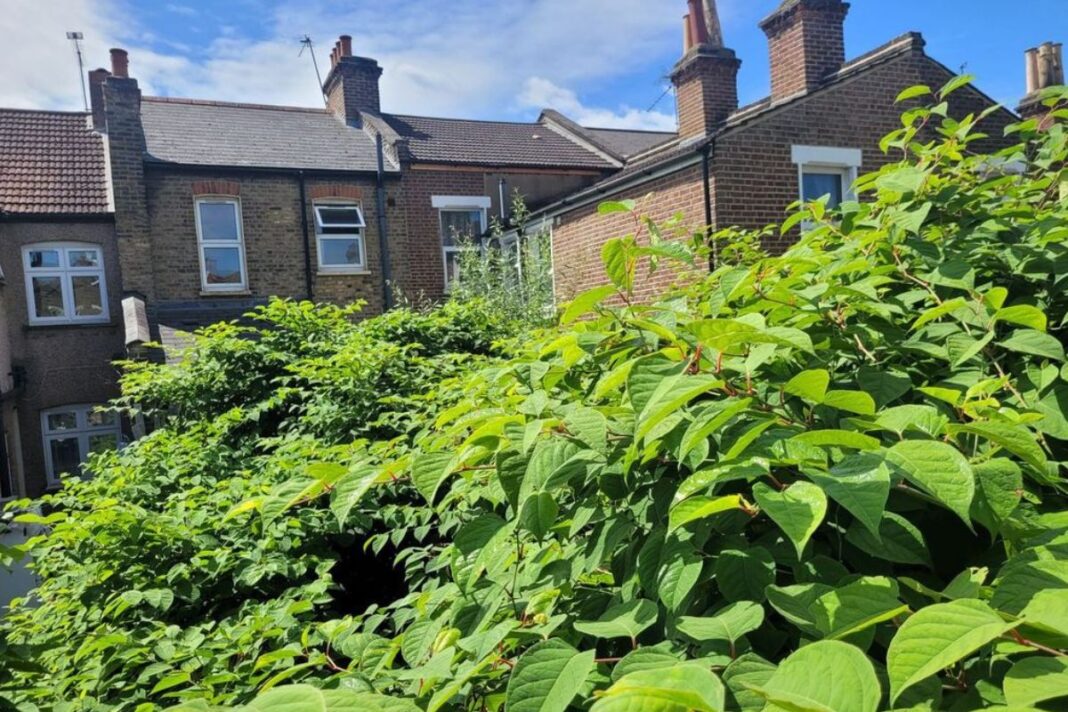
Chesterfield has the highest concentration of invasive plants in Britain, according to research examining more than 676,000 recorded occurrences across England, Wales and Scotland.
Analysis by SAM Conveyancing ranks 349 local authorities according to the number of records for 20 invasive plant species relative to their land area.
Chesterfield tops the table with 52.9 occurrences per sq km, followed by Bolton at 51.4 and the London borough of Brent at 45.1.
Kensington and Chelsea and Liverpool complete the top five, while four London boroughs feature among the 10 areas with the highest concentrations.
PROPERTY RISK
Giant hogweed is the most frequently recorded invasive plant in Chesterfield, with 1,771 occurrences, followed by 889 records of Japanese knotweed and 375 of Himalayan balsam.
Bolton has a substantially larger overall number of records at 7,196, but its greater geographical area gives it a slightly lower concentration than Chesterfield.
Across Britain, Himalayan balsam is the most frequently recorded invasive species included in the analysis, with 157,728 occurrences, followed by Japanese knotweed with 115,767.
Japanese knotweed can present particular problems during property transactions, with its presence potentially affecting valuations and mortgage lending depending on its location, extent and impact on the property.
BUYER CHECKS

Andrew Boast, founder of SAM Conveyancing, says: “While an invasive plant isn’t necessarily a dealbreaker, it is a game-changer. Whether you are worried about your mortgage being declined or the sheer cost of digging it out, the first step is knowing exactly what you’re up against.
“A hotspot doesn’t mean that invasive plant is present in every property in the area, but you’ll want to keep your eyes peeled during the viewing. A known invasive plant occurrence near your home is often just a prompt for better due diligence.
“Your surveyor also needs a heads-up. If you know you’re in a high-risk area, you can ensure your RICS surveyor pays extra attention to the boundaries.”
Merseyside has the highest concentration among the 45 sub-regional areas analysed, at 23 occurrences per sq km, followed by Inner London West at 18.2.
London is the most densely affected region overall at 10.3 occurrences per sq km, while Scotland records the lowest concentration at 1.1.
At local authority level, the Shetland Islands has the lowest concentration, with 0.13 occurrences per sq km.