



The Middle East conflict meant we downgraded our house price forecasts last week, partly due to the uncertainty around how the Treasury will respond to the economic shock.
Twenty-four hours later came speculation the Chancellor was planning to freeze private rents for a year.
Stories about the plan to alleviate cost-of-living pressures have since been walked back by the government, but it was not a promising sign.
The property market is used to trial balloons, but this was more radical than anything floated last summer and indicates the Treasury is dancing more energetically to the tune of its backbenchers.
POLITICAL CAPITAL
It also suggests pre-Budget speculation will again focus on a range of smaller tax rises, some linked to wealth, in order to create enough headroom to keep bond markets on side.
The government doesn’t appear to have the political capital to implement meaningful spending cuts or broad-based tax rises.
For the same reason, any new Prime Minister would find it difficult to change direction. Or, more importantly for the property market, any new Chancellor.
We have seen contenders for the top job like Angela Rayner and Andy Burnham attempt to soothe financial markets in recent weeks but without much success.
Ten-year UK government bond yields were trading above 5% last week, partly thanks to renewed leadership speculation, which will inevitably increase following this week’s local elections.
SLOW-MOTION IMPACT
Meanwhile, the slow-motion impact of the Middle East conflict on the UK housing market continued to play out last week.
Five-year swap rates, which lenders use to price fixed-rate mortgages of the same length, were trading above 4.3% last week, which compares to less than 3.5% in February.
However, mortgage offers can last for six months, which means buyers sitting on deals that pre-date the conflict will be under pressure to act sooner rather than later.
Nationwide, for example, reported that annual house price increased marginally to 3% in April.
However, there were few other positive signs last week. Mortgage approvals were down by 1% in March on the year and 3% below the five-year average. It’s not a large drop but it doesn’t indicate the spring market is firing up yet.
The Bank of England also appeared uncertain about the direction of travel as it voted 8-1 to hold rates on Thursday.
Its announcement also set out such a wide range of possible outcomes for the economy that there was no clear signal around its thinking, said Pepperstone analyst Michael Brown.
“Their focus is on the conflict’s second-round effects on inflation, but they won’t get that data for a long time,” he said. “For that reason, I don’t see them hiking but just sitting on their hands for the rest of this year.”
Financial markets were pricing in two further hikes in 2026 but that will depend on how long the conflict lasts and to what extent it escalates.
RUNNING FOR MAYOR
Ahead of this week’s local elections, one candidate for London Mayor in 2028 told me he decided to run because of City Hall’s lack of engagement with the built environment sector.
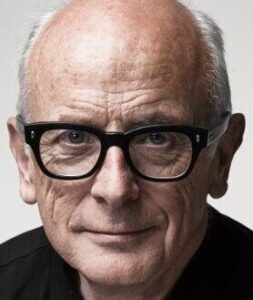
“The tipping point was the election before last when New London Architecture organised a hustings for all the London mayoral candidates to be questioned about the built environment,” said Peter Murrary on the latest episode of Housing Unpacked.
“We had a constituency representing probably a quarter of a million professionals, but when we contacted Sadiq Khan’s office, he said no.”
Peter started his career in architectural journalism but is best known as the co-founder of New London Architecture, a convening body for a range of organisations and businesses involved in shaping London’s built environment.
He founded the London Festival of Architecture and was also a design advisor to the last two London mayors. He announced his candidacy in December, explaining on the podcast that the fragmentation of UK politics since the general election in July 2024 has created an opening for independent candidates.
His policy platform will be based on “getting stuff done”, he said, emphasising that he understood developers’ frustrations.
“One of the biggest problems is uncertainty. Uncertainty over planning timescales, uncertainty over costs, uncertainty over negotiations. Developers and investors need a level of certainty, and that’s what I would bring.”
We also discuss what previous Mayors have got right and wrong, lessons that can be learned from other cities around the world, the role played by densification and tall towers, and whether London needs a City Architect to implement a coherent vision for growth and development.