Almost 4,700 residential buildings are now being monitored under government programmes for unsafe cladding as a new levy on residential development comes into force today.
Analysis of Ministry of Housing, Communities and Local Government data by Property Inspect shows 4,697 buildings of 11 metres or higher were being monitored at the end of July, compared with 4,191 at the end of January.
The 12.1% increase does not mean another 506 buildings have necessarily become unsafe during the period. It partly reflects more of the buildings expected to require remediation being identified and brought within government programmes.
MHCLG estimates those programmes are now monitoring between 64% and 81% of buildings expected to require remediation, compared with between 49% and 73% in January.
REMEDIATION PROGRESS
The number of 11 to 18-metre buildings being monitored has increased by 13.7% since January, while the number measuring 18 metres and above is up 10.8%.
Progress is also being made on existing cases.
The number of buildings where remediation is underway has increased by 3.3%, while completed cases – including buildings awaiting building control sign-off – are up 22.2%.
However, the number of buildings waiting for remediation work to start has increased by 7.5%.
NEW LEVY
From 1 October, the Building Safety Levy will apply to qualifying new residential developments in England and raise money towards remediating safety defects in existing buildings.
It will generally apply to developments creating 10 or more homes or at least 30 purpose-built student accommodation bedspaces, subject to exemptions.
Charges are based on floorspace and vary by local authority and whether development takes place on previously developed land.
Kensington & Chelsea has the highest rate for residential development at £50.17 per square metre on previously developed land and £100.35 on previously undeveloped land.
APPROVAL DELAYS
Property Inspect also highlights the time required to secure regulatory approval for remediation work on higher-risk buildings.
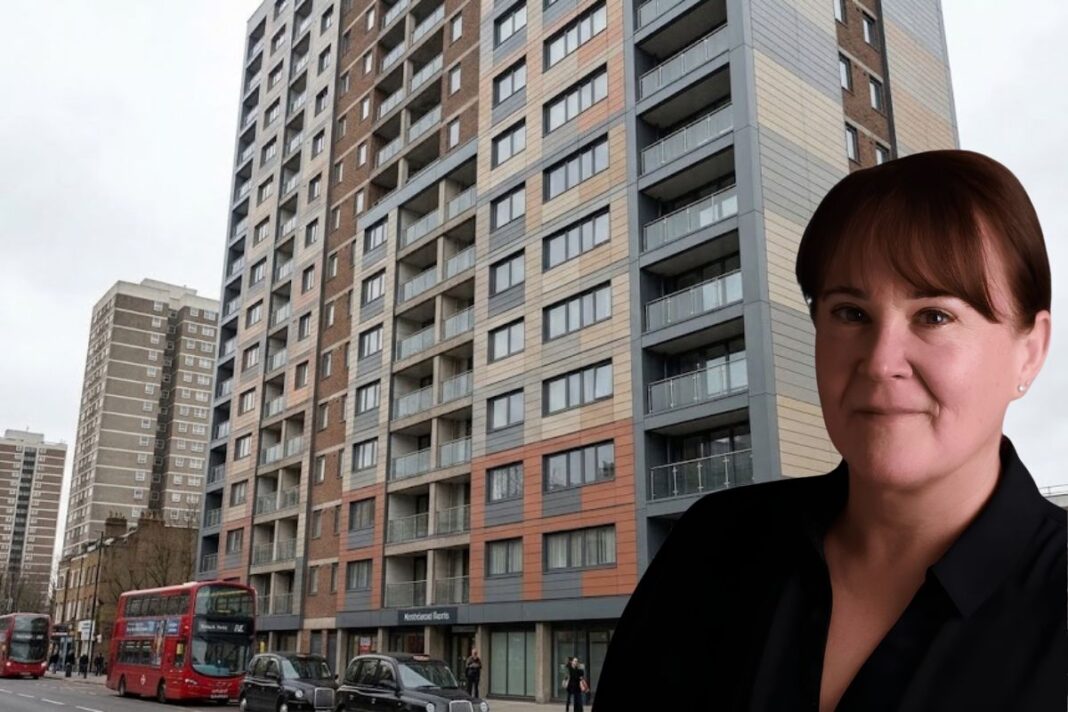
Sián Hemming-Metcalfe (main picture, inset), Operations Director at Property Inspect, says: “The Building Safety Levy marks an important step in addressing one of the biggest challenges to emerge from the building safety crisis, because it creates a dedicated mechanism for the development sector to contribute towards the cost of putting unsafe buildings right.
“However, money alone will not clear the backlog. The latest figures show that the number of buildings being monitored for remediation continues to grow, while thousands of buildings remain somewhere in the remediation pipeline. We need to make sure that the funding, skills, and capacity required to move these buildings through the process are available at the same time.”
She adds: “Before remediation work on a high-rise building can begin, it needs approval from the Building Safety Regulator, and the latest BSR data shows remediation applications are taking a median of 33 weeks to approve.
“That’s a significant improvement on the 43 weeks seen a year ago, but it still means many months can pass before work even starts.”
Hemming-Metcalfe says the industry also needs sufficient building control and safety expertise to inspect completed works and provide the necessary sign-off.
“The ultimate measure of success should not simply be how much money is raised or how many remediation projects are started. It should be how quickly buildings can move from being identified as unsafe, through assessment and remediation, to a point where the work is properly evidenced, signed off, and residents can move forward with confidence.”