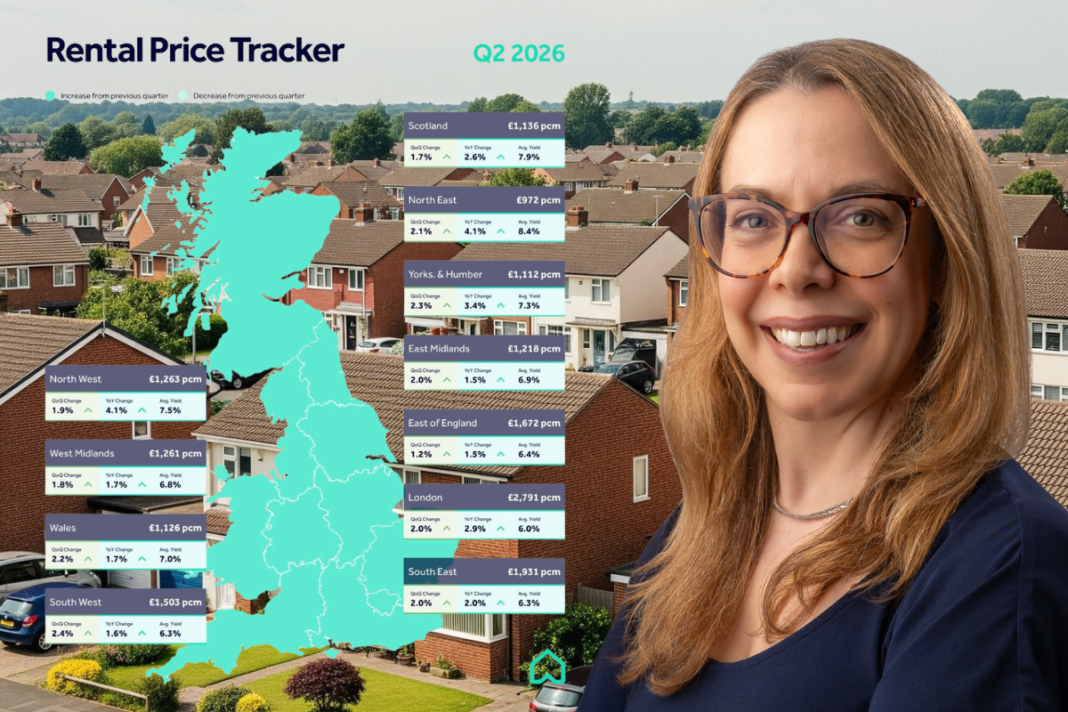
The supply of homes available to rent has fallen below last year’s level for the first time since 2022, as new Rightmove data shows advertised rents have climbed to fresh record highs across Britain.
The property portal’s latest Rental Trends Report found the average advertised rent outside London increased by 1.9% during the second quarter of the year to a record £1,397 per calendar month, while average rents in the capital reached a new high of £2,791 after rising 2% over the quarter.
At the same time, the number of rental homes on the market slipped to 1% below the level seen a year earlier, ending a period in which rental supply had gradually recovered from the severe shortages experienced after the pandemic.
Despite the fall in available homes, competition between tenants remains well below the peak seen in 2022. The average rental property now receives 10 enquiries, compared with 22 during the height of the rental market frenzy, although demand remains above pre-pandemic norms.
REGIONAL DIFFERENCES
The North East and North West recorded the strongest annual rental growth at 4.1%, while annual increases were lowest in the East Midlands and East of England at 1.5%.
Landlord borrowing costs also eased slightly, with Rightmove’s daily buy-to-let mortgage tracker showing the average two-year fixed buy-to-let rate falling to 5.55%, down from 5.67% a month earlier.
Colleen Babcock (main picture, inset), property expert at Rightmove, says: “We’re seeing new record average rents advertised in both London and Great Britain outside of the capital, however overall, we’re seeing rents return to more familiar seasonal patterns and stable growth.
“Even though supply is no longer increasing, the market remains much more balanced than it was at the peak of competition in 2022.
“Regional trends also continue to vary significantly across the country, with more affordable northern areas still seeing some of the strongest rental growth. London has seen a notable increase in rents this quarter, and also the largest drop in available rental supply, underlining how local supply and demand dynamics continue to shape rental pricing.”
POSITIVE EXPERIENCE

Darren Bolton, Lettings Valuer, Julie Twist Properties, Manchester City Centre, says: “The Manchester rental market is continuing to perform well, with average rents increasing by up to 2% compared with last year.
“However, we’re seeing much more stock available than we were a few years ago, giving tenants greater choice and reducing some of the intense competition that characterised the market at its peak.
“For renters, that’s creating a more balanced and positive experience, with a wider range of properties to consider and less pressure to make quick decisions. For landlords, standing out has become more important. Properties that are well presented, well maintained and priced realistically for the current market are attracting the strongest levels of interest.””
The report also found landlord yields continued to strengthen, with the average yield across Great Britain excluding London rising to 6.6%, while the North East remained the strongest performing region at 8.4%.
SUPPLY CHALLENGE

Kim Lidbury President of ARLA Propertymark (Association of Residential Letting Agents), says: “While headline rent growth remains relatively modest compared with the peaks seen in recent years, the fall in newly listed rental homes should not be overlooked.
“If fewer landlords are bringing properties to market over a sustained period, this risks creating a more persistent supply challenge that may place renewed upward pressure on rents in the months ahead.
“The data also reinforces the importance of professional property management in a changing market. As legislative requirements continue to evolve, landlords who access expert advice and invest in maintaining high-quality homes are more likely to retain tenants, reduce costly void periods and support a more stable private rented sector. Increasing confidence for responsible landlords to remain in, or enter, the market will be essential if the sector is to keep pace with long-term housing demand.”