New plug-in solar panel technology could create additional electrical, fire and structural risks for landlords, property owners and insurers, according to risk assessment specialist RiskSTOP.
Plug-in photovoltaic (PV) solar systems became available for legal use in the UK from 27 August following changes announced by the Department for Energy Security and Net Zero.
Unlike conventional roof-mounted solar installations, the smaller systems can be installed by householders and connected directly through an electrical socket.
Their relative simplicity could make the technology particularly attractive for flats, rented homes and properties unsuitable for conventional rooftop solar, but RiskSTOP warns they should not be regarded as risk-free.
NEW RISKS FOR PROPERTY OWNERS
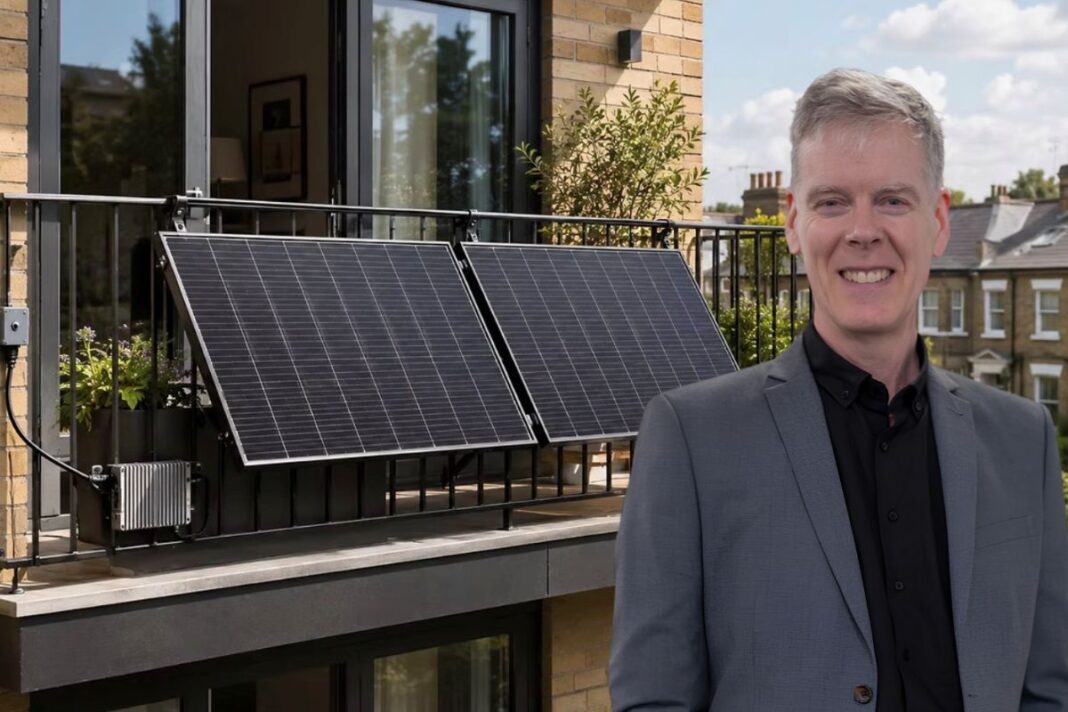
Johnny Thomson (main picture, inset), Head of Strategic Planning at RiskSTOP, says: “Unlike conventional roof-mounted PV systems, plug-in systems are designed to be installed by householders and connected directly to a standard electrical socket.
“They offer a relatively simple means of generating renewable electricity and may be particularly attractive to residents in flats, apartments, rental properties and homes unsuitable for traditional roof-mounted solar installations.
“Whilst plug-in PV systems are generally smaller than conventional solar installations, they should not be considered risk-free. They introduce many of the same electrical, fire and structural hazards associated with traditional PV systems, together with additional risks arising from user installation, product compliance, mounting arrangements and interaction with existing electrical circuits.”
The way the systems feed electricity into a property means the condition and suitability of its existing electrical installation, product compliance and protection incorporated within the equipment all need consideration.
Panels installed on balconies, walls and terraces also raise questions around secure mounting and exposure to wind and weather.
For rented and leasehold properties, landlord or freeholder consent could also be relevant alongside planning, insurance and network operator requirements.
INSURANCE IMPLICATIONS
RiskSTOP says the emergence of plug-in systems means solar generation could increasingly appear at properties where it has not previously featured in risk assessments.
Thomson adds: “Compared with larger conventional PV installations, these systems are generally lower in complexity and scale. However, the important point is that as they become more widely available, they may begin appearing on properties where solar generation has not previously formed part of normal risk assessment.
“For insurers and brokers, understanding what has been installed, where it has been positioned and how it is being managed will become increasingly important. As with many developing technologies, effective risk management is about recognising the exposure early and making sure the controls remain proportionate.”