

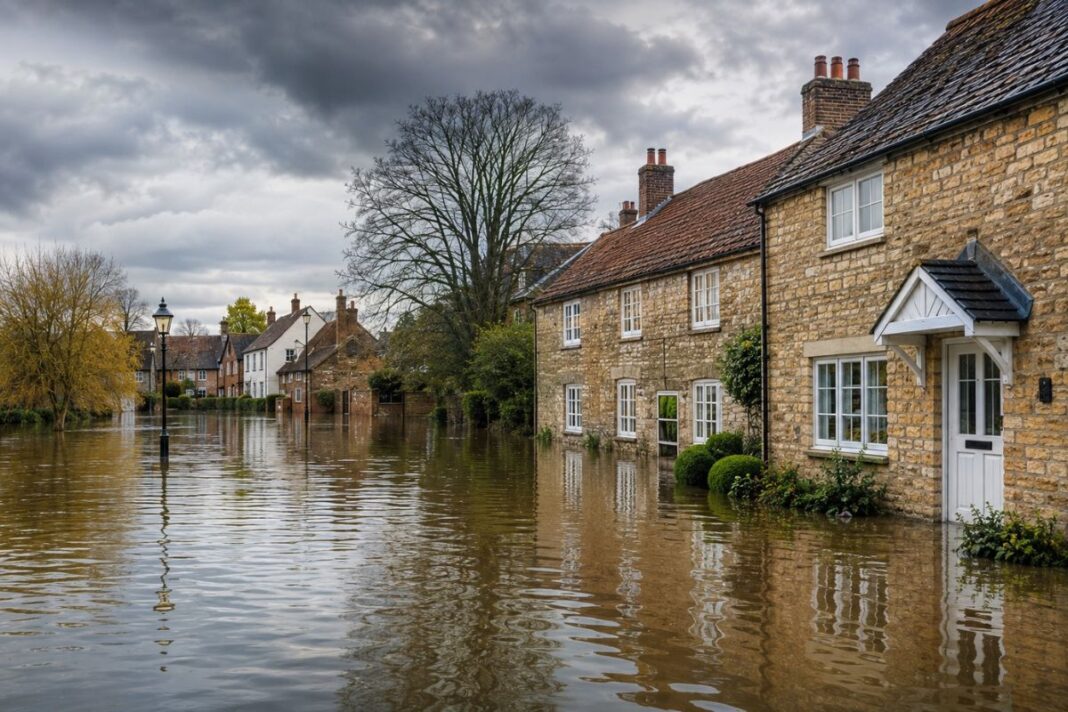
Norfolk has been named the English county most exposed to climate-related housing emergencies, with flooding helping push it to the bottom of a new national index.
Analysis by emergency accommodation provider Jigsaw Conferences ranks 47 ceremonial counties using eight factors including flood exposure, temperatures, wildfire risk and storm intensity.
Norfolk records a Climate Risk Index score of 32.3 out of 100, where a lower score represents greater exposure.
Tyne and Wear sits at the opposite end of the table, scoring 81.7 and ranking as the county least exposed to the risks assessed.
FLOODING DRIVES NORFOLK RISK
Some 18.44% of Norfolk’s land is classified as being in a high-risk flood zone, rising to 20.06% under Jigsaw’s extreme-risk measure.
South Yorkshire ranks as the second most exposed county with a score of 38.4, driven partly by wildfire risk, while Somerset is third at 39.2.
Cumbria, Lincolnshire, the Isle of Wight, North Yorkshire, Hampshire, Suffolk and Devon complete the 10 counties identified as most exposed.
Across the 47 counties analysed, Jigsaw says 9.32% of land is considered at high risk of flooding and 10.96% at extreme risk.
Lincolnshire has the greatest flood exposure, with 33.63% of land classified as high risk and 37.32% as extreme risk.
Jigsaw’s own data also suggests households displaced by flooding spend an average of 36.5 nights in temporary accommodation.
TYNE AND WEAR TOPS TABLE
Tyne and Wear achieves the strongest overall score, helped by comparatively low summer temperatures and limited land classified as wildfire fuel.
The West Midlands ranks second with 79.6, followed by Hertfordshire at 74.1.
Greater Manchester, Warwickshire and Leicestershire also feature among the 10 counties assessed as least exposed.
The individual risk factors reveal significant geographical differences. Greater London records the highest mean summer maximum temperature at 23.11°C, while Northumberland has the greatest proportion of land identified as potential wildfire fuel.
Cornwall records the highest average wind speeds, while Herefordshire has the lowest.
FAMILIES AT RISK
Mandy Kaur, Managing Director at Jigsaw Conferences, says: “Climate change is steadily increasing the frequency and severity of extreme weather across the UK, putting more families at risk of being displaced from their homes.
“Naturally occurring cycles like El Niño can amplify that further in any given year, driving wetter winters or more intense heat spells on top of the long-term trend.”