


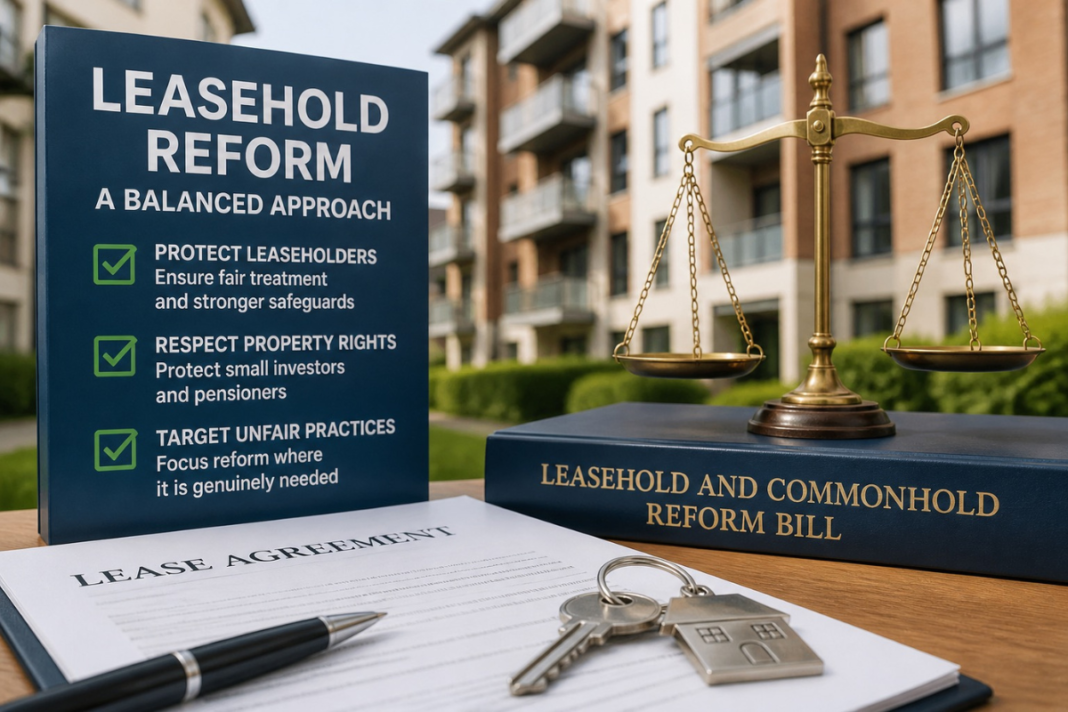
The issues dominating Westminster’s leasehold debate are not the issues dominating leaseholders’ everyday lives, research suggests.
A survey among thousands of leaseholders, commissioned by Justice for Property Rights and conducted independently by Censuswide, reveals that service charges were the cost most frequently identified by leaseholders as having increased unexpectedly, ahead of ground rents.
This raises important questions about whether the current balance of reform reflects the everyday experiences and priorities of homeowners.
The research found that 38.5% said service charges were the cost that had increased most unexpectedly, compared with 21% who identified ground rent
GROUND RENT GRIPES
Meanwhile, 65% said their ground rent was affordable and only 14% identified abolition of ground rent as the single Government reform that would make the greatest difference.
Overall, 83% said leaseholds were satisfied or neutral with their experience of leasehold home ownership
Another 16.4% selected making it easier to buy the freehold as the single reform that would make the biggest difference.
ECONOMIC IMPACT
Justice for Property Rights is also calling on ministers to publish a comprehensive Economic Impact Assessment before Parliament considers proposals to introduce a 40-year sunset period for existing ground rent income, arguing that reforms affecting long-established contractual property rights should be accompanied by a full assessment of their wider economic, legal and investment consequences.
Richard Merrin, spokesperson for Justice for Property Rights, says: “The Government has rightly engaged with leaseholders and campaign groups throughout its programme of reform. This independent research adds another important perspective by capturing the views of 2,000 leaseholders from across the country.
“The findings suggest that while leaseholders clearly support reform, their priorities are broader than the current public debate often suggests. The issues affecting them every month are service charges, transparency, accountability and confidence in the management of their buildings.
“This is not an argument against reform. It is an argument for ensuring that reform reflects the evidence and addresses the issues leaseholders themselves identify as having the greatest impact on their everyday lives.”