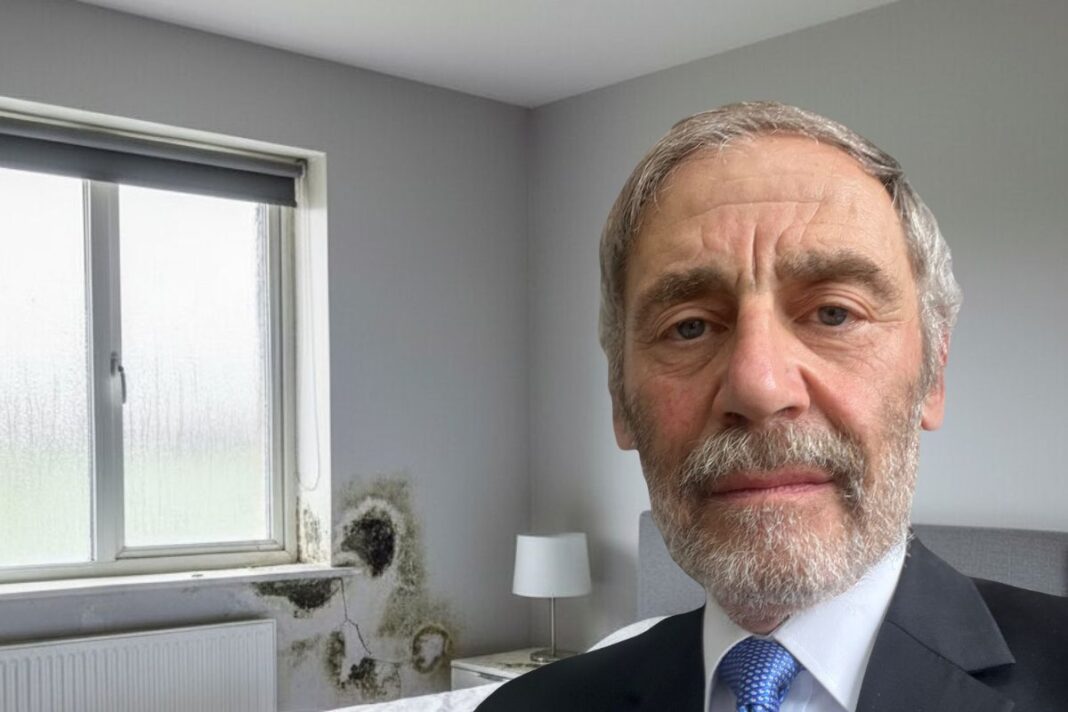
Landlords have been warned that blaming tenant “lifestyle” for damp and mould is unlikely to provide an effective defence against a disrepair claim unless they have evidence to support it.
Property barrister Jeffrey Zitron (main picture, inset) says landlords need to understand both their repairing obligations and the requirement to keep rented homes fit for human habitation as complaints increase during colder weather.
The Barrister Group Chambers says damp and mould is now the single biggest driver of disrepair claims handled by its housing team.
Section 11 of the Landlord and Tenant Act 1985 requires landlords to keep elements including the structure, exterior, water, drainage and heating installations in repair. Sections 9A and 9B also require rented homes to remain fit for human habitation throughout a tenancy.
LANDLORD EVIDENCE
Zitron says: “This is about landlords understanding what hazards they must identify and the statutory timescales within which social landlords must act. They need to ensure that hazards are diagnosed accurately and that the response reflects the severity. Inspections need to be properly recorded and additional investigations commissioned if the root cause is unclear.”
Tenant behaviour can still be relevant where a problem is wholly or mainly caused by a tenant breaching their obligations.
But Zitron says landlords need evidence, potentially including inspections of ventilation, heating and insulation and checks for water penetration, rather than simply assuming how the mould developed.
RECORD KEEPING
He adds: “Always remember what this is about: Keeping homes fit for human habitation. A landlord and tenant who become embroiled in a disrepair case which turns into a claim are heading into a time-consuming and expensive tunnel. Being awarded damages may be fair recompense to a tenant, but most just want their home to be safe, warm and comfortable.
“So, a landlord who responds promptly and effectively, whether to a Letter of Claim under the Housing Conditions Protocol or through an internal complaints process, saves themselves and their tenant grief and money.
“Landlords also need to remember that the range of hazards covered by the Act will be extended further in November 2026, so getting systems right should be a priority.”