


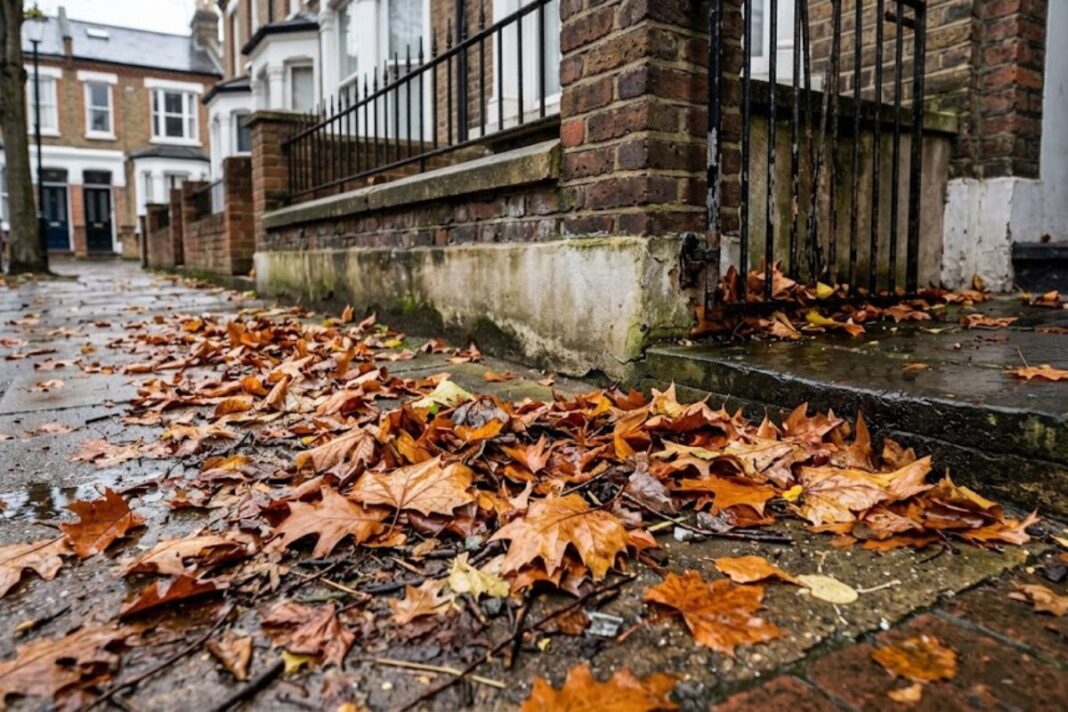
Landlords and property managers are being urged to keep communal paths and entrances clear of fallen leaves as autumn brings potential liability and waste-disposal risks.
Wet leaves can create slip hazards around entrances, paths, steps and other communal areas, making regular maintenance particularly important where landlords or managing agents are responsible for their upkeep.
Waste specialist Direct365 has also warned against simply sweeping leaves from private property onto roads, pavements or neighbouring land.
The warning comes after maximum fixed penalties for fly-tipping in England increased from £1,000 to £5,000 from 1 September, while the maximum littering penalty rose from £500 to £750.
COMMUNAL AREAS
Responsibility will depend on who controls and is responsible for maintaining a particular area rather than automatically falling on a landlord or agent.
However, property managers responsible for communal external spaces should have appropriate inspection and maintenance arrangements in place, particularly where wet leaves could create a foreseeable hazard.
Karl Bantleman at Direct365 says: “Taking a few minutes to regularly clear paths, driveways and steps can help keep entrances and walkways safer throughout the autumn months.
“With waste enforcement fines increased from the start of September, it is vital that property owners dispose of garden waste correctly.”
£5,000 PENALTY
The Government increased the maximum fixed penalty available to English councils for waste deposit offences to £5,000 as part of a crackdown on fly-tipping.
Local authorities retain discretion over the amount imposed, with penalties intended to reflect the seriousness of an offence.
Direct365 advises landlords and property managers to dispose of collected leaves through appropriate garden waste, composting or licensed waste collection services rather than moving them onto public or neighbouring land.
It also recommends keeping private drains, gutters and grates clear to reduce the risk of water build-up, damp and localised flooding.