UK house prices returned to growth in April while rental inflation continued to ease according to the latest figures from the Office for National Statistics (ONS), suggesting the housing market is becoming more balanced after the disruption caused by last year’s stamp duty changes.
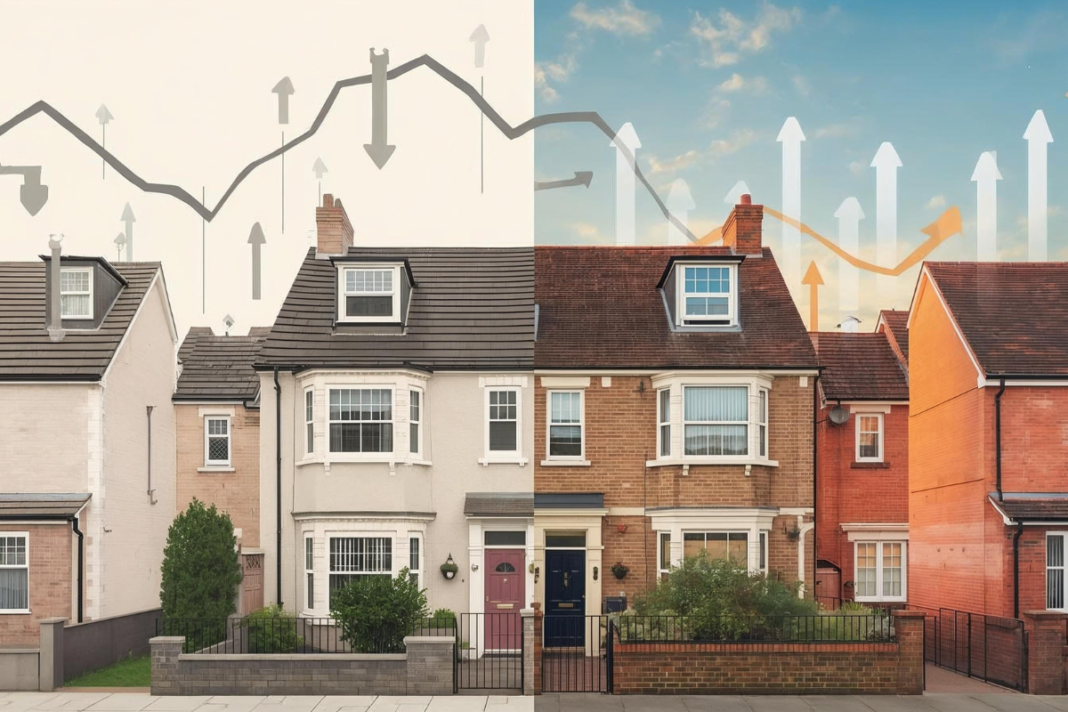
The average UK house price rose by 3.8% in the year to April 2026 to reach £270,000, up from zero annual growth recorded in March.
At the same time, private rental inflation continued to slow, with average UK rents increasing by 3.3% in the year to May, down from 3.5% the previous month. The average monthly rent across the UK now stands at £1,383.
The figures point to a market where house prices remain resilient despite affordability pressures, while rental growth is gradually easing from the record highs seen in recent years.
STAMP DUTY CHANGES
According to the ONS, the sharp rise in annual house price inflation was largely driven by a base effect following the stamp duty changes introduced in April 2025. House prices fell sharply during the same period last year, making annual comparisons appear stronger in 2026.
Across the UK, England recorded the strongest annual house price growth at 3.9%, taking the average property value to £291,000. House prices rose by 3.5% in Wales to £212,000 and by 2.8% in Scotland to £192,000.
While house price growth accelerated, the rental market continued to cool.
Average rents in England increased by 3.4% to £1,442 in the year to May, while rents in Wales rose by 4.7% to £836. Scotland saw the weakest rental growth at 1.0%, with average rents reaching £1,009.
London remained the region with the slowest rental inflation in England, recording annual growth of just 2.0%, while the North East saw the strongest increase at 5.9%.
AFFORDABILITY PRESSURES
The latest data suggests that affordability pressures continue to influence both the sales and rental sectors. Higher mortgage costs are still constraining buyer budgets, but house prices have remained supported by limited supply and steady demand.
Meanwhile, rental growth is slowing as tenants reach the limits of affordability after several years of rapid increases.

Nathan Emerson, CEO of Propertymark, says: “An increase in house prices reflects continued resilience within the housing market despite wider and ongoing economic pressures. While demand remains steady, affordability continues to be a challenge for many households, particularly first-time buyers.
“A well-functioning housing market relies on a balance between supply and demand, and long-term solutions are needed to improve affordability and consumer choice.
“With inflation remaining unchanged at 2.8%, there is further evidence that relative stability within the economy may be starting to return. Attention will now turn to tomorrow’s Bank of England interest rate decision, which will be closely monitored by consumers and businesses alike, given its influence on borrowing costs and market confidence.”
BIG RISK

Tom Bill, Head of UK Residential Research at Knight, says: “Ignoring the distortive effect of stamp duty, house prices and trading activity have moderated this spring due to the impact of higher mortgage costs.
“Without the typical seasonal bounce, the result is a market that feels flat rather than one that’s falling off a cliff.
“As the inflationary impact of the Middle East conflict lingers beyond any ceasefire and the Bank of England holds rates steady for the foreseeable future, we expect the mood to remain subdued.
“Domestic politics now represents the biggest risk, particularly if there is an ideological shift on tax and buyers and sellers have to again endure months of speculation ahead of the Budget.”
And he adds: “Rental value growth remains stubborn and rents are around a third higher than before Covid.
“The reality of the Renters’ Rights Act and the prospect of future legislation may encourage more landlords to sell up, which means tenants will continue to feel financial squeezed.”