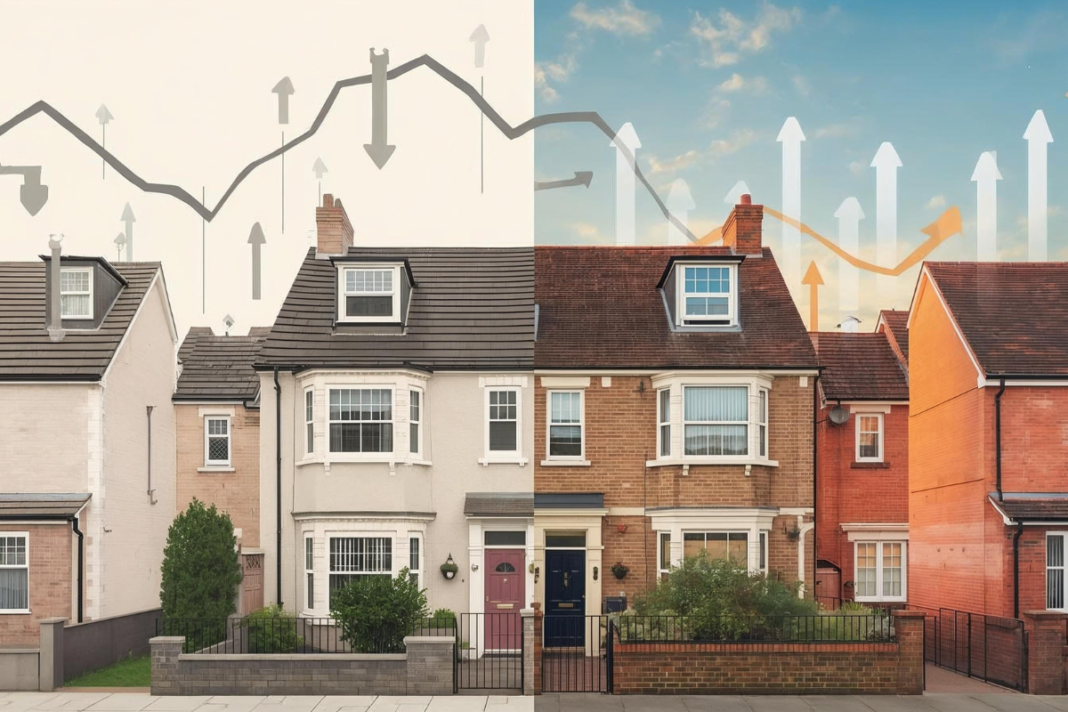
The gap between house and flat prices has reached its widest level in three decades according to latest analysis from Zoopla.
It seems affordability pressures and ongoing leasehold concerns are continuing to weigh on the flat market.
The property portal found that the average UK house now costs 1.7 times more than the average flat, up from 1.3 times a decade ago. Since 2016, average house prices have risen by 43%, while flat values have increased by just 10%.
The disparity is even more pronounced outside London, where the average house costs 2.3 times more than a flat, compared with 1.8 times in 2016. The West Midlands recorded the largest gap, with houses worth 2.5 times the value of flats.
RESHAPING THE MARKET
Zoopla says the trend highlights how affordability and buyer preferences are reshaping the housing market, with many first-time buyers outside London bypassing flats altogether and targeting houses where prices remain within reach.
The analysis also points to the impact of England’s leasehold system. Four in five flats listed for sale in England are leasehold, with the average owner paying around £200 a year in ground rent and £1,900 in service charges.
However Scotland, where long leaseholds do not apply and flat owners typically hold a share of the freehold, has seen little change in the relationship between house and flat prices over the last decade. The house-to-flat price ratio stands at 1.9 times, only marginally higher than the 1.8 recorded in 2016.
The differing market dynamics are also reflected in transaction speeds. Scottish flats take an average of 15 days to sell, matching the time taken to sell a house. Across England and Wales, flats typically take around 40 days to sell, eight days longer than houses.
HOUSE FLAT GAP
Richard Donnell (main picture, inset), Executive Director at Zoopla, says: “The gap between house and flat prices has never been wider, and for buyers who are prepared to do their homework, that presents an opportunity. For many, flats remain the main route into home ownership, particularly in London and the South East where the cost of buying a house is higher.
“Buying a leasehold flat is more complex than buying a house – lease length, service charges and ground rent terms all matter and vary significantly from one property to the next.
This complexity is not the same as risk, and the leasehold system is being actively reformed.
“Buyers who invest time to research and understand the system and get support can take advantage of the gap between flat and house prices.
“A well-managed building with a long lease and stable service charges is a very different proposition from a property with less clarity on service charges and a short lease.”