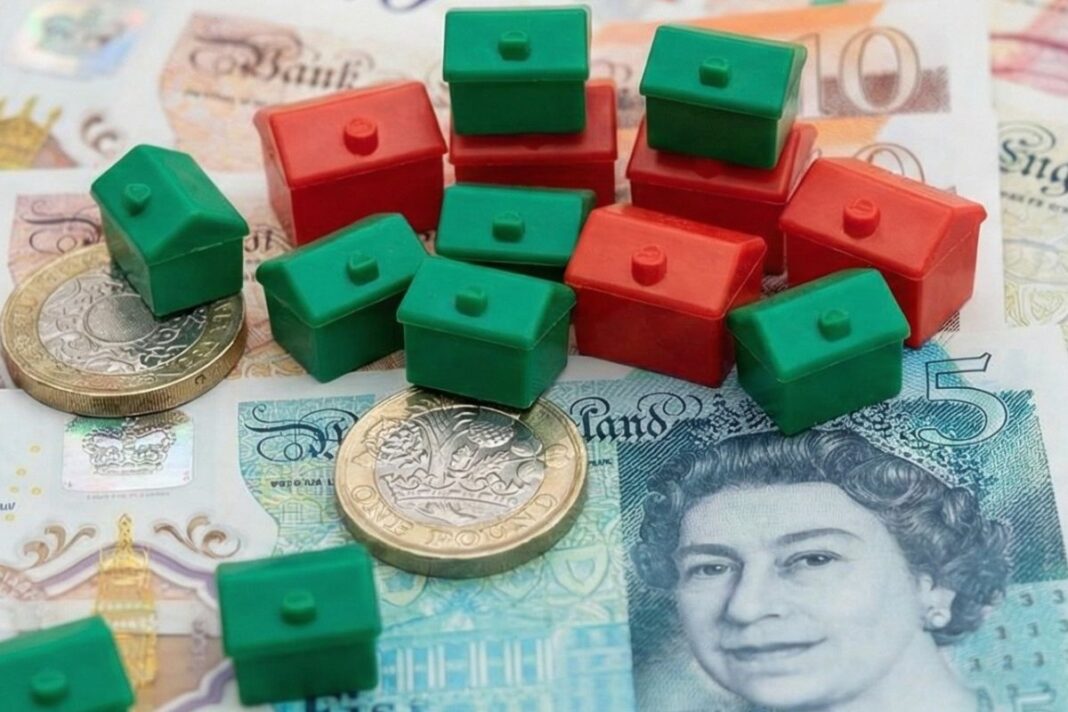
Homebuyers face renewed affordability pressure after UK inflation climbed above 3% as mortgage rates also move higher.
The Consumer Prices Index rose by 3.1% in the year to August, up from 2.9% in July, according to the Office for National Statistics.
The increase adds further pressure to household finances at a time when prospective buyers are already facing higher borrowing costs and property prices that remain above last year’s levels.
Separate official figures published today show the average UK property cost £273,000 in July, 1.4% more than a year earlier.
HOUSEHOLD PRESSURE
Inflation increased by 0.5% during August alone, compared with 0.3% in the same month last year.
Transport, particularly motor fuels, made the largest upward contribution to the increase in annual inflation.
Core CPI, which excludes energy, food, alcohol and tobacco, remained unchanged at 2.6%, while services inflation was also unchanged at 3.4%.
The wider CPIH measure, which includes owner occupiers’ housing costs, increased from 3.1% to 3.3%.
BUYER AFFORDABILITY
The inflation figures come as conditions have become more challenging for buyers relying on mortgage finance.
Fixed mortgage rates have been moving higher as lenders respond to increased funding costs, potentially reducing the amount some households can afford to borrow.
At the same time, house prices remain higher nationally despite growth slowing for a third consecutive month.
The latest UK House Price Index shows prices increased by 1.4% annually in July, although there are substantial regional differences.
London prices fell by 3.3% year-on-year while the North East recorded growth of 4.9%.
The combination of higher living costs and more expensive mortgage borrowing could put further pressure on household budgets as the autumn property market gets under way.
ROLLERCOASTER YEAR
Nathan Emerson (main picture, inset), CEO of Propertymark, says: “The year to date has been a considerable rollercoaster for many households, with rising costs putting increasing pressure on household finances. Consumers have rightly shown caution around longer-term, high-value borrowing, with the impact being felt across the housing market.
“With inflation tracking upwards, tomorrow’s base rate decision will be closely watched and could have a direct impact on the housing market as we head towards the Autumn Budget.
“The housing market remains finely balanced, with key factors such as higher food and energy costs continuing to weigh on consumer confidence and ongoing affordability.”
CRITICAL MIDDLE

Neil Rudge, Chief Banking Officer at Shawbrook, adds: “When inflation ticks up, the conversation rightly turns to households.
“But there is another group that barely gets a mention. Medium-sized businesses are the shock absorbers of the UK economy, absorbing higher input costs while trying to limit the impact on their customers and employees. That often means tighter margins, delayed investment and harder choices.
“If inflationary pressure persists, it is this critical middle that will quietly carry much of the load. Their contribution, and the trade-offs they are making, deserve far more attention than they currently receive.”