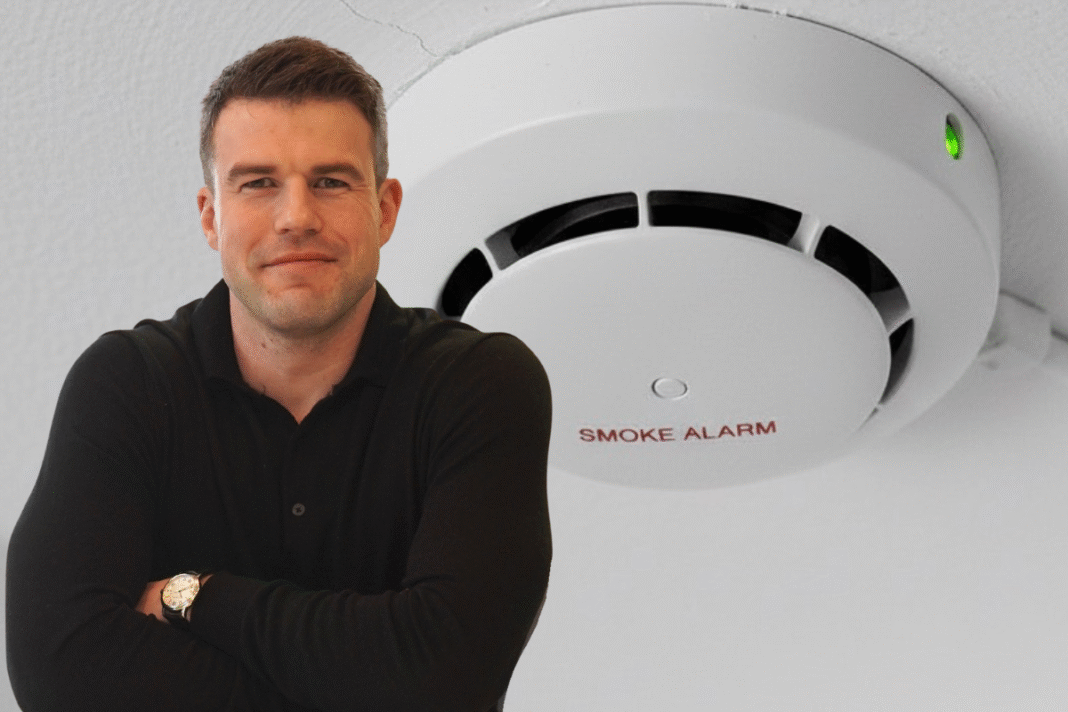
Fire and rescue services attended more than 56,000 false alarms at purpose-built flats in England last year, equivalent to around 153 callouts every day.
Government figures analysed by fire software provider Drax Technology show 56,105 false alarm incidents during the year ending March 2026.
That represents an increase of around 4% from 54,125 during the previous year.
Purpose-built flats account for around 22% of the 255,047 false fire alarms attended across all property types in England during the period.
COOKING TOPS FALSE ALARM CAUSES
Cooking is the biggest individual cause, triggering more than 13,500 false alarms, including incidents involving burnt toast.
However, equipment problems also account for a significant proportion of emergency responses.
On 12,232 occasions, alarm equipment is recorded as faulty, damaged, poorly maintained or incorrectly positioned.
Other common causes include alarms being carelessly or unnecessarily activated and steam triggering detection systems.
The figures also demonstrate the potential demand placed on emergency services, with more than 15 fire and rescue vehicles mobilised to each of five false alarm incidents.
‘ALARM FATIGUE’ WARNING
David Simpson (main picture, inset), Group Product Director at Drax Technology, says: “False fire alarms disrupt residents, create extra work for on-site property teams and, if they happen too often, lead to ‘alarm fatigue’, where people become less likely to react when an alarm sounds.
“Every alarm needs to be investigated rapidly and giving teams the right information from the outset makes that much easier. The sooner they understand what’s happened, the sooner they can rule out a false alarm or respond to a genuine incident, reducing unnecessary disruption.”
Drax Technology says greater use of remote monitoring and data could allow property managers to identify recurring faults and target maintenance more effectively.
Simpson says: “Every alarm generates valuable data. Capturing that information within a single digital platform helps property managers understand why alarms occur, identify recurring faults and target maintenance more effectively.
“Over time, that insight helps reduce repeat incidents and improve fire safety across entire portfolios.”
BTR AND PBSA PORTFOLIOS
The company says this can be particularly important for Build to Rent and purpose-built student accommodation operators managing multiple buildings and large numbers of residents.
Simpson adds: “Rather than treating every alarm as an isolated event, teams can respond more effectively, learn from what happened and build a stronger ‘Golden Thread’ of how each incident was managed.”
There is no standard national fee for fire and rescue services attending false alarms, although some services can impose cost-recovery charges in certain circumstances involving repeated false alarms at non-domestic premises.