


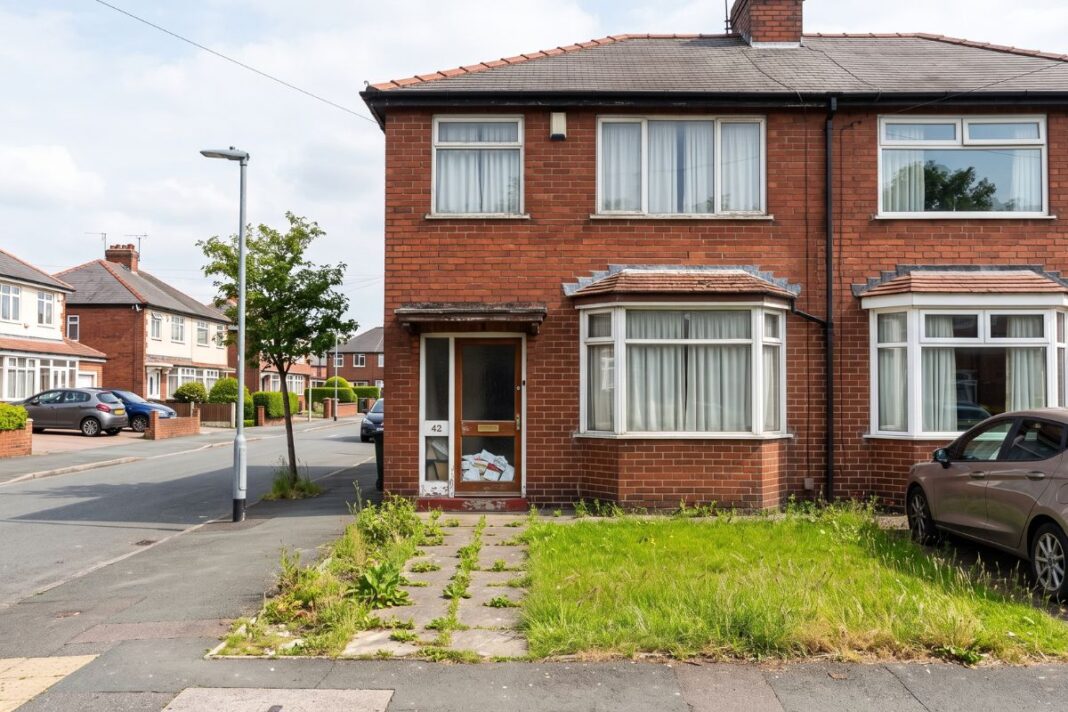
Councils will be able to take control of homes left empty for just six months under government reforms aimed at bringing more than 300,000 long-term vacant properties back into use.
Ministers are cutting the qualifying period for an Empty Dwelling Management Order (EDMO) from two years to six months as part of an overhaul of powers that have historically been rarely used.
The change comes as the number of long-term empty homes in England has climbed to more than 303,000, according to analysis by Action on Empty Homes of government data — up 14% in a year and more than 50% since 2016.
EDMOs allow councils to take over management of privately owned empty properties and return them to occupation for up to seven years without changing their ownership.
SIX-MONTH TRIGGER
The Government is effectively reversing restrictions introduced in 2012, when the qualifying period was increased from six months to two years.
Those changes also required councils to demonstrate issues including nuisance caused by the property and community support before securing an order.
Under the latest reforms, the six-month threshold will be restored and evidential requirements relating to anti-social behaviour and community support will be removed.
Ministers say this should allow councils to intervene before vacant properties fall into serious disrepair and simplify applications to the Residential Property Tribunal.
RARELY USED POWER
The challenge will be whether councils actually make greater use of the orders.
The Ministry of Housing, Communities and Local Government confirmed last year that it does not collect figures on the number of EDMOs issued.
However, a House of Lords debate in July cited around 200 orders being used since the power was introduced in 2006 and none during 2023-24. Peers described the existing process as complex and difficult for councils to use.
The reforms come alongside existing powers allowing councils to impose council tax premiums on long-term empty properties.
Official figures show 153,000 empty homes were subject to an Empty Homes Premium in 2025, up 28% in a year.
The Government says it is considering further reforms to strengthen EDMOs and encourage councils to use the powers more effectively.
London long-term empty homes more than double in nine years
The number of long-term empty homes in London has more than doubled since 2016, highlighting the scale of the challenge facing councils as they are handed stronger powers to bring vacant properties back into use.
There were 47,287 long-term empty homes across the capital in 2025, according to Action on Empty Homes’ analysis of official council tax data.
That represents a 23% increase in just a year and a 138% rise since 2016.
Total residential vacancy in London, including other categories of empty property, has meanwhile reached 161,116 homes — equivalent to around one in every 24 properties.
EMPTY HOMES RISE
London is the only English region where the number of long-term empty homes has increased every year since 2016, according to Action on Empty Homes.
The increase comes despite intense pressure on housing supply and affordability across the capital.
Nationally, the number of long-term empty homes reached 303,185 in 2025, up 14% in a year and more than 50% since 2016.
But London’s increase has been considerably sharper, with the number of properties remaining empty for more than six months rising by 138% over the nine-year period.
NEW COUNCIL POWERS
The figures provide fresh context for government reforms announced this weekend to make it easier for councils to use Empty Dwelling Management Orders.
Under the changes, councils will be able to seek an EDMO after a property has stood empty for six months rather than the current two years.
The Government is also removing requirements for councils to provide evidence relating to issues including anti-social behaviour and community support when seeking an order.
EDMOs allow local authorities to take over management of privately owned empty homes and return them to occupation without taking ownership of the property.
Action on Empty Homes argues that existing EDMO rules have limited councils’ ability to tackle London’s growing number of vacant properties and has called for stronger powers alongside investment to return more empty homes to residential use.