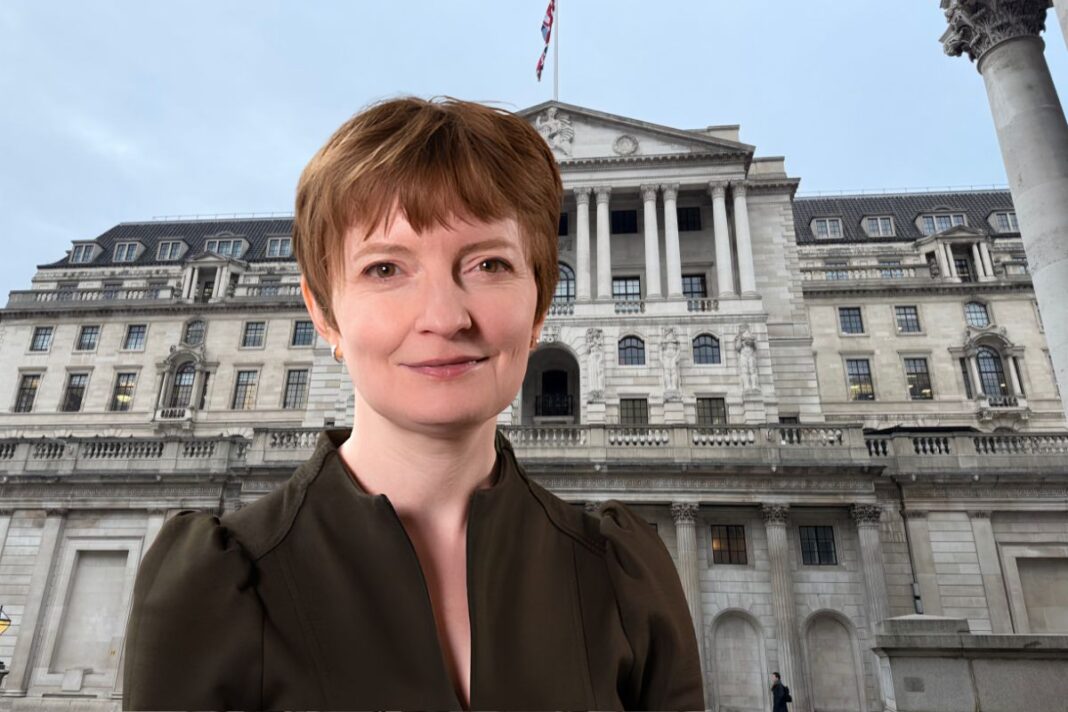
The prospect of another Bank of England rate rise is increasing as policymakers become more concerned that higher energy costs could fuel persistent inflation.
Deputy Governor Clare Lombardelli (main picture, inset) says the longer energy prices remain high and volatile, the greater the risk that increases spread into wages and prices across the wider economy.
Her warning comes after the Monetary Policy Committee voted 6-3 to hold Bank Rate at 3.75% this month, with three members already backing an increase to 4%.
Higher market rates are meanwhile feeding through to borrowing costs, with the Bank reporting that quoted two-year fixed mortgage rates are around 0.95 percentage points higher than before the Middle East conflict began.
RATE PRESSURE
UK inflation increased to 3.1% in August and the Bank now expects it to rise to around 3.75% during the final quarter of this year before moving slightly above 4% in early 2027.
The Bank says higher global energy prices are driving much of the increase, with Brent crude and UK wholesale gas prices rising 36% and 78% respectively since the period preceding its July Monetary Policy Report.
Lombardelli, who voted to leave rates unchanged this month, says monetary policy is already leaning against the risk of persistent inflationary pressures.
She says: “The longer energy prices remain high and volatile, the greater the risk for pass-through more widely into domestic wages and prices.”
MORTGAGE COSTS
The MPC is increasingly divided over how quickly it should respond.
Megan Greene, Catherine Mann and Huw Pill voted for an immediate quarter-point increase this month, while Governor Andrew Bailey was among those backing a hold.
However, Bailey says that if the Middle East conflict persists and the danger of second-round inflation increases, monetary policy may need to tighten.
Lombardelli similarly says the case for increasing Bank Rate is building the longer the conflict continues without a lasting resolution.
The Bank says financial markets are also assigning greater probability to near-term rate increases, although policymakers stress that the outlook remains highly uncertain.
The shift raises the prospect of mortgage rates remaining higher for longer – and potentially increasing further – as lenders respond to changing market expectations for Bank Rate.