Estate agents marketing flats have been warned that building safety documentation can make apparently similar properties very different propositions for buyers.
The warning comes as thousands of residential buildings continue to undergo or await remediation for unsafe cladding, potentially adding another layer of complexity to leasehold sales.
Government figures show 4,697 residential buildings of 11 metres or more in England were being monitored for unsafe cladding at the end of July.
Remediation had been completed on 1,833 – 39% – while work had started on another 718. Some 2,146 buildings, equivalent to 46% of those being monitored, had yet to start remediation.
SALES COMPLEXITY
Moving Compared says agents and buyers need to look beyond the condition of an individual apartment and understand the position of the wider building.
Important information can include whether historic safety defects have been identified, the progress of remediation, how outstanding work is being funded and whether leaseholders benefit from statutory protections.
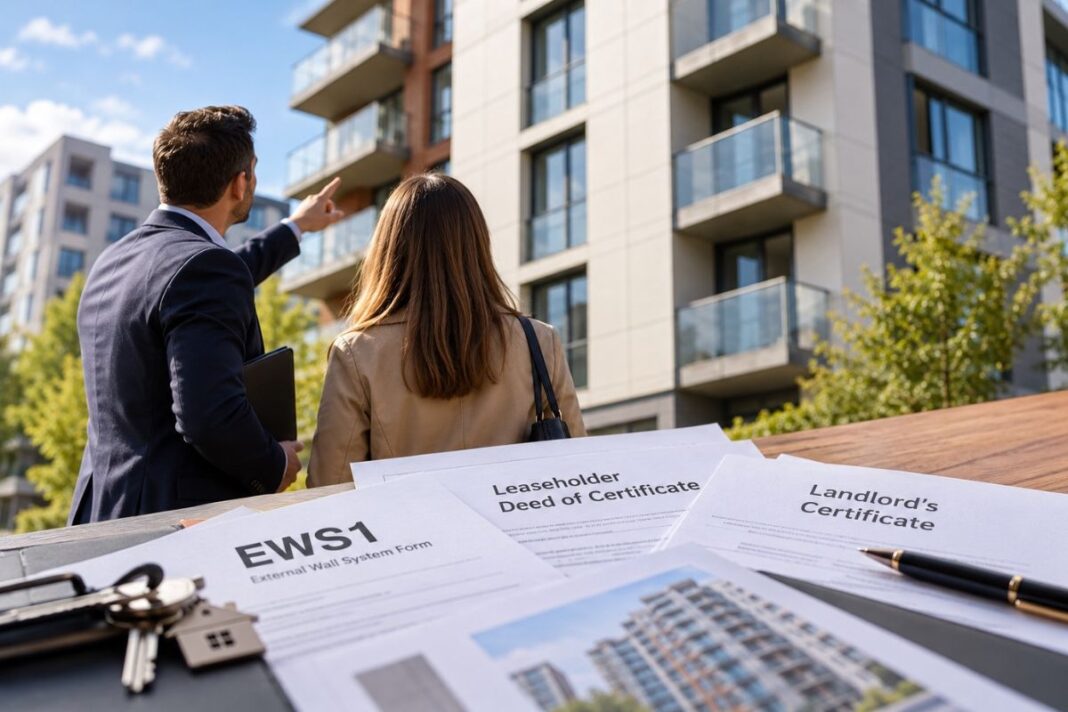
A Leaseholder Deed of Certificate can help establish whether a qualifying lease benefits from protections under the Building Safety Act, while a Landlord’s Certificate can provide information relevant to responsibility for certain defects and remediation costs.
EWS1 forms can also be relevant to lenders and valuers assessing external wall systems, although they are not required for every apartment building and should not be regarded as a general certificate declaring a building safe.
REMEDIATION PROGRESS
The status of remediation can also vary significantly between developments.
A Moving Compared spokesperson says descriptions such as “remediation planned” can cover everything from a project with funding secured and contractors appointed to one where responsibility and timescales remain unresolved.
The company says these issues can generate additional conveyancing enquiries alongside the service charge and management information already associated with leasehold transactions.
For agents, establishing the building’s position early could therefore help ensure buyers and their advisers understand potential issues before a transaction is well advanced.