Andy Burnham has placed housing at the centre of his new government, announcing a £340m drive to tackle rough sleeping and pledging to build more council homes.
In his first speech as Prime Minister, Burnham said his government would act as a “circuit breaker for Britain” and introduce significant changes to the country’s political and economic model.
The former Greater Manchester mayor promised to put essential services under stronger public control, reindustrialise the economy and devolve more power from Westminster.
A detailed 10-year plan will be published later this year, while immediate measures to ease cost-of-living pressures are due to be announced tomorrow.
END ROUGH SLEEPING
Burnham also confirmed that his first instruction to officials would be to end rough sleeping. The government subsequently announced an additional £340m as the first stage of a wider five-year programme.
The funding will support the acquisition of suitable properties and provide 1,200 homes and intensive assistance for at least 3,000 people experiencing severe and long-term homelessness.
Mayors, councils, the NHS and other public services will be involved in delivering the programme, with further measures promised before the autumn.
The government cited research from homelessness charity Crisis estimating that one year of rough sleeping costs public services £20,128 per person, compared with £1,426 for a successful prevention intervention.
“This is something a government can fix if it chooses to. Today, I’m choosing to.”
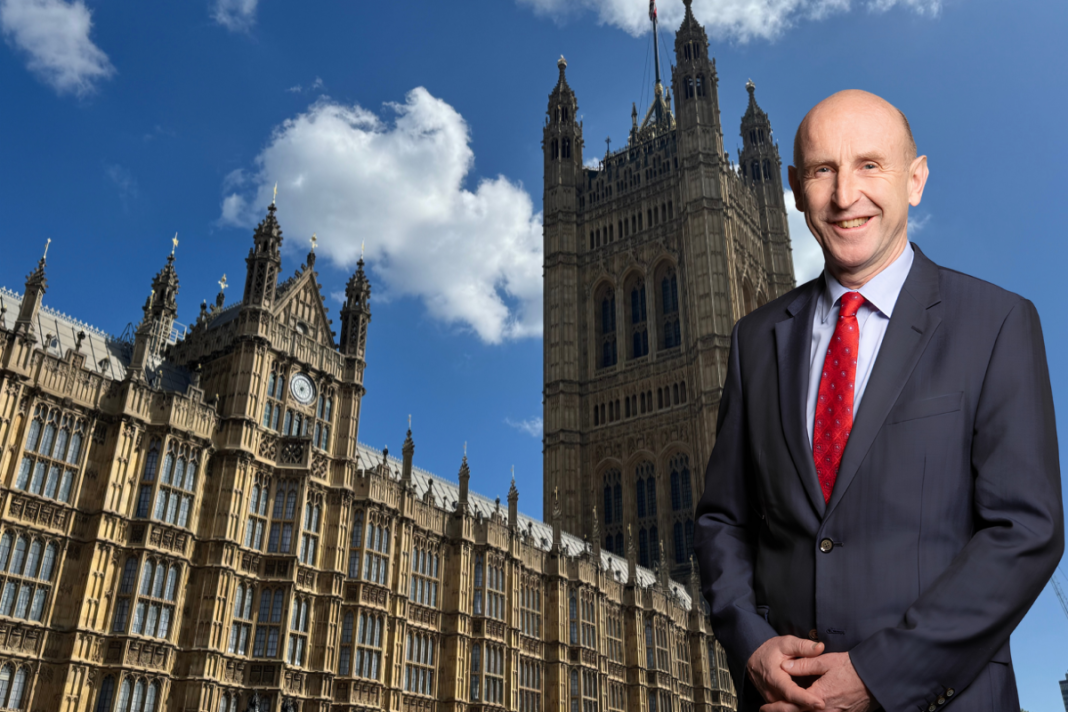
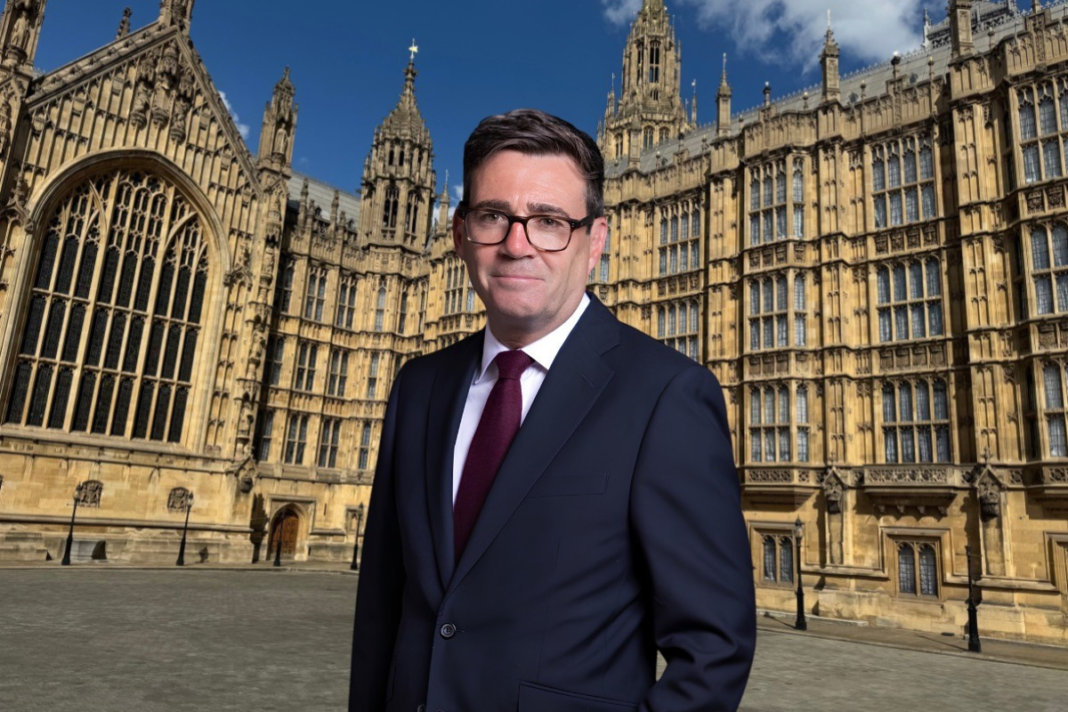
Burnham (main picture, inset) said: “For too long, we’ve been told that ending rough sleeping will take decades or even that it’s impossible. I’m not having that.
“This is something a government can fix if it chooses to. Today, I’m choosing to.
“On my first day as Prime Minister, I’m announcing this government’s commitment to finally end long-term rough sleeping across the UK at the earliest opportunity.
“We’ll get to work immediately, bringing together national and local government with the investment needed to get it done.
“This is the kind of Britain I want us to be – a country where everyone has the security of a roof over their head, and where no one is left behind or written off. Let’s bring back hope.”
Burnham also linked increased council housebuilding with reducing the welfare bill, arguing that greater housing provision would help the government meet its fiscal and defence commitments.
INDUSTRY REACTS TO BURNHAM AS PM
Nathan Emerson, CEO of Propertymark, says: “Propertymark welcomes Andy Burnham to Downing Street, and we look forward to learning more about proposals aimed at addressing current housing concerns.
“There are many complex challenges that remain regarding the delivery of a sustainable mix of affordable housing across each region.
“Over the coming months, it will be essential that the sector has a clear opportunity to engage with the UK Government on key housing issues, helping to ensure that the manifesto commitment to deliver 1.5 million homes across England becomes a reality.
“Looking at the bigger picture, a diverse housing mix must be delivered with a regional focus and supported by robust local infrastructure. Building homes is the challenge; building well-designed, functional communities must be the goal.”
TIME TO RESTORE CONFIDENCE

Nick Leeming, Chairman of Jackson-Stops, says: “Andy Burnham takes office having placed housing firmly at the top of his agenda. Building more homes is essential, but the health of the market also depends on helping existing homes circulate more freely, so that more people can make the move that is right for them.
“Our latest research suggests that removing stamp duty costs could bring more than 300,000 owner-occupied homes onto the market across England within less than a year. At the same time, 42% of those whose moving plans have been delayed cited economic uncertainty as a reason.
“The new Government therefore has an opportunity to restore confidence in the market by combining a clear commitment to housebuilding with stable economic management and a serious review of the upfront costs that continue to hold back buyers and sellers.
“If that can be achieved, we should see momentum return, more transactions progress and more people able to move when the time is right for them.”
BELIEVE IN FAIRY TALES

Trevor Abrahmsohn, Chief Executive of Glentree International, says: “We will build 1.5million new homes over the course of the Parliament; we will see the biggest increase in social and affordable housing for generations; we pledge to prioritise new social rented homes; we plan to reform the planning system to make developments easier and faster; we plan to prevent developers from avoiding affordable housing obligations; we will give first time buyers priority on many new developments and we will reform compulsory purchase rules so land can be assembled more cheaply.”
“Who said this? Was this the rhetoric from our new Prime Minister ‘Mr. Dweeb’ from ‘oop North’?
“No, it wasn’t, it was the joint statement of the former Prime Minister Sir Keir Starmer and Angela Rayner in their proclamations before the last Election in 2024.
“Listening to the new PM on the steps of Number 10 today, it all sounds remarkably familiar and, believe it or not, some of the nudniks out there, who support the Labour Party, actually believe it’s true.
“Should we believe in fairy tales?”
PULL THE BUILD TO RENT LEVER
Brendan Geraghty, CEO of The ARL, says: “The Association for Rental Living (ARL) welcomes Andy Burnham as the Leader of the Labour Party and Prime Minister of the UK.
“As the representative body for the institutionally backed, professionally managed rental living sector including Build to Rent, the ARL welcomes the Prime Minister’s belief that “everything starts with a good home”, an approach that recognises the critical importance of housing to the economic and social fabric of the nation, something that we have long called for.
“The Build to Rent sector has demonstrated over the last decade that institutional rental housing can deliver additional good homes, at scale and at pace, and is perfectly placed to offer hundreds of thousands more new homes, together with accountable standards, resident trust, public value and investable delivery capacity, in partnership with local authorities and the National Housing Bank.
“We support policies, together with the pledged stability of politics, that enable the delivery of new homes of all tenures and call upon the Prime Minister to pull the Build to Rent lever to realise the potential of institutional rental housing in addressing the housing crisis this nation faces, once and for all.”
CALRITY AND ENGAGEMENT

Rebecca Shafran, Head of Commercial Research, BNP Paribas Real Estate UK, says: “The consensus over the direction of travel signalled to date – more devolved planning power, a renewed focus on land and property taxation, and a bigger role for the state in housebuilding – could help to address real and long-standing problems in the UK’s housing and investment markets.
“But it remains speculation at this point rather than policy, and that uncertainty is already a factor for investors and developers approaching investment decisions.
“As these proposals take shape, we’d suggest three things. First, clarity, the sooner the government clearly sets out what it intends to do on property taxation, the sooner the market adjusts as prolonged speculation can be more damaging to investment and transaction activity than the policy itself.
“Second, meaningful engagement with the industry before any changes are finalised, particularly given the viability pressures already facing development.
“And lastly, sensible transition periods for any reform, providing reasonable time to adjust rather than sudden changes.
“Real estate has a critical role to play in the government’s growth and housing ambitions. Getting the sequencing and detail right will determine whether this becomes a genuine opportunity for the sector or a further source of uncertainty.”
GOLDEN OPPORTUNITY

Tina McKenzie, Policy Chair of the Federation of Small Businesses (FSB), says:
“We extend a warm welcome to Andy Burnham as he takes on the most important role in public life. This is a golden opportunity to restart the Parliament, go for growth, and get it right on supporting small businesses.
“The new Prime Minister has set out a positive, pro-small business stall in recent weeks, and we are optimistic that he can galvanise the new government to make these plans a reality. That will mean reworking the mistakes on business rates made by the last government, by increasing Small Business Rate Relief, acting on costs after the sledgehammer of National Insurance rises, and scrapping pointless paperwork that holds business back.
“Where the last government did get things unquestionably right – such as the new late payment laws currently going through the Lords – we need the new Prime Minister to stand firm behind small firms.
“This must include taking novel steps to drive change through the system, including opening up procurement and making sure that decisions that impact local communities are made locally.
“For the Prime Minister to get growth in every postcode, he needs to back the UK’s 5.7 million small businesses which are at the heart of local economies and communities right across the country.”