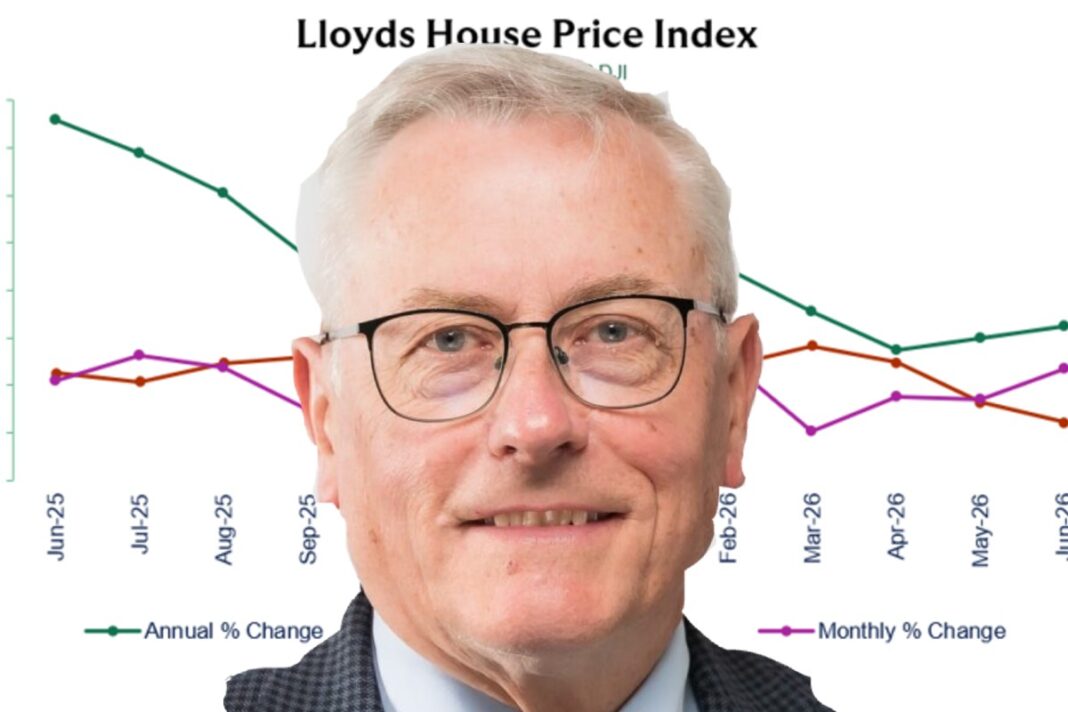
Average UK house prices have increased for the first time since the outbreak of the Iran war but the figures may just be temporary respite for a troubled market as affordability pressures remain.
The newly-named Lloyds House Price Index, rebranded since the bank retired the Halifax name, revealed that average property values rose 0.2% in June on monthly basis.
Average prices have been falling since February and were down 0.2% in May.
Meanwhile, annual growth was at 0.6% compared with 0.5% a month before, putting average UK house prices at £299,330.
REGIONAL DIVIDE
On a regional basis, Northern Ireland continues to record the strongest annual house price growth in the UK, with average prices up 7.4% over the past year to £229,000, Lloyds said.
Scotland has the next highest annual growth at +3.9%, with average prices of £223,277.
In Wales , property price growth strengthened by 0. 9% on annual basis to £ 231,142.
Meanwhile in England, stronger price growth remains concentrated in northern regions. The North East saw prices rise 2.8% over the year to £181,133, while the North West recorded annual growth of +2.4%, with the average property now costing £248,218.
In contrast, southern markets continue to see prices fall. The South East led declines, with prices down 2% year-on-year to £381,654, while London saw average values fall by 1.1% to £534,831 .
Amanda Bryden, head of mortgages at Lloyds, says: “Recent price trends continue to reflect wider economic uncertainty, including the impact of global events on inflation and interest rate expectations. While affordability remains stretched for many buyers, mortgage rates have eased from their recent highs, offering some encouragement to those considering a move.
“While latest industry data shows the number of new mortgage approvals dropped in May, this wasn’t unexpected given the spike in rates seen earlier this year, and we’d expect to see activity recover assuming borrowing costs continue to fall.
“Looking ahead, we expect the housing market to continue moving at a measured pace. Lower borrowing costs should provide some support for demand, though affordability constraints remain an important factor. The outlook for house prices will depend largely on inflation continuing to ease and household confidence gradually improving.”
CAUTIOUS OPTIMISM

Commenting on the index, Nathan Emerson, chief executive of Propertymark, was more cautious.
He says: “When taking a broad view of the property market and the wider economy, it is encouraging to see average UK house prices deliver growth, both month on month and year on year.
“However, with Bank of England data showing mortgage borrowing has fallen for a second consecutive month, it will be important to keep close check on how this affects house prices over the summer.
“While consumer confidence remains relatively stable, the coming months will be key to monitor as the economy looks to hopefully strengthen.
“Across the summer, attention will also likely turn to new political leadership and what a change in prime minister could mean for the property sector. Housing remains central to economic growth and must be a priority across all nations within the UK.”