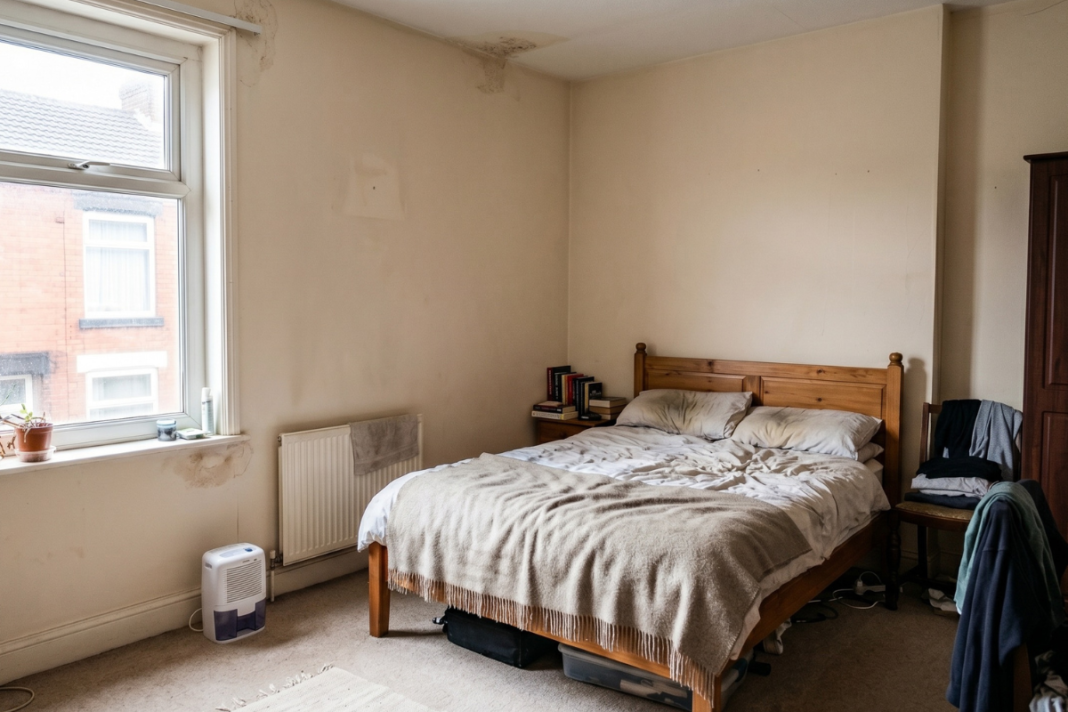
Housing providers, operators and letting agents are being warned that the next phase of Awaab’s Law will require a fundamental shift from reactive repairs to proactive risk management.
Property inspection platform Inventory Base says many organisations remain focused on damp and mould remediation, despite incoming regulations extending legal responsibilities across a much broader range of housing hazards.
The warning comes as government housing data highlights the scale of wider property risks. While an estimated 155,000 homes contained Category 1 damp hazards in 2024, around 940,000 homes were found to have Category 1 fall hazards on stairs and a further 635,000 suffered from excess cold.
The first phase of Awaab’s Law introduced strict timescales for investigating and addressing damp and mould issues in social housing. However, forthcoming changes will extend those principles to hazards including excess heat and cold, fire and electrical risks, structural safety, falls, hygiene concerns and food safety.
EVIDENCE AND ACCOUNTABILITY
Inventory Base believes the changes will place greater emphasis on evidence, accountability and audit trails, requiring housing providers to demonstrate not only that hazards were addressed, but when they were identified and what action was taken.
The warning coincides with the introduction of the Housing Health and Safety Rating System (England) (Amendment) Regulations 2026, which come into force on 23 June. The reforms simplify hazard categories, replace the existing A-J banding system with High, Medium and Low ratings, and aim to make housing risks easier to understand and communicate.
The company predicts that property inspections will become increasingly digital and evidence-led, risk assessments will move towards continuous monitoring of property condition, and compliance reporting will rely more heavily on auditable operational data.
RISK IDENTIFICATION

Sián Hemming-Metcalfe, Operations Director at Inventory Base, says: “Damp and mould have been the catalyst for change, but Awaab’s Law is rapidly becoming something much bigger.
“There’s still a perception in some parts of the sector that this is primarily a damp and mould regulation, but that’s a dangerous misunderstanding.
“The direction of travel is clear: housing providers will increasingly be expected to prove they identified risks, assessed them correctly and acted within a defensible timeframe.”
PROACTIVE MANAGEMENT
She adds: “The real challenge isn’t repairs, it’s visibility. You can’t respond to a hazard within regulatory timeframes if you don’t have accurate information about the condition of a property, the risks present and a clear record of when those risks were identified.
“As regulators, residents and legal teams place greater emphasis on evidence, organisations need to be able to demonstrate what they knew, when they knew it and what action they took.
“Those that adapt early won’t just reduce compliance risk. They’ll gain something far more valuable: visibility across their portfolios.
“In an environment increasingly shaped by regulation, resident scrutiny and legal accountability, that visibility will be the difference between proactive management and permanent firefighting.”