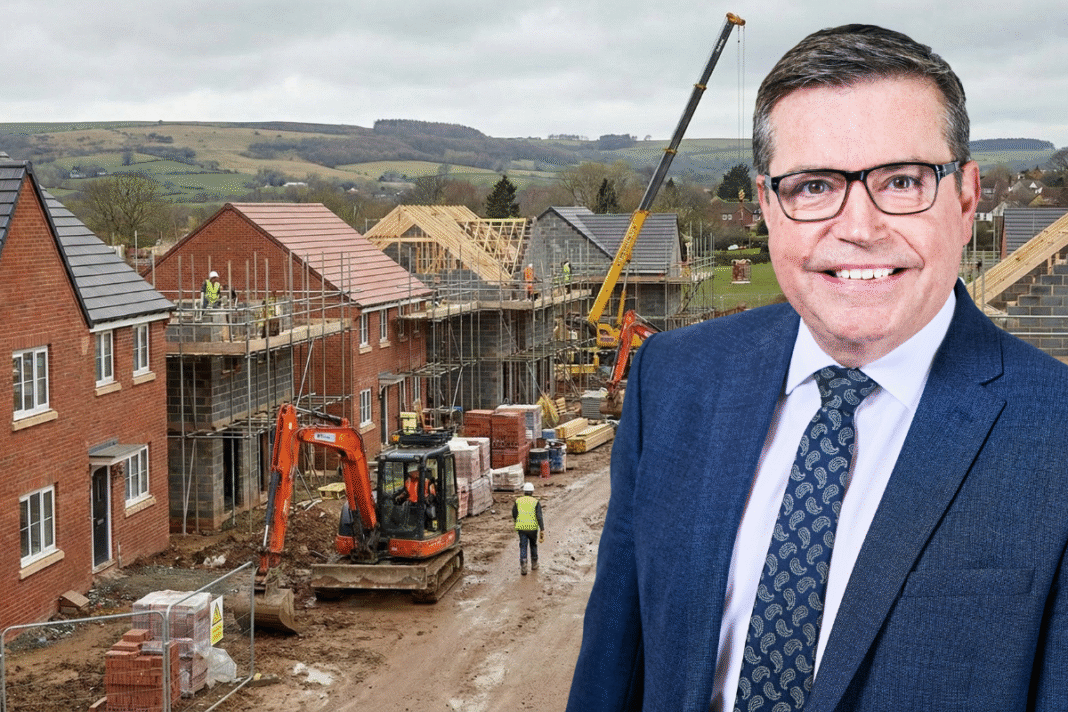
Meeting the UK’s housing need is no small task. With a shortfall of 2.5 million homes in England alone and a new government promising 1.5 million completions before the general election, the pressure on housebuilders has never been greater.
Yet increasing supply is not simply a numbers game. What we build – the mix of sizes, styles and tenures – matters just as much as how many homes we deliver.
For decades, the industry has recognised the importance of place-making, but in practice many large schemes, for various reasons, still lean towards a narrow offer: apartments in city centres, or four-bedroom houses in the suburbs.
That approach risks slowing sales, limiting absorption and undermining community cohesion. Diversity is not only good planning – it is good business.
VARIETY DRIVES VELOCITY
At Woodhurst Park in Warfield, Berkshire, LRG has seen first-hand how a broad housing mix accelerates delivery.
The scheme spans everything from apartments and starter homes to substantial detached houses and later living options.
Because it appeals to first time buyers, growing families, downsizers and renters alike, sales have kept pace with projections and the development has avoided the costly overruns that often plague large sites.
This experience is far from unique. Government-commissioned research – from the Letwin Review to analysis by the Ministry of Housing, Communities and Local Government – shows that absorption rates are significantly faster on mixed tenure sites.
“The more market segments a site can serve, the more buyers or renters there are at any one time.”
Developments that include affordable housing and Build to Rent (BTR) typically build out 30% to 60% quicker than mono-tenure estates. The reason is simple: the more market segments a site can serve, the more buyers or renters there are at any one time.
For housebuilders, this is commercially critical. A faster sales rate means improved cash flow, lower interest costs and reduced exposure to market downturns.
It also allows land to be recycled more quickly into the next project, supporting the government’s wider growth agenda.
MEETING REAL-WORL DEMAND
Delivering a variety of homes is also about matching genuine need. Today’s buyers and renters are not homogenous.
Many first-time buyers have been priced out by high deposits and squeezed affordability.
At the same time, the downsizer market is evolving: buyers in their 60s and 70s increasingly seek well-designed, low-maintenance houses with enough space for visiting family – not just retirement apartments.
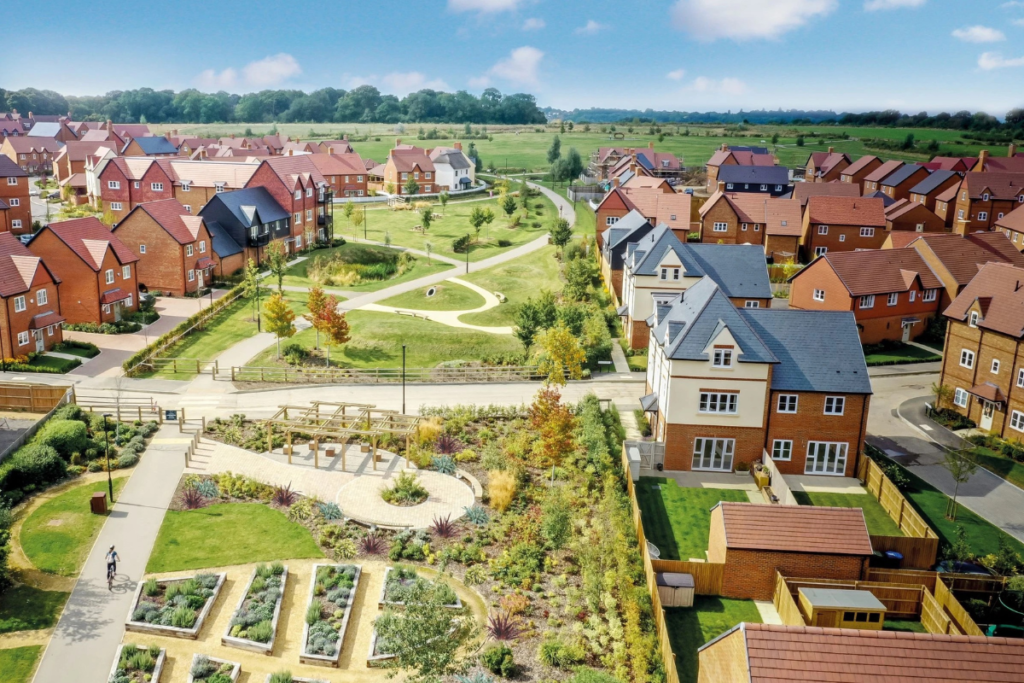
Developers have responded. At Woodhurst Park, large three-bedroom homes have proved popular with downsizers who want flexibility for hobbies, home offices or visiting grandchildren, while enjoying the “lock up and leave” ease of a new build.
This cohort is financially resilient and often chain-free, providing a dependable stream of purchasers who free up family homes elsewhere in the market.
Similarly, offering BTR or shared ownership alongside open-market sales can unlock new demand.
BTR appeals to long-term renters seeking professionally managed homes; shared ownership creates a route for households otherwise shut out of ownership. Both bring depth to the buyer pool and help schemes maintain momentum through economic cycles.
AFFORDABILITY AND THE FILTERING EFFECT
There is a broader market benefit too. Research by Public First highlights how building a range of homes – particularly larger, higher-value ones – helps overall affordability.
When better-off households move up into spacious new builds, they release smaller, cheaper homes further down the chain. This “filtering” effect expands supply where first time buyers need it most.
Trying to dictate a single product – for instance, mandating large numbers of starter flats in markets where aspirational family housing sells better – can backfire.
Developers know local demand patterns intimately; giving them scope to balance the mix creates the most efficient outcomes for affordability and build-out speed alike.
PLANNING POLICY MUST SUPPORT MIX
The government’s planning reforms (specifically the Planning Reform Working Paper: Speeding Up Build Out and Technical consultation on implementing measures to improve Build Out transparency) rightly focus on speeding delivery, but supply-side policy alone will not solve the housing crisis if absorption remains constrained.
Equally important is a planning process that supports, rather than hinders, product flexibility.
Too often, prescriptive local policies lock developers into a set housing mix agreed years before first sales.
In a market where buyer demand shifts rapidly – influenced by mortgage rates, demographics and tax policy – developers need the freedom to adjust mix without triggering lengthy re-applications.
UNDERSTANDING BUYER PSYCHE
Variety is not just about price points; it is about lifestyle and aspiration.
The pandemic reshaped housing preferences: space to work from home, gardens, walkable amenities and green infrastructure now rank highly.
Developments that combine smaller units for young professionals with generous family homes, later living options and BTR apartments can foster genuinely mixed communities where people can move as their lives change.
This “lifetime community” model, of which Woodhurst Park is such a good example, also strengthens local support for development.
Residents are more likely to welcome growth when they see it delivering homes for their children, parents and themselves – not just one homogenous product.
That support can be crucial in navigating local politics and reducing resistance at planning stage.
A PRAGMATIC CALL TO ACTION
Housebuilders face a complex market: interest rates are gradually reducing but affordability remains stretched; legislative changes from increased regulations to future leasehold reform add uncertainty.
Yet the fundamentals of demand are strong and our experience on the ground is of rising buyer registrations and improving confidence.
To capitalise, the industry must focus not only on how many homes it builds but on how well those homes serve the full spectrum of demand.
That means embracing partnerships with housing associations and institutional investors to deliver affordable and BTR homes alongside market sale.
It means designing flexible, future-proof houses that appeal to downsizers and families alike. And it means engaging with planners and policymakers to secure frameworks that reward, rather than penalise, diversity.
If we want to hit 370,000 completions a year, we must make every site work harder.
If we want to hit 370,000 completions a year, we must make every site work harder. As Woodhurst Park shows, mixed, inclusive communities unlock new demand, accelerate build-out and leave a legacy of thriving neighbourhoods.
For government, this is the low-cost lever that can complement planning reform: create space for product diversity and partner models, and the private sector will deliver at pace.
For developers, the message is equally clear. Build for everyone – and the market will keep moving.