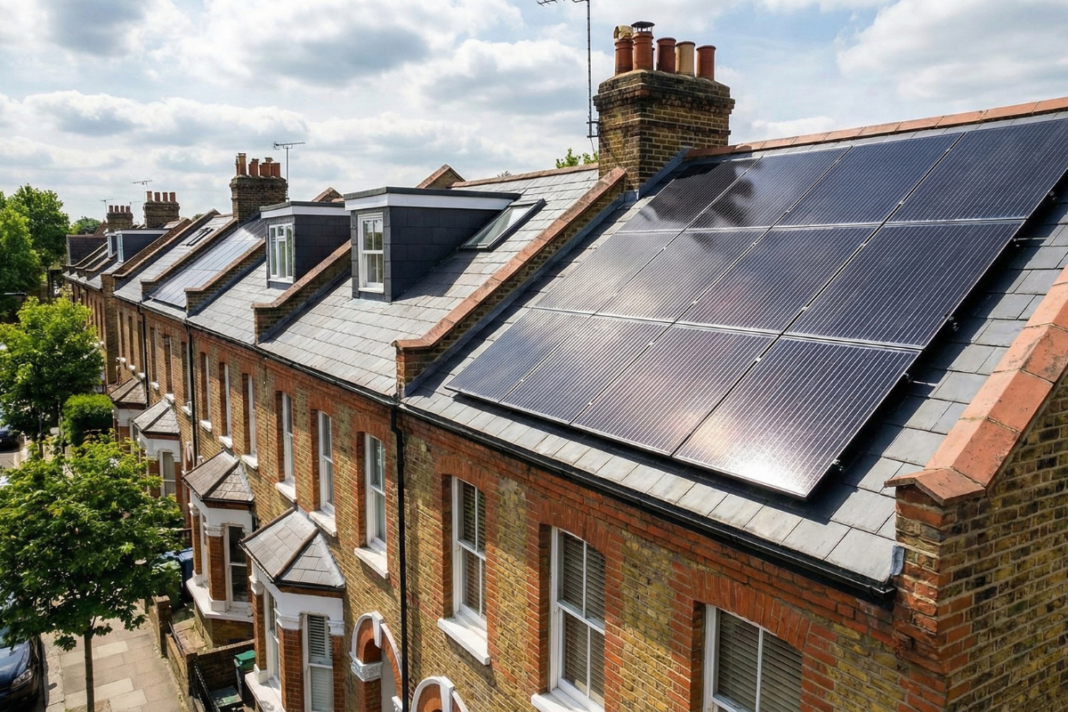
Critics have hit out at the government’s government’s £15 billion Warm Homes Plan, despite millions of households set to benefit from lower energy bills.
Described as the biggest public investment in home upgrades in British history the programme aims to upgrade up to five million homes by 2030 with measures including insulation, solar panels, batteries and heat pumps, helping to lift as many as one million families out of fuel poverty while cutting long-term energy costs.
The announcement builds on measures set out at the Budget, which will see an average £150 taken off energy bills from April.
Around six million households will also receive the £150 Warm Home Discount, creating a combined £300 package of support for eligible families.
ESSENTIAL WORKS
Ministers say improving the energy efficiency of Britain’s housing stock is essential after insulation installations fell by more than 90% between 2010 and 2024, leaving millions exposed to higher bills during recent energy price shocks.
The plan is structured around three core pillars. Low-income households will receive fully funded upgrade packages backed by £5 billion of public investment, potentially covering the full cost of solar panels, batteries or insulation.
- Social housing upgrades may be delivered on a street-by-street basis to improve whole neighbourhoods at once.
- A universal offer will give homeowners access to government-backed low and zero-interest loans for solar panels, batteries and heat pumps, alongside a £7,500 grant for heat pumps.
- New homes will be required to include solar panels as standard under the Future Homes Standard, due to be implemented in early 2026.
New protections for renters will also be introduced, with updated rules requiring landlords to improve energy efficiency over time. The government estimates these measures could lift around half a million renting households out of fuel poverty by the end of the decade.
Prime Minister Keir Starmer said a warm home “should be a basic guarantee for every family”, while Energy Secretary Ed Miliband described the plan as a national effort to tackle fuel poverty and energy affordability across Britain.
DEEPLY CONCERNING

But Timothy Douglas, Head of Policy and Campaigns at Propertymark, says: “While the ambition of the Warm Homes Plan to improve energy efficiency and tackle fuel poverty is acknowledged, the proposals as they stand are deeply concerning for landlords and agents across both the residential and commercial sectors.

“In the private rented sector, landlords are being asked to deliver, in many cases, substantial and costly upgrades to reach EPC C by 2030, yet this is being imposed without clear, long-term funding commitments, realistic delivery timescales, or sufficient flexibility for older, complex, and hard-to-treat properties.
“A phased and realistic approach would allow landlords to maintain the Decent Homes Standard, manage costs effectively, and contribute meaningfully to the UK Government’s ambition to achieve net zero by 2050.”
ZERO CLARITY
And he adds: “Crucially, there remains no clarity on Minimum Energy Efficiency Standards for non-domestic property, despite expectations that commercial landlords will be required to meet EPC B by 2030.
“The absence of detail makes it impossible for landlords to invest with confidence.”
“The absence of detail on interim targets, exemptions, enforcement, and financial support makes it impossible for landlords to plan responsibly or invest with confidence.
“Propertymark has consistently warned that a one-size-fits-all approach to energy efficiency will not work.
“Without certainty, genuine flexibility, and practical financial support, there is a serious risk that both residential and commercial landlords will withdraw properties from the market.
“This would reduce supply, drive up costs for tenants and businesses, and ultimately undermine the government’s stated objectives on affordability, energy efficiency, and economic growth.”
HMO CONCERNS

And Vann Vogstad, Founder and CEO of COHO, says: “The Warm Homes Plan is well-intentioned, but it risks overlooking the shared housing and HMO sector, which is a significant part of the UK housing system.
“While landlords are mentioned within the Warm Homes Plan, the practical focus and financial support still appears to be weighted towards owner-occupiers.
“Over two million house-sharing tenants live in homes where energy bills are typically included, meaning landlords already have a direct financial incentive to manage energy use efficiently.
“Investment decisions in the rental and HMO market are driven by financial viability, not ideology.”
“If carbon reduction is the aim, along with cutting energy bills, policy needs to ensure that landlords are not only referenced but meaningfully incentivised, as investment decisions in the rental and HMO market are driven by financial viability, not ideology.
“Without that alignment, uptake will be uneven and the overall impact of the policy will be reduced.
INCREASING RENTS
“Offering low-interest loans is not enough. Support mechanisms need to bring meaningful change to the economics otherwise uptake will be slower and patchier in the rental and HMO sector, limiting the policy’s overall effectiveness and putting additional upward pressure on rents.”
“Latest ONS private rent figures out yesterday show that average UK monthly private rents increased by 4.0%, to £1,368, in the 12 months to December 2025.”
And he adds: “The industry also needs greater clarity from the Government around the “new rules to ensure landlords invest in upgrades to cut bills for renters and social tenants”, as mentioned in the Warm Homes Plan, if we’re to see change.
“Encouraging landlords to install greener technology absolutely makes sense, but it works best when policy recognises how shared housing actually operates and supports investment in a way that reflects those commercial realities.”