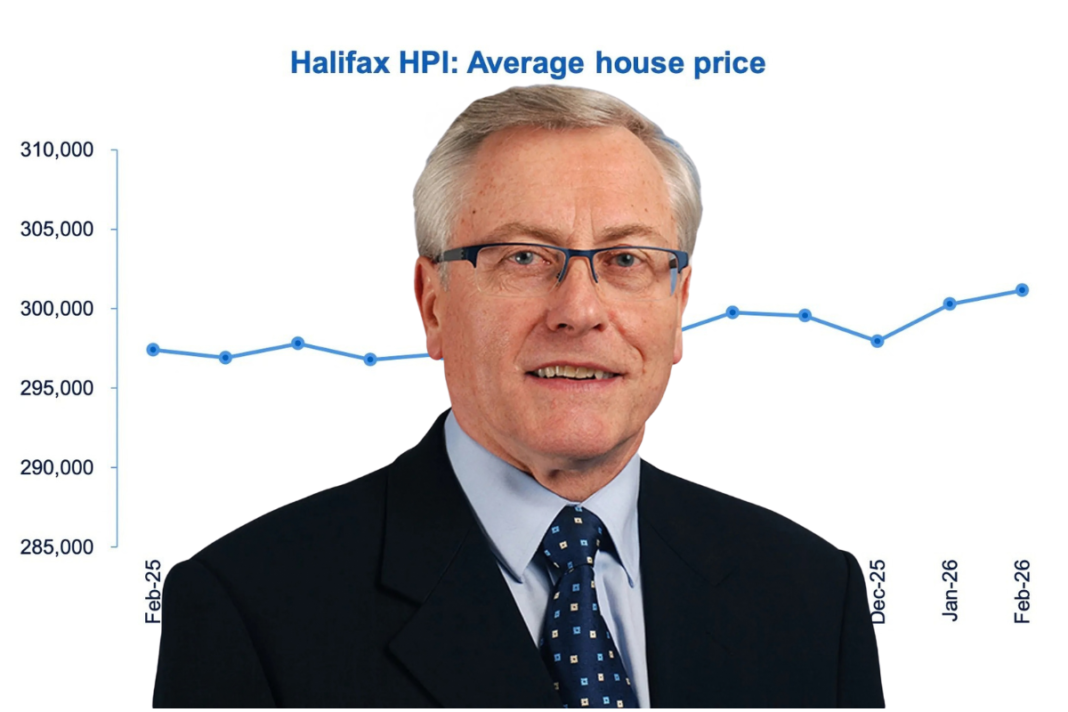
UK house prices edged higher again in February as the property market continued to build momentum after a steady start to the year.
The latest figures from Halifax released on Friday show that the average UK property price rose by 0.3% in February, following a 0.8% increase in January, taking the typical home value to a new high of £301,151.
Annual house price growth also strengthened slightly, rising to 1.3%, up from 1.1% in January and marking the strongest annual increase in four months.
Amanda Bryden, Head of Mortgages at Halifax, says the market had regained some traction after a softer finish to last year.
STEADY START

She says: “The housing market built on its steady start to the year in February, with average prices rising by +0.3%, following an increase of +0.8% in January. Annual growth also picked up to +1.3%, its strongest rate for four months.
“Since the start of the year, average prices have increased by around £3,000, with a typical property now costing £301,151.”
She adds: “There’s no doubt that affordability remains stretched, supply is constrained, and regional disparities persist. For those without family support, the path to home ownership feels particularly challenging,” she said.
REGIONAL PERFORMANCE
Northern Ireland recorded the strongest annual growth, with prices rising 6.3% year-on-year to an average of £218,608, while Scotland saw values climb 4.7% to £222,286.
Elsewhere, Wales posted a more modest annual increase of 2.4%, taking the typical property value to £231,637.

Within England, the North East led growth with prices up 3.5% year-on-year to £181,838, while the North West saw values rise 2.9% to an average of £246,292.
But more expensive southern markets continue to cool. The South East saw the steepest decline, with prices down 2.2% annually to £383,834, while London recorded a 1.0% fall, leaving the average property price at £538,200.
Bryden says that while interest rates have begun to ease and real wage growth has supported buyer confidence, geopolitical tensions could influence the pace at which borrowing costs fall in the months ahead.
INDUSTRY REACTION

Mary-Lou Press, President of NAEA Propertymark (National Association of Estate Agents), says: “The latest Halifax House Price Index confirms that average property values have remained above the £300,000 mark for the second consecutive month, reinforcing the resilience of the UK housing market.
“Sustained pricing at this level signals continued buyer confidence, despite affordability pressures and wider economic uncertainty.
“However, while rising prices may reflect market strength, they also present clear challenges. Without meaningful support for those stepping onto the housing ladder, higher property values will inevitably push up deposit requirements and borrowing thresholds. As prices remain above £300,000, aspiring first-time buyers face a growing hurdle in saving for larger deposits, making access to homeownership increasingly difficult.”
MIDDLE EAST QUESTION MARK

Tom Bill, Head of UK Residential Research at Knight Frank, said: “Momentum in the housing market had been rebuilding after November’s Budget and the outlook for mortgages was brighter only a week ago.
“However, a prolonged conflict in the Middle East would dampen sentiment and delay rate cuts due to rising inflation, which would put downwards pressure on prices.
“That said, we have seen how quickly interest rate expectations can change this year, and the underlying weakness in the jobs market is one of several reasons that multiple cuts could come back onto the table in 2026, which would support demand. A lot hinges on the length of the conflict.”
BUSY SPRING MARKET AHEAD

Tony Gambrill, Regional Sales Director at Chestertons, says: “In February, the property market was driven by first-time buyers as well as families wanting to upsize which boosted demand for new-build homes and larger houses.
“Despite some lenders raising mortgage rates again, house hunters remain undeterred which suggests a particularly busy and competitive spring market ahead.”
ENCOURAGING SIGN

Nicky Stevenson, Managing Director at Fine & Country, says: “The early-year momentum has carried into February, with house prices rising by 0.3% on the month, following January’s stronger increase. While this is still modest growth, it’s an encouraging sign that confidence is returning in a steady, sustainable way after the softer end to last year.
“Overall, we are seeing a healthy backdrop for both buyers and sellers as we head towards the spring moving season, with activity usually picking up.
“The regional split highlighted in these figures is worth taking note of. Northern Ireland and Scotland continue to lead the way, and within England the stronger price growth is still concentrated in northern regions, while pricier southern markets remain softer. That’s a reminder that national headlines only tell part of the story, and local conditions are doing much of the heavy lifting.
“Affordability is still stretched for many, but the conditions for buyers have been gradually improving, with easing interest rates and inflation. For movers, that mix of steadier pricing and improving certainty around borrowing costs should help provide more certainty.
“For sellers, the opportunity is in understanding where demand is most resilient and pricing with the local market in mind. Buyers are active, but they remain value-led and in a market like this, the right strategy is about meeting demand with accurate pricing and a good presentation of your home.”
PAUSE BUTTON

Jeremy Leaf, north London estate agent and a former RICS Residential Chairman, says: “There is no question some buyers and sellers have been pressing the pause button since war in the Middle East began.
“We expect that button will be pushed a little harder if it seems likely uncertainties over interest rates and inflation persist for much more than a few weeks.
“Until the end of February, activity had picked up steadily as seen in these and other housing market figures although inevitably some of that improvement may now begin to slowly unwind.
“Either way, the availability of stock, particularly from landlords exiting the rental sector, and underlying worries about the economy, mean prices stay subdued and transaction times lengthen.”
FIRMER FOOTING

Jason Tebb, President of OnTheMarket, says: “Welcome post-Budget clarity, combined with a lack of any tax changes in the Spring Statement, has put the housing market on a firmer footing as buyers and sellers who put moves on hold are able to proceed with more confidence.
“Six interest rate reductions in the past 19 months have been hugely important for the housing market, easing buyer affordability, encouraging activity and boosting confidence.
“The narrow vote at the Monetary Policy Committee’s meeting in January raised hopes that another reduction in base rate might come this month but the rate setters may feel this needs to be pushed back for now as conflict in the Middle East creates uncertainty with regard to energy prices and inflation.”
FOUNDATIONS IN PLACE

Iain McKenzie, CEO of The Guild of Property Professionals, says: “The latest Halifax figures suggest the housing market is continuing to build on the steady momentum we’ve seen since the start of the year.
“While growth remains modest, it’s encouraging to see prices edging upwards again after the softer close to 2025.
“Importantly, price growth is being balanced by a healthier level of supply, with around 6% more homes on the market than a year ago. This is helping to keep values in check and is creating a more sustainable environment for buyers and sellers alike.
“The broader outlook is also improving. Mortgage rates have been gradually easing, with the average five-year fixed rate dipping below 4% for the first time in several years, while lenders are beginning to offer greater borrowing flexibility. Combined with expectations that the Bank of England may reduce the base rate further in the coming months, affordability should continue to improve through 2026.
“Although mortgage approvals dipped earlier in the year, more recent indicators, such as strong sales agreed figures and positive sentiment from surveyors, point to a market that remains resilient and is gradually regaining confidence.
“With spring traditionally the busiest time for listings and completions, the coming months should provide a clearer picture, but the foundations are certainly in place for steady, sustainable growth as the year progresses.”
IMPROVED CONFIDENCE

Amy Reynolds, Head of Sales at Richmond estate agency Antony Roberts, says: “Halifax’s data reinforces what we’re seeing on the ground: prices are broadly stable, with modest growth where supply is tight and homes are priced realistically.
“This is not a market being driven by speculative price inflation, but by improved confidence and the genuine need to move as committed buyers re-enter the market. Buyers are more decisive and prepared to make strong offers to secure the right property. Activity since the start of the year has been noticeably stronger, and as we head into spring, that underlying demand is supporting prices rather than pushing them sharply higher.
“The lack of measures in the form of sudden tax changes in the Spring Statement was welcome. The biggest boost to the housing market is stability, with consistency around stamp duty and mortgage policy giving buyers and sellers the confidence to plan.”
REGIONAL VARIATIONS

Tom Brown, Managing Director, Real Estate at Ingenious, said: “There’s clearly a significant and notable shortage of housing inventory across various price brackets and locations. Consequently, any decline in homeowner sales is likely counterbalanced by increased demand from renters and investors. This is a trend that is not going away.
“However, it’s crucial to recognise that the situation isn’t consistent nationwide or across different property pricing brackets. It’s helpful to delve into subsectors and regional dynamics when assessing opportunities, as a broad market view can be misleading.
“In the real estate sector, we’re seeing significant investment capital for assets for long-term rental. On account of their scale and buying power, these typically institutional investors face fewer disruptions than owner occupiers or small-scale Buy-to-let investors.”