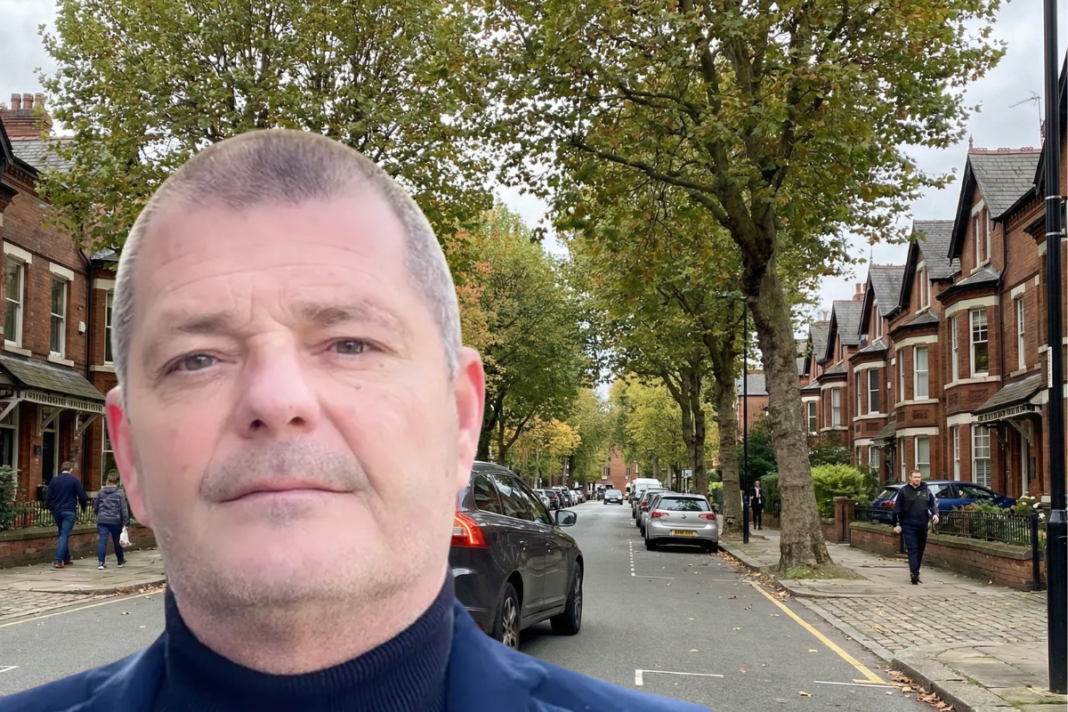
Lunch at the German Gymnasium in London’s King’s Cross is civilised, unhurried and faintly theatrical. Truly fitting for a conversation with one of the industry’s finest that ranges from estate agency fees to heart surgery, artificial intelligence and music.
Michael Day, Founder of Integra Property Services and one of the most recognisable figures in UK residential property, has chosen well.
Fifty years in property is an unusual milestone in an industry often defined by churn. Day has seen booms, busts, revolutions in technology and regulation as well as repeated attempts to “disrupt” estate agency out of existence. He remains unconvinced that any of it changes the fundamentals.
“What’s changed the most is technology, legislation and marketing,” he says without hesitation. “What’s stayed the same is that this is, and always will be, a people business.”
TRUE CONVICTION
That conviction has shaped a career that has spanned senior corporate roles, professional leadership, advisory work, mentoring and entrepreneurship.
It also explains why Day is sceptical of claims that technology – even AI – will completely replace human judgement in property transactions.
“AI can do a lot of the heavy lifting,” he says. “It can funnel information, speed things up, remove friction. But it still can’t put an arm around someone when they’re selling their home because of a death, a divorce or a job move. That’s still human territory.”
The danger, in his view, is not technology itself but the erosion of value. Estate agency fees have fallen steadily for two decades, even as costs have risen.
Twenty years ago, average fees were closer to 1.6%; today, they hover around 1%. In the US, he notes, 5% or 6% remains the norm reflecting a very different service model.

“Estate agents in the UK are paid far too little.”
“Estate agents in the UK are paid far too little,” Day says bluntly. “And they’re paid what they’re worth because the industry has allowed value to be commoditised. Most sales businesses aren’t making money. They’ve survived on lettings. That’s not sustainable.”
If consumers conclude that an AI robot does the job better, or cheaply enough, many firms will not survive. The crossroads, he suggests, are already visible.
LEADERSHIP THE HARD WAY
Day’s own leadership philosophy has evolved markedly over five decades. Early on, like many in the industry, he learned by observation rather than instruction, following good examples and, perhaps more importantly, bad ones.
The real shift came later, during his MBA, and crystallised through the work of Ken Blanchard, particularly The One Minute Manager and the theory of situational leadership.
“That transformed how I thought about managing people,” he says. “You don’t manage everyone the same way. People have different skills, confidence levels and experience. Over-manage them and you suffocate them. Under-manage them and they flounder.”
It is why Day talks about leaders rather than managers and why training, mentoring and personal development recur throughout his career. He remains wary of formulaic approaches, preferring judgement and adaptability over dogma.
INTEGRA: INTEGRATION BEFORE IT WAS FASHIONABLE
Day’s business now is Integra Property Services. Now 22 years old it actually began as an estate agency but was shaped by ideas that were well ahead of their time. The name itself is revealing, drawn from integration, integrity and the internet.
Day’s original model bundled conveyancing into the sales process, initiating legal work at instruction rather than offer stage. The aim was simple: remove weeks from the transaction timeline.
“We sped up the process,” he says. “And we could do it again tomorrow.”
That it never became industry standard still frustrates him. Home Information Packs, he argues, were flawed but directionally correct and should have been allowed to evolve rather than be scrapped.
“We’ve wasted 25 years,” he says. “We’re going back to something similar anyway. It just won’t be called HIPs.”
THE LIMITS OS PROFESSIONAL STANDARDS
Day’s professional credentials are formidable. He was vice president of the ISVA before its merger with RICS, later becoming the inaugural chairman of the RICS Residential Faculty. He is also a fellow of Propertymark NAEA and ARLA.
Yet he is refreshingly honest about the limits of professional bodies.
“RICS punches way below its weight in residential agency,” he says. “Propertymark has taken that ground.”
And although qualifications matter he believes that they are they are not a panacea.
“Just because you’ve got a qualification doesn’t mean you’re competent or ethical. It helps but enforcement matters more. We already have regulations. We just don’t enforce them properly.”
It is a theme he returns to repeatedly: standards without teeth achieve little.
DOING IT DIFFERENTLY
After advising a “who’s who” of the property sector, Day sees clear patterns among the most successful firms.
“Around 80% of agents don’t have a business plan,” he says. “The top 20% do.”
Those firms invest heavily in people, training and reward. They differentiate themselves meaningfully. Not just through branding but through service and they also communicate that difference clearly.
“The only difference between most agents is the colour of the logo,” he says. “The best ones actually do something different.”
Technology may open the door but it is conversation that closes the deal.
“People spend a fortune generating leads and then fail at the point of contact because they haven’t trained their staff properly,” he laments.
MISPLACED EXPECTATIONS
Day has been deeply involved in proptech businesses including teclet, Coadjute and Thirdfort but he is far from starry-eyed.
“Most agents use a fraction of the technology they pay for,” he says. “And then staff turnover erodes it further. Capabilities get watered down.”
Technology should free humans to do what humans do best, not replace them. Trust, he insists, is still the currency of the transaction.
“People think being liked is enough. It isn’t. Trust matters more. If a client trusts you, they’ll deal with you even if they don’t like you very much!”
FIXING HOMEBUYING
As a member of the Home Buying & Selling Council Day has been close to attempts to reform the transaction process and also candid about their limitations.
“It’s been a great forum,” he says. “But largely a talking shop.”
Progress, he argues, requires mandatory change, not voluntary adoption.
“If one person in a chain does the right thing and nine don’t, nothing improves.”
Housing policy itself, he believes, is ill-suited to short political cycles.
“Housing should be taken out of government,” he says. “Policy needs a 10- to 15-year horizon, not a four-year one.”
ENABLING COMPLIANCE
As a Propertymark-accredited trainer in AML, GDPR and consumer protection, Day sees compliance differently from many practitioners.
“Most people see compliance as a burden,” he says. “I see it as a business enabler.”
Know-your-customer processes, he argues, deepen understanding and improve service. Resistance often stems from mindset rather than substance.
“Renter reform is the same. Some see opportunity. Others just see pain. It’s happening anyway so just embrace it.”
HEALTH AND RESILIENCE
In 2021 Day underwent triple heart bypass surgery. It was preventative rather than remedial and prompted by his wife’s insistence after chest pains.
“It made me realise I wasn’t immortal,” he says simply.
The experience reshaped his priorities. He exercises more, works differently and places greater emphasis on family and personal fulfilment. Music, long a passion, has returned to the foreground, with a full album release – Prodigal Son – due imminently in both digital and physical CD formats.
“You still have to work hard,” he says. “But you also have to play.”
GIVING BACK
Mentoring, particularly through Agents Together, has become central to Day’s work. The charity, born during Covid, addresses a quieter crisis: isolation, pressure and burnout within the industry.
“People lack sounding boards,” he says. “They’re promoted into roles they don’t feel ready for. It’s a tough business.”
Agents Together is not about answers, he stresses, but about helping people find their own.
His wider charitable work is extensive, from diabetes fundraising to leadership roles in community organisations and the revitalisation of the Propertymark Trust which raised £250,000 last year to support industry members in crisis and fund education.
“I do it because I enjoy it,” he says. “And because we owe it to support each other where that help is needed.”
UNFINISHED BUSINESS
Having judged countless industry awards Day believes their greatest value lies not in winning but in forcing reflection and review.
“Entering an award makes you ask why you deserve to win. That’s invaluable.”
And as for the market itself, he is cautiously optimistic.
“There are too many agents,” he says. “But over time, we’ll see consolidation. Fewer firms, better people, higher fees and better margins.”
DRIVING FORCE
So what still drives Day now?
“Tomorrow someone new will come into the industry and need help,” he says. “As long as I can make a difference and I’m still getting the call, I’m happy.”
At the German Gymnasium, the plates are cleared and the conversation winds down. Day pours the last of the wine.
The industry may change but his message remains resolutely human.
“Well, one for the ditch,” he chortles. One more indeed.