

Financial services firm Together has warned that the Government’s new annual levy on homes valued above £2 million risks placing additional pressure on older homeowners and complicating mortgage assessments, as unease over the measure continues to ripple through the housing market.
The annual charge – widely dubbed a “mansion tax” – will take effect from April 2028 and is expected to cost affected households up to £7,500 a year.
While the Autumn Budget offered few major housing interventions, the levy has become one of its most contentious elements, particularly in regions where house price inflation has pushed long-owned family homes above the £2 million threshold.
According to Together’s post-Budget research, 21% of the UK public believe the tax is unfair, with older homeowners the most vocal.
ASSET-RICH, CASH-POOR
The firm said Baby Boomers, many of whom bought properties decades ago and now live on modest retirement incomes, are disproportionately concerned. A fifth of those aged 61 to 79 say the measure penalises people who are “asset-rich but cash-poor”, raising fears that some households could struggle to meet the new charge.
The regional impact is also expected to be uneven. Nearly a quarter of respondents in London and the South West believe the levy is unfair, reflecting steep regional price differentials. Bristol, London and Plymouth residents registered the strongest objections.
FINANCIAL STRAIN
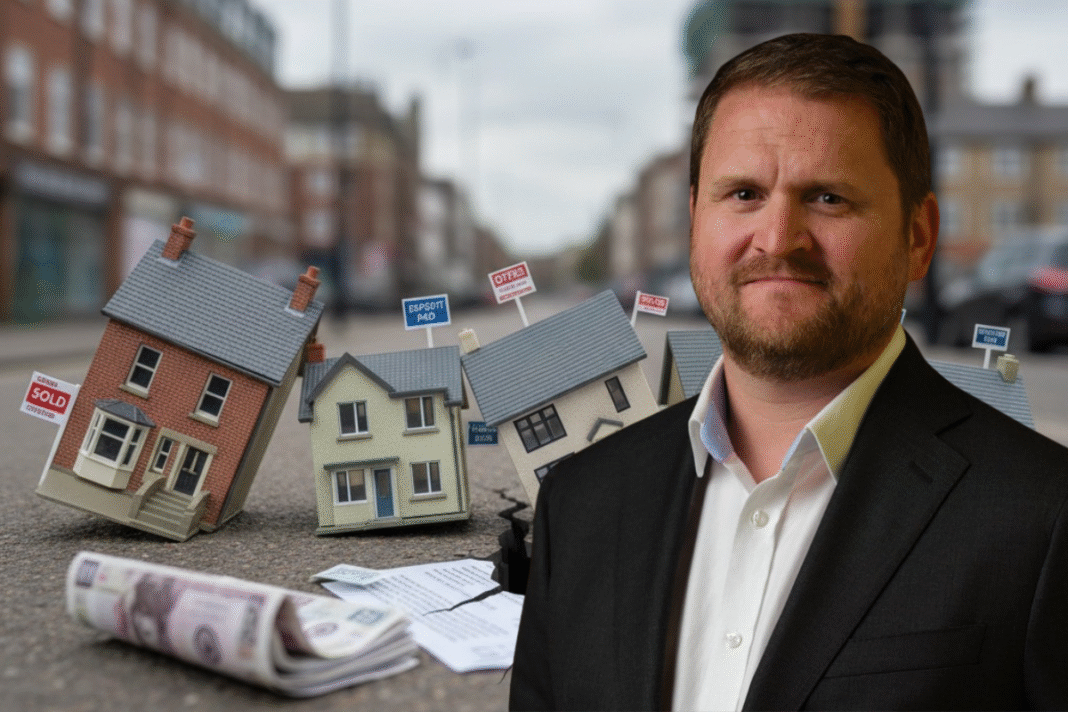
Ryan Etchells (main picture, inset), chief commercial officer at Together, says the policy risks creating financial strain for long-standing homeowners who never viewed their properties as investments.
He adds: “Empty nesters and people who bought their property decades ago simply as a family home will now have to cough up thousands just to continue living in their own home,” he said. “Asset-rich but cash-poor older homeowners could really struggle, as this could be equivalent to an entire year’s state pension.”
Etchells says that lenders will need to factor the levy into affordability assessments for higher-value properties, warning that the Government is unlikely to implement specific affordability safeguards.

RENT HIKES
Meanwhile nearly nine in 10 Brits fear the Chancellor’s decision to increase tax on landlords will lead to higher rents, according to research by property lender Together.

Rachel Reeves hit landlords with a 2% tax hike on their rental income in this week’s Budget, a move seen by many as breaking Labour’s manifesto pledge not to increase taxes on working people.
Now new research published from a survey conducted immediately after the Chancellor’s announcement last Wednesday suggests that the tax rise will lead to pain for renters as landlords pass on the extra costs to their tenants or sell up altogether, cutting the supply of rental homes in the long term.
HIGHER PAYMENTS
A huge number – 86% – of 2,000 people polled in Together’s survey said the increased costs for landlords would simply lead to higher monthly payments for already hard-pressed renters. This rises to 94% of Baby Boomer generation (61 to 79-year-olds) surveyed.
Etchells says: “In our experience many of our landlord customers have chosen not to pass on increased costs to their tenants, instead absorbing extra payments associated with providing homes for tenants, which have been brought about by attacks on the private rental sector by successive governments.
“However, landlords with properties in their own names now face the taxman taking another sizeable bite out of their incomes thanks to Reeves’ rise in property income tax rates.”
OUT OF POCKET
And he adds: “The two percentage point hike will not only leaving landlords out of pocket, but renters too. Our research shows that the public understand that the extra costs will fall to those renting their homes.
“With all the regulatory, legislative and tax burdens of late (on top of the incoming Renters Rights Bill) this will inevitably result in higher rents from next year onwards, and if landlords can’t make their portfolios work for them they could be forced to sell-up altogether.”
The 2% surcharge will be applied across the board, increasing property income tax to 22% for taxpayers on the basic rate, 42% on the higher rate and 47% for those paying the additional rate, to be introduced from April 2027.