


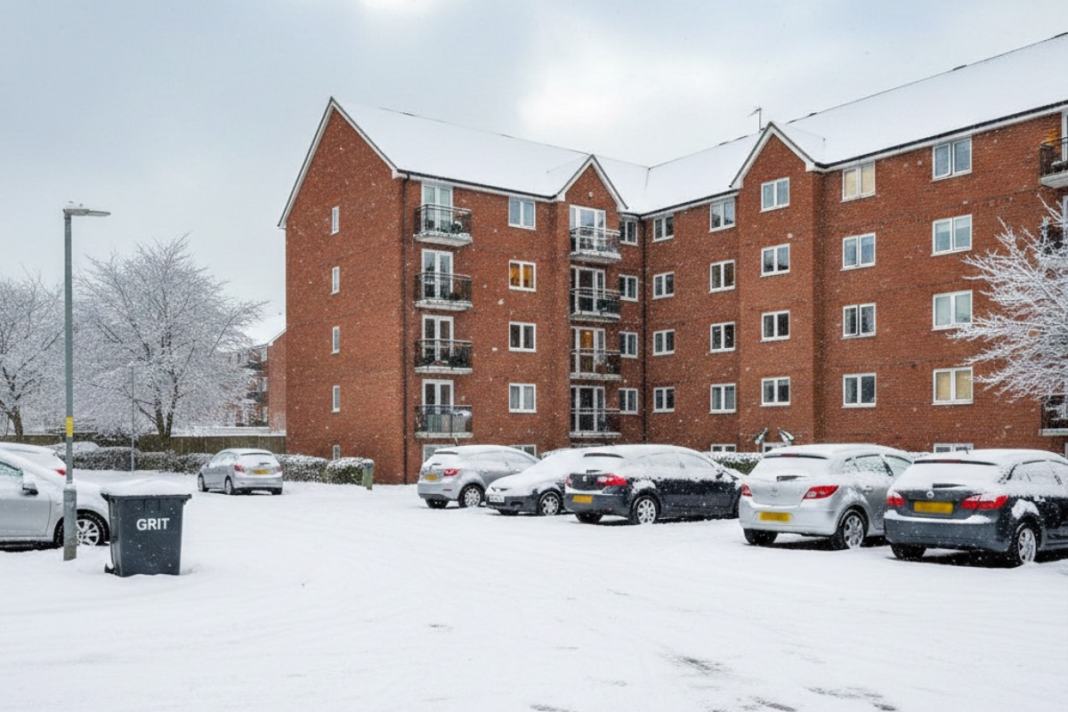
Landlords and property managers are being urged to review their winter safety procedures as icy weather heightens the risk of injury claims linked to untreated paths, communal areas and car parks.
The warning comes amid a steady seasonal rise in slips, trips and falls associated with snow and ice, particularly in shared residential blocks and managed estates.
While there is no blanket legal requirement for homeowners to clear snow or ice from public pavements, those responsible for multi-occupancy buildings and commercial premises typically face a higher duty of care.
Failure to take reasonable steps to address known hazards in communal areas can expose landlords and managing agents to negligence claims if accidents occur.
LIABILITY DANGER
Legal specialists note that risks are not limited to inaction. Poorly executed snow clearance – for example, clearing but failing to grit, or allowing meltwater to refreeze across walkways – can increase danger and potential liability.
For property managers, the question is often whether winter precautions were planned, documented and implemented in a timely manner.
The issue also extends to vehicle use on managed estates and business premises. Snow left on roofs, obscured number plates and limited visibility can lead to penalties for drivers, alongside increased exposure if an accident occurs in car parks or access roads under a landlord’s control.
WIDESPREAD CONFUSION
According to personal injury solicitors at HD Claims, confusion over legal responsibilities remains widespread.
They stress that liability generally turns on reasonableness: whether appropriate measures were taken in light of the conditions and foreseeable risks.

Common areas of exposure for landlords and managing agents include untreated stairwells, entrance ramps, car parks, bin stores and frequently used access paths.
Businesses operating from premises with public access are also expected to have winter maintenance strategies in place, including gritting schedules, inspection records and incident reporting.
BEST PRACTICE
Best practice guidance highlights the importance of clearing snow before it compacts, using grit or salt after shovelling, and avoiding moving snow to areas where meltwater may refreeze across walkways.
Partial clearance that leaves isolated ice patches can be particularly problematic in communal settings.
With colder conditions set to persist, landlords, freeholders, managing agents and block managers are being advised to ensure risk assessments are up to date, contractors are briefed, and residents know whom to contact about dangerous surfaces.
Legal experts emphasise that proactive management can reduce both accident risk and the likelihood of costly disputes during the peak winter period.