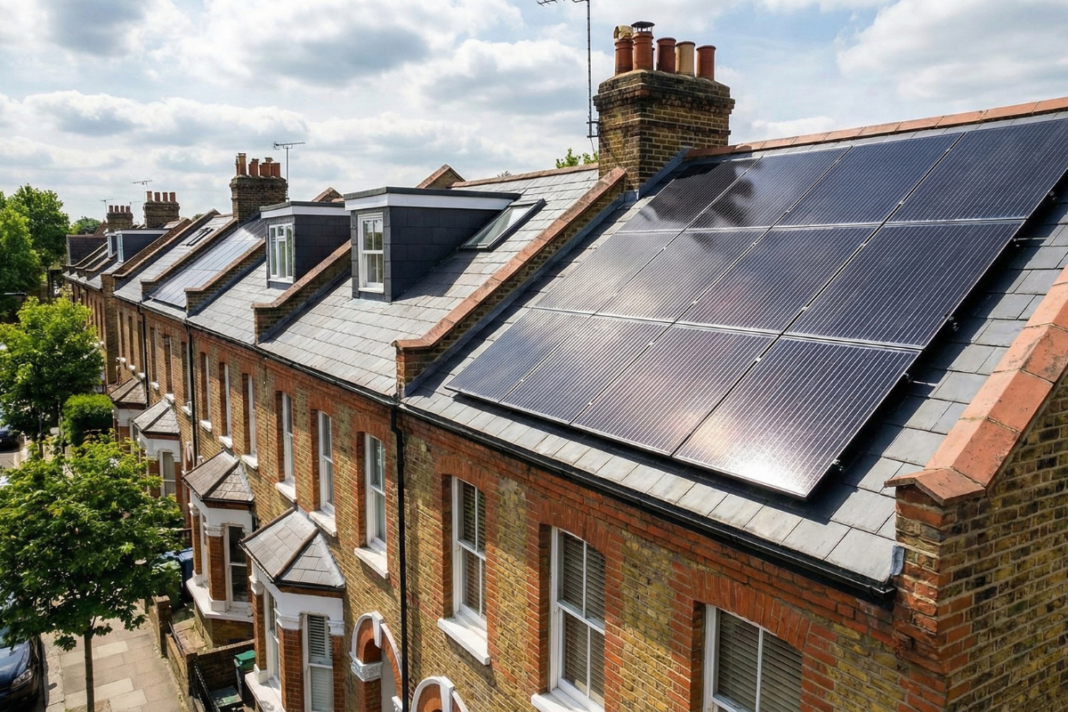
Household solar installation in the UK is failing to keep pace with commercial and industrial deployment, raising fresh questions over how quickly domestic properties can decarbonise ahead of the forthcoming Future Homes Standard.
New analysis of government data by solar subscription provider Gryd shows that residential solar installations increased by 67% between December 2020 and December 2025, rising from just under 967,000 systems to around 1.61 million.
Over the same period, commercial and industrial installations tripled, climbing from 101,820 to more than 303,000 systems.
As a result, the share of UK solar systems installed on homes has fallen. In 2020, residential properties accounted for more than 90% of all installations.
HUGE DROP
By the end of 2025, that figure had dropped to just over 84%, highlighting what Gryd describes as a widening gap between public support for solar energy and households’ ability to install it.
The data comes as the government prepares to introduce the Future Homes Standard, which is expected to mandate solar panels on almost all new-build homes in England. Gryd estimates that such a requirement could deliver a significant uplift in domestic solar capacity.
MAJOR BARRIERS

Mohamed Gaafar, chief executive and co-founder of Gryd, says: “UK businesses are now moving much faster than households, largely because they can absorb the upfront cost of solar and take a longer-term view of energy investment.
“For many households, the upfront cost of retrofitting solar remains a major barrier. That continues to hold back adoption, even as support for the technology has grown.”