UK house price growth strengthened in March signalling a return of momentum to the housing market after a softer start to the year.
The latest index from Nationwide Building Society shows annual house price growth rose to 2.2% in March, up from 1.0% in February.
On a monthly basis, prices increased by 0.9%, taking the average UK property value to £277,186.
The figures suggest the market has stabilised following a slowdown around the turn of the year, with modest price growth returning across most regions.
UNCERTAIN OUTLOOK
However, the outlook remains uncertain, with rising global energy prices and shifting interest rate expectations expected to weigh on affordability and activity in the months ahead.
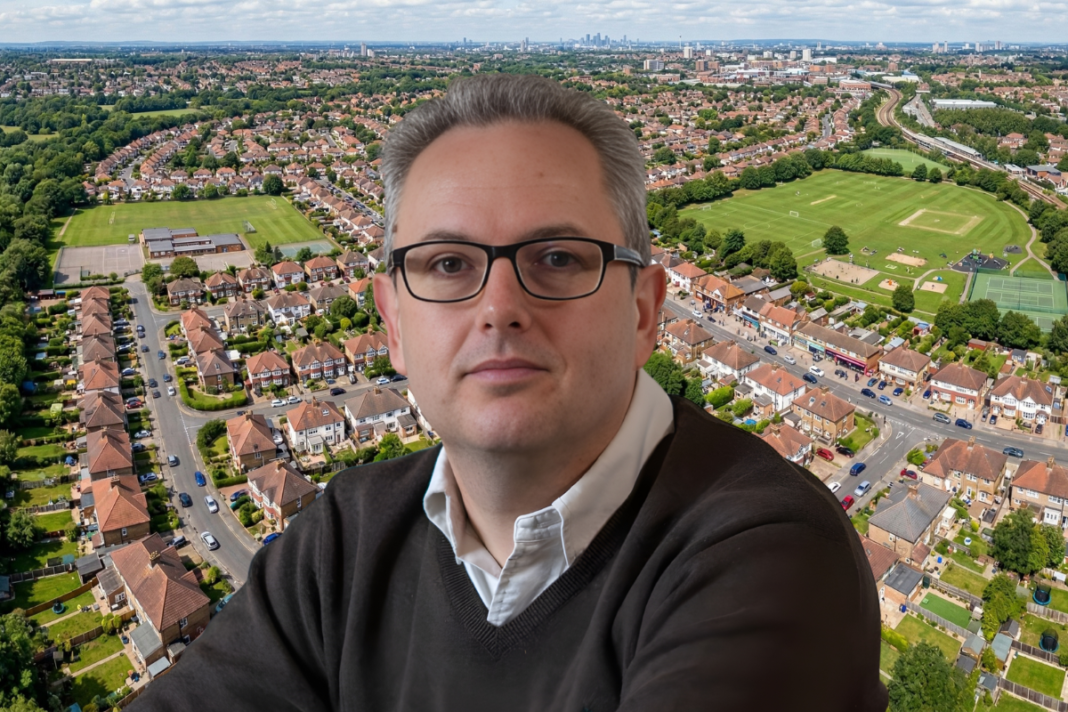
Robert Gardner (main picture, inset), Nationwide Chief Economist, says: “UK annual house price growth picked up to 2.2% in March, from 1.0% in February. Prices increased by 0.9% month on month, after taking account of seasonal effects.”
He adds: “The pickup in house price growth suggests that the market had regained momentum after the slowdown recorded around the turn of the year.
“However, the sharp rise in global energy prices in response to developments in the Middle East represents a significant shock to the global economy, clouding the outlook.”
RATE EXPECTATIONS
Gardner also warned that financial markets have rapidly repriced expectations for interest rates, saying: “This shift has resulted in a sharp rise in longer term interest rates (swap rates) that underpin fixed rate mortgage pricing.
“If sustained, this could reverse some of the improvement in housing affordability that has taken place in recent years.”
Regional data highlights a widening divide in performance. Northern Ireland led the UK in Q1 with prices up 9.5% year-on-year, while the Outer South East saw a 0.7% decline. Detached homes recorded the strongest growth at 2.4%, while flats were the only segment to see a fall, down 0.5% annually.
The data points to a market regaining its footing but also one still highly sensitive to macroeconomic pressures.
INDUSTRY REACTION

Nathan Emerson, CEO of Propertymark, says: “An uplift in house prices will be welcomed by the market and suggests that buyer demand remains resilient despite ongoing economic headwinds.
“Improved sentiment, coupled with marginally better affordability conditions earlier in the year, appears to be supporting price growth.
“However, this upward movement must be viewed in context. Affordability remains stretched by historical standards, and any renewed pressure on inflation that may also affect base rate decisions could quickly temper this momentum.
“For now, it’s a positive sign that confidence is returning, but sustained growth will depend on stability in borrowing costs and a consistent flow of motivated buyers entering the market.”
MIDDLE EAST IMPACT IN THE POST

Tom Bill, head of UK residential research at Knight Frank, says: “The impact from the Middle East conflict on the housing market is still in the post.
“The fact mortgage offers last for six months means the effect of higher borrowing costs will filter into the market this spring and summer, putting downwards pressure on prices and transaction volumes. The longer-term impact hinges on the intensity and length of the conflict.
“That said, one mitigating factor is the amount of equity in the system and the fact more homes are now owned outright than with a mortgage.”
PRAGMATIC OUTLOOK

Jason Tebb, President of OnTheMarket, says: “This data shows just how much market activity and sentiment continued to pick up at the start of this year, with buyers and sellers proceeding with their moves with more clarity and confidence.
“While interest rate rises, rather than previously-expected reductions, seem increasingly likely depending on inflationary pressures, six interest rate cuts in the past 20 months have greatly assisted affordability and put borrowers in a stronger position.
“Those who have already delayed the decision to move for various reasons are actively engaged in the market and are pressing on despite the Middle East conflict, with our own property sentiment index showing that buyers and sellers are adopting a more pragmatic outlook rather than a loss of confidence.”
RESILIENT MARKET

Iain McKenzie, CEO of The Guild of Property Professionals, says: “The latest Nationwide figures point to a housing market that continues to show resilience; however, recovery remains fragile and highly sensitive to wider economic developments.
“Price sensitivity continues to be a defining feature of today’s market. Sellers who take the time to understand local dynamics and set realistic asking prices are still the ones achieving the most timely and successful sales.
“At the same time, the increased number of homes coming to market compared with a year ago is giving buyers more choice and negotiating power, which is helping to keep price growth relatively contained.
“The outlook has become more uncertain in recent weeks.”
“However, the outlook has become more uncertain in recent weeks. The rise in global energy prices following developments in the Middle East has introduced fresh inflationary pressure and prompted the Bank of England to pause its rate-cutting cycle. As mortgage rates begin to edge up again and cost-of-living concerns persist, there are buyers who are adopting a ‘wait-and-see’ approach.
“In the near term, it is expected that economic growth will be weaker and inflation higher than previously forecast, which will have an impact on the housing market. Much will depend on how long these geopolitical pressures persist and how policymakers respond.
“For now, the market is showing resilience, but stability rather than rapid growth is likely to be the dominant theme through the coming months.”
CREEPING DOUBTS

Jeremy Leaf, north London estate agent and a former RICS Residential Chairman, says: “Although always a very useful snapshot of house prices from the UK’s largest building society, the data here mostly covers the period before Middle East hostilities emerged.
“In the month or so immediately proceeding, activity had been warming up quite promisingly.
“Now that the conflict has continued for longer than originally anticipated, some doubts are starting to creep in over mortgage costs and inflation in particular.
“However, the overwhelming majority of previously-agreed sales are continuing but new business is taking longer to negotiate.”
GLOBAL UNCERTAINTY

Amy Reynolds, Head of Sales at Richmond estate agency Antony Roberts, says: “The property market continues to demonstrate resilience despite a backdrop of global uncertainty.
“The Middle East conflict has contributed to increased caution across financial markets. Mortgage rates have already edged upwards in response, and this is naturally becoming a talking point among applicants.
“We are seeing a slight softening in viewing numbers as some buyers pause to assess the situation; however, the underlying market remains robust. Serious buyers are still very much active, with second viewings continuing and sales being agreed at levels typical for this time of year. While there is greater awareness of cost, for the right property, committed buyers are continuing to move forward with confidence.”