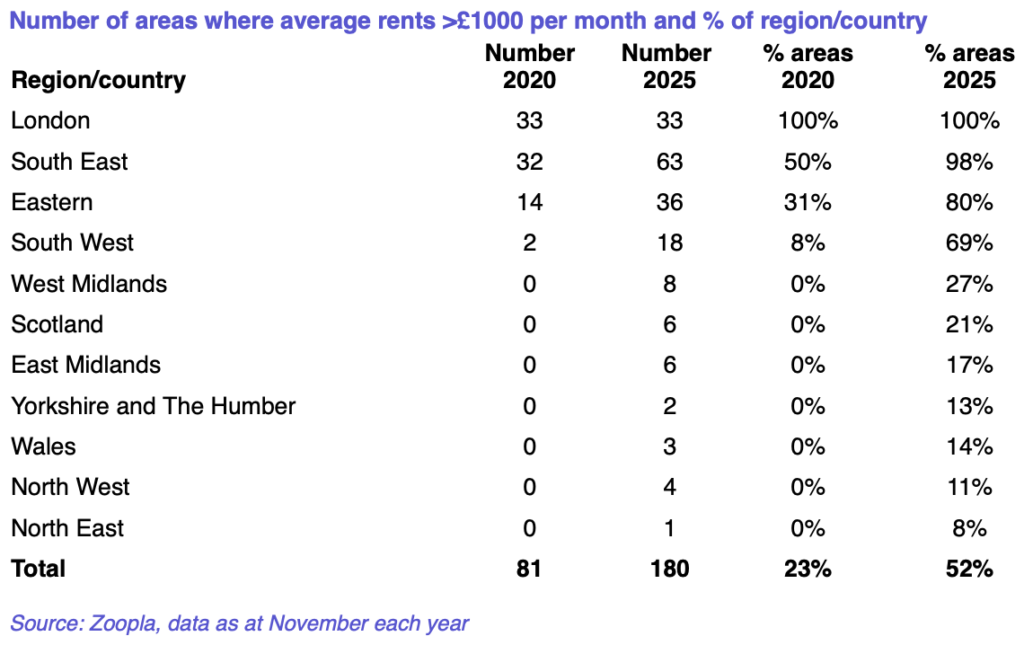



Zoopla research has revealed that average rents have now breached £1,000 per month in more than half of local authorities across Great Britain highlighting the sheer scale of rental inflation over the past five years.
The data shows 52% of local authorities now record average rents above £1,000pcm – more than double the 23% recorded in 2020. In raw numbers, that equates to 180 areas in 2025, up from just 81 five years ago.
The shift is most acute in southern England. In the South East, 98% of local authorities now exceed the £1,000 threshold, compared with 50% in 2020. The East of England has seen a similar jump, from 31% to 80%. London remains universally above the mark.
The £1,000 milestone is no longer confined to the capital and commuter belt. Areas that have recently tipped over include Nottingham (£1,015pcm), Leeds (£1,013pcm), Thanet (£1,017pcm), East Devon (£1,032pcm) and Stirling (£1,040pcm), highlighting how deeply rental growth has embedded itself across regional cities and coastal markets.
AFFORDABILITY STRETCH
However, there are signs the relentless pace of rental inflation is finally cooling.
Rents for new tenancies rose by just 1.9% in the year to November 2025 — the slowest rate of growth for four years. At the same time, there are 14% more homes available to rent compared with a year ago.
Zoopla attributes the easing pressure to lower levels of international migration for work and study, alongside improved conditions for first-time buyers, who typically exit the rental sector when purchasing their first home.
While affordability remains stretched – particularly in southern England and major cities where four-figure monthly rents are now the norm – renters are gaining marginal leverage in negotiations as supply improves and growth slows.
STARTING TO COOL
Richard Donnell (main picture, inset), Executive Director at Zoopla, says: “While renting has become more expensive and is an important cost for household budgets, the market is shifting in renters’ favour.

“Slower rent growth, increased choice, and more stable outlooks mean cost-of-living pressures from rent are easing rather than intensifying.
“Growing the size of the rental market – private and affordable homes – is the best route to further reducing the pressure on renters.”