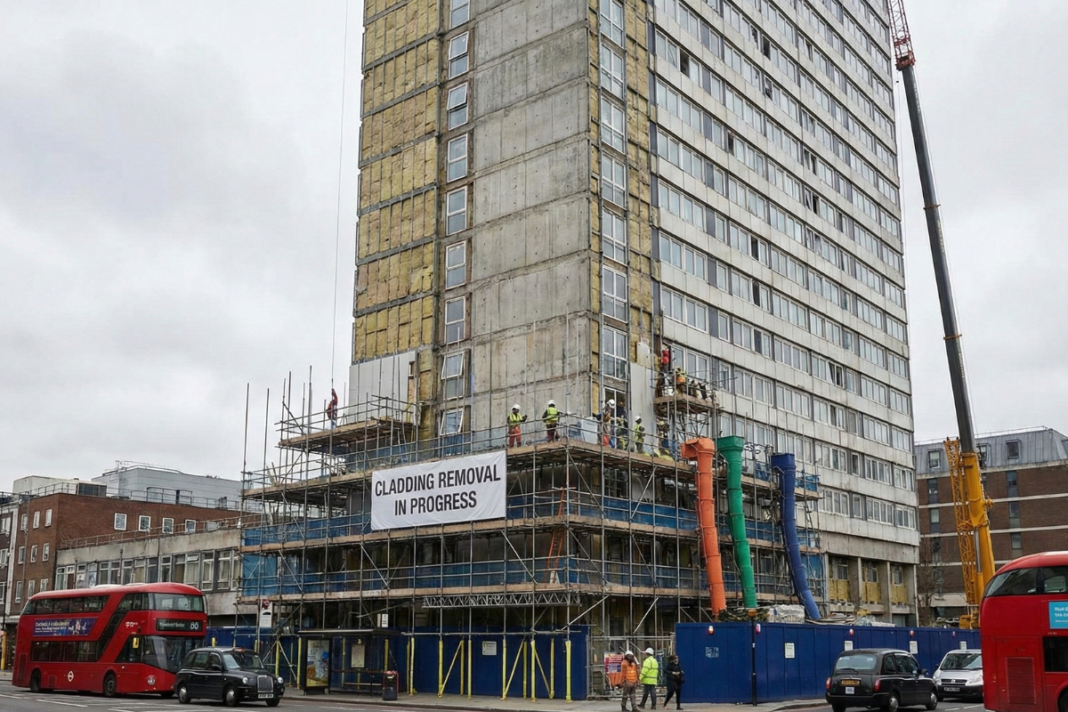
The number of high-rise residential buildings flagged for potential cladding risks has reached a record level yet fewer are progressing into remediation and raising fresh concerns about delays in the government’s building safety programme.
Latest data from the Ministry of Housing, Communities & Local Government shows that, as of October 2025, 5,570 residential buildings over 11 metres are being monitored for cladding and fire safety risks – a 15.2% increase over the past year.
Growth has been strongest among buildings between 11 and 18 metres, where monitoring has risen by 23.5%, while the number of buildings over 18 metres has increased by 9.5%.
However, momentum in remediation has weakened. The number of buildings with remediation work actively underway fell by 22.8% between October 2024 and October 2025, suggesting a widening gap between identification and action.
SYSTEMIC INEFFICIENCIES
There are signs of progress at the final stage of the process. Completed remediation projects increased by 35.5% over the same period, indicating that once work begins it is being delivered more efficiently.
Property Inspect UK says that the data points to systemic inefficiencies rather than a lack of construction capacity.
And Sián Hemming-Metcalfe, its Operations Director, says delays are being driven by fragmented documentation, inconsistent evidence standards and slow manual verification processes.
INCONSISTENT STANDARDS

She adds: “More buildings than ever are entering monitoring, yet fewer are moving into the remediation pipeline.
“The system still relies too heavily on fragmented documentation processes, inconsistent evidence standards, and slow, manual review procedures that delay sign-off even when physical work is complete.”

Hemming-Metcalfe says that the issue extended beyond industry disruption.
“Every building that has been identified for remediation but hasn’t received it represents dozens, if not hundreds, of people and families whose lives are at risk,” she adds, arguing that high-rise fire safety remained “literally a matter of life or death”.
Property Inspect is calling for standardised digital evidence packs, a national remediation tracking system and funding models tied to clear compliance standards and review timeframes, warning that without structural reform, projects risk continuing to stall in administrative limbo.