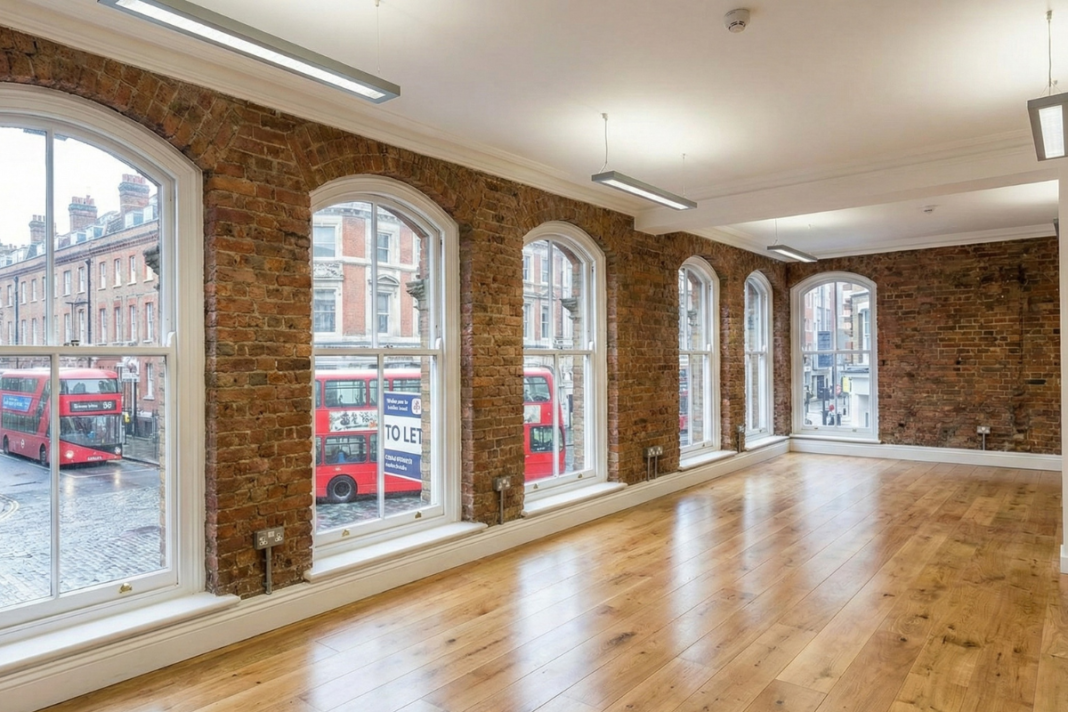
Demand for UK commercial property leasing and investment remained largely positive in Q4 2025 despite uncertainty surrounding November’s Autumn Budget, according to Rightmove’s latest Commercial Insights Tracker.
While growth slowed compared with the previous quarter and the same period last year, activity stayed in positive territory overall.
The moderation in demand was partly attributed to the unusually late timing of the Labour government’s second Budget, delivered on 26 November, and months of speculation around potential tax changes.
In the run-up to the Budget widespread expectations of reforms to business taxation encouraged some occupiers and investors to adopt a wait-and-see approach. This weighed on momentum towards the end of the year, particularly in certain sectors and locations.
SUSTAINED DEMAND
Despite this, figures for the final quarter of 2025 remained resilient, suggesting underlying demand for commercial space and investment opportunities has been sustained.

Andy Miles, managing director of commercial property at Rightmove, says: “It seems that uncertainty in the run up to the Budget suppressed demand in some areas but it’s positive that it mostly continued to grow year-on-year.
“Some business leaders understandably delay their decision making when potentially large financial changes are just around the corner.”
And he adds: “There are positive signs ahead for the rest of 2026. Not only is demand largely higher than last year, but we are expecting to see further interest rate cuts starting later this year, which would help to make commercial property investment more attractive and viable to some investors.
“It’s still a difficult cost climate for many businesses, but stable demand to lease commercial space and interest rate reductions for investors would help to create some momentum for the 2026 market.”

BUSINESS RATES REFORM
The Autumn Budget introduced significant reforms to the business rates system, including a new five-category multiplier structure from April 2026.
This creates a clearer distinction between retail, hospitality and leisure properties and other commercial assets, alongside a new band for high-value premises.
Industrial property continued to outperform other sectors. Demand to lease industrial space rose by 11% year on year, followed by offices at 2% and leisure at 1%, while retail leasing demand fell by 4%.
Investment demand showed a similar pattern, with industrial up 12%, offices up 4% and retail up 3%, while leisure investment demand declined by 7%.
INCREASED SUPPLY
Supply increased across all sectors for leasing, and across all but leisure for investment, reflecting more cautious decision-making in parts of the market.
Office leasing demand in several key London locations fell more sharply than the national average.
Demand in the City of London dropped by 24% year on year, while Westminster recorded an 8% decline, potentially reflecting both Budget-related caution and limited prime supply.
OPTIMISTIC OUTLOOK

Darren Bond, global managing director at Christie & Co, says: “We are optimistic about the market outlook for our specialist sectors. The visibility and pipeline of transactions anticipated to happen in the first half of the year are encouraging when compared with the same period a year ago.
“There is no doubt that cost pressures will continue to put a strain on businesses, and the economic environment will be more challenging in the year ahead.
“As long as demand remains at the current level, with bank funding readily available, then we see no reason why market sentiment shouldn’t be maintained and even surpass the levels seen in 2025.”
LONG TERM INVESTMENT

Michael Sears, Propertymark Commercial Advisory Panel Member, says: “It is positive to see previous planning and innovation now starting to bear fruit with enhanced demand and continued interest in long term investment.
“Like all sections of society, any fiscal uncertainty can bring a degree of apprehension regarding investment sentiment until full details are clear-cut.
“Despite challenges within the wider economy, the commercial sector delivered robust numbers and opportunities for growth throughout last year and is well-positioned for success heading further into 2026.
“We are witnessing many town and city centres transform themselves to better serve communities and modern-day needs, as well as a rejuvenated demand within the office sector to keep pace with modern hybrid practises, specifically the need for cutting-edge workspace, which delivers better provisions for future technology needs, energy efficiency requirements, and stronger public transport links for employees.”