


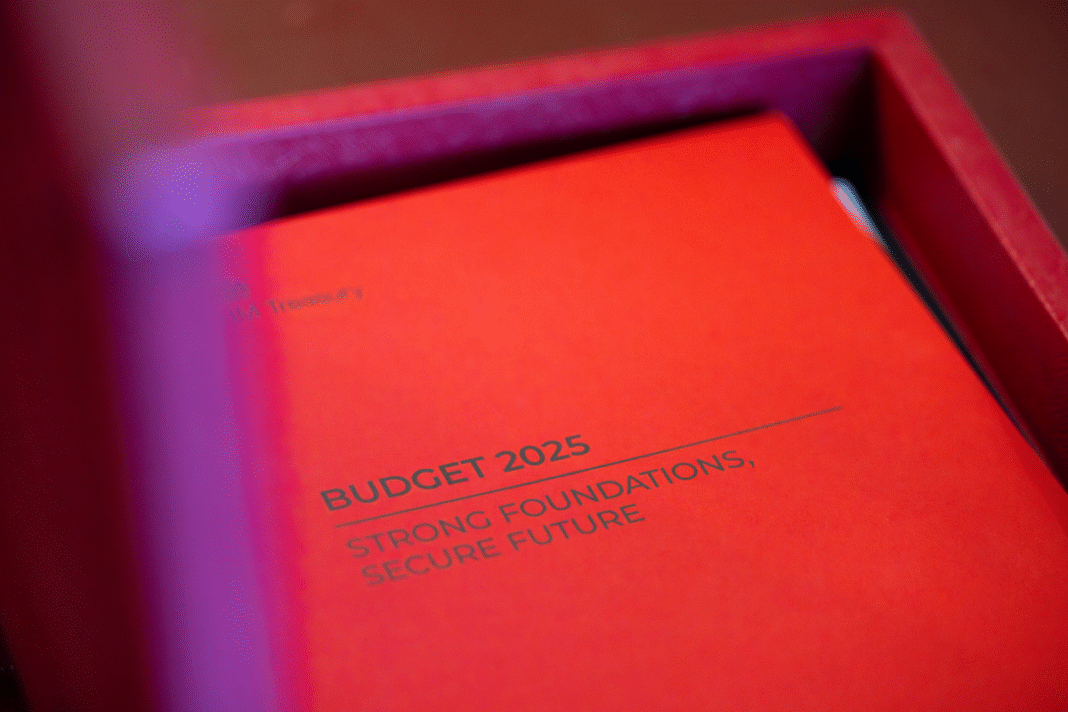
Last month’s Autumn Budget delivered by Chancellor Rachel Reeves arrived with unusual drama after key details leaked early.
But the final package proved more restrained than many in the property industry had expected.
While landlords and high-value homeowners will shoulder higher taxes, the measures stop short of the sweeping interventions some feared.
Instead, the Budget leans heavily on one overarching goal: cooling inflation to pave the way for lower interest rates.
CONFIDENCE BOOST
For the housing market, the question now is whether the Treasury’s strategy will succeed quickly enough to lift confidence after two years of turbulence.
Inflation, now averaging 3.5%, is forecast to fall to 2.5% next year. Treasury officials say the Budget’s cost-cutting measures could trim 0.4 percentage points from inflation – a modest shift, but one that could give the Bank of England space to cut rates further.
Lower inflation and lower mortgage rates would be the most meaningful support for households and developers alike.

As Tom Davies, Group Financial Services Managing Director at Mortgage Scout, put it: “Confidence is what really drives the mortgage market, and that is shaped by the wider economic picture.
“The Bank of England’s rate cuts earlier this year, followed by more stable mortgage pricing, have created a more predictable foundation for buyers to plan against.”

TENANTS RELIEF
For renters, the Budget offered indirect help rather than headline reforms. Upratings to benefits, pensions and the minimum wage – an 8.5% rise for most adults – will provide real-terms gains for many tenants.
And the controversial lifting of the benefit cap for households with more than two children from April 2026 will particularly support the 20% of private renters reliant on Local Housing Allowance top-ups.
Yet the gains may be offset by rising landlord costs, driven both by tax changes and regulatory reform.
The Renters’ Rights Act, taking effect in May, will restrict possession grounds and limit rent increases to once a year.
The move is expected to benefit tenants in the long run but could prompt some landlords to sell or raise rents pre-emptively.
FIRST-TIME BUYERS
Despite widespread anticipation, first-time buyers were once again overlooked. With no new support schemes and shared ownership absent from the Government’s core housing strategy, the Budget risks deepening the policy vacuum around aspiring homeowners.

Peter Hawley, Director of SOWN, warns that shared ownership has become “all but invisible” in national policy despite its importance: “Shared Ownership bridges the gap between renting and full ownership… yet it barely features in current policy documents.
“A more flexible system that uprates thresholds and allows regional variation would keep Shared Ownership focused on those who need help most, without shutting out the ‘missing middle’ of would-be buyers.”
A consultation on the Lifetime ISA will begin next year but any changes are unlikely before 2027.
Nevertheless, the wider economic backdrop is becoming more favourable for new buyers.
Prices remain below 2022 levels in many higher-value markets, while wages have risen ahead of inflation for several years.
A base rate cut – possible later this month – could bring mortgage rates back towards 4%, materially improving affordability.
SECOND-STEPPERS
For existing homeowners planning to move the Budget’s impact is more muted. The continued freezing of income tax thresholds will reduce net incomes for many but lower inflation and cheaper mortgages could more than offset this.

With house-price growth still trailing inflation, trading up (or down) looks more attractive than in previous years.
Kevin Shaw, National Sales Managing Director at LRG, argues that deeper reform is needed: “Stamp duty remains an outdated tax that restricts mobility and puts the brakes on economic activity… We remain strong believers that there’s a need for fundamental reform to allow the market to function more effectively.”
HIGH-VALUE HOMEOWNERS
The most politically sensitive announcement was the introduction of an annual levy on properties worth more than £2 million – the first modern form of “mansion tax”.
From 2028, charges will start at £2,500 for homes valued between £2m and £2.5m, rising to £7,500 for properties above £5m.

Only around 1% of homeowners will be directly affected but properties close to valuation thresholds may see prices adjust.
Valuations will be conducted in 2026, leaving two years of uncertainty for buyers and sellers in prime markets.
But Neil Louth, Chief Executive of The Acorn Group, cautions that the administrative challenge is significant: “Questions remain about how properties will be assessed.
“This is estimated to raise £0.4 billion in 2029–30, a figure that appears modest against the billions that need to be recovered.”
LANDLORDS AND INVESTORS
Although rumours of National Insurance on rental income did not materialise, the Budget confirmed that from April 2027, tax on property income will rise by 2 percentage points across all thresholds.
Basic-rate landlords will pay 22%, while higher-rate taxpayers will see their rental income taxed at 42% or 47%.

Allison Thompson, National Lettings Managing Director at LRG, says: “For landlords, the biggest change is the rise in income tax rates applied specifically to property income… it is worth taking a fresh look at how their portfolio is structured and whether it still serves their long-term plans.”
Not all the news was negative. Capital Gains Tax on residential property remains at a reduced 24% for higher-rate taxpayers and investors may benefit from major public-sector development plans.
New towns are proposed for Tempsford, Leeds South Bank and Crews Hill, alongside increased housebuilding funding across Manchester, London, the North East, South Yorkshire, the West Midlands and West Yorkshire.
The release of Ministry of Defence land for housing will also support development targeted at serving and retired military personnel.
STEADYING THE MARKET
The Autumn Budget stops short of radical change. For most households, the outlook hinges less on tax tweaks and more on the path of inflation and mortgage rates.
If the Treasury succeeds in driving inflation closer to target, lower borrowing costs could help revive activity across the sales and rental markets in 2026.
But for landlords, investors and high-value homeowners, the message is clear: tax burdens are rising and financial planning will be essential before the year is out.
For now, the market enters 2026 with a rare sense of stability, albeit one underpinned more by expectation than policy.