


Nearly half of purpose-built blocks of flats inspected by fire authorities last year failed safety audits highlighting continuing compliance problems across England’s higher-rise housing stock.
Data analysed by Drax Technology shows that of 4,257 buildings over four storeys audited by Fire and Rescue Services between April 2024 and March 2025, 1,923 – or 45% – were rated “unsatisfactory” and required remedial work to meet fire safety regulations.
The figure is only slightly lower than the previous year, when 49% of inspected buildings failed checks, and raises concerns given there are estimated to be around 120,000 buildings of this size across England.
Fire safety audits assess whether buildings meet legal requirements, including checks on alarms, escape routes, equipment and management procedures.
ENFORCEMENT ACTION
Responsibility for compliance sits with the building’s designated “Responsible Person”, who must ensure records are up to date and safety measures remain valid, particularly after structural changes.
A total of 445 enforcement notices were issued, requiring building managers to fix safety breaches within a set timeframe, while 20 buildings received Prohibition Notices – the most serious sanction before prosecution – meaning all or part of the property could not be used due to an immediate risk to life.
Six prosecutions were also brought after failures to carry out required remedial work.
The analysis also found higher-rise blocks were particularly likely to fail, with 34% of buildings over 10 storeys receiving an unsatisfactory rating.
COMPLIANCE GAPS
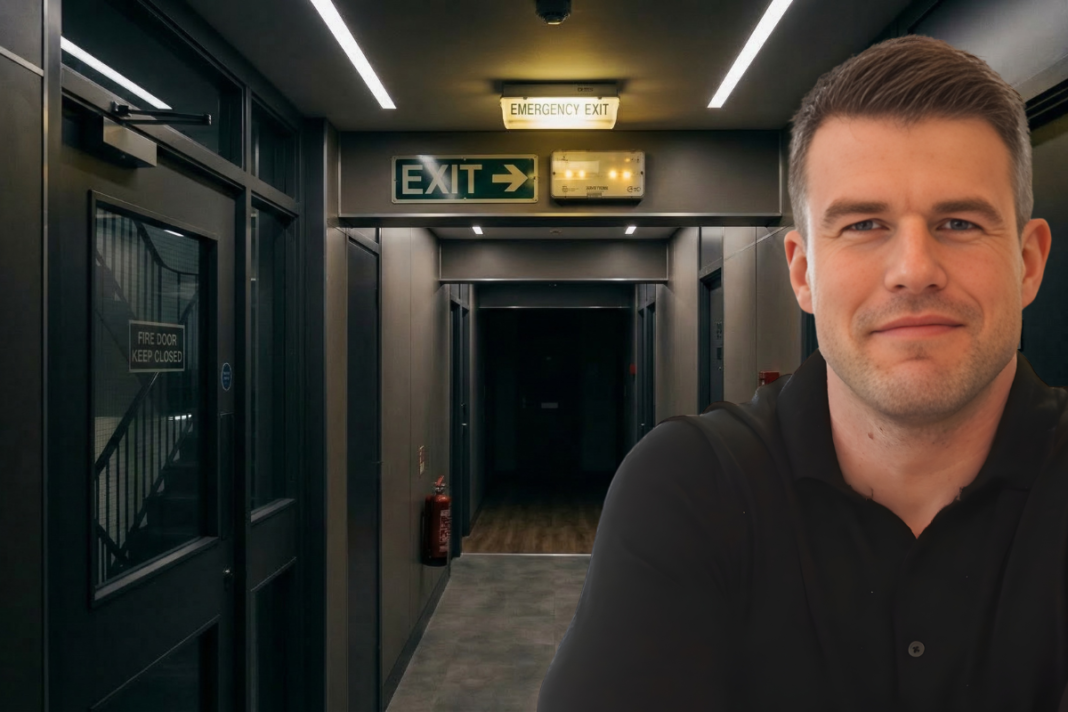
David Simpson (main picture, inset), Group Product Director at Drax Technology, says the findings show the sector still has major gaps in compliance.

“Blocked escape routes, failing emergency lighting, and faulty alarms are too often pushed down maintenance lists until a fire exposes the devastating consequences.
“Under the Building Safety Act, compliance can no longer be assumed, it must be proven. Building managers across BTR, the PRS and social housing, now need clear evidence of what was inspected, when, and by whom. Gaps in record-keeping represent a serious operational, financial, and regulatory risk.”
And he adds: “There is no room for uncertainty when it comes to resident safety… High-rise buildings pose greater risks because fire fighter access is more complex, so robust and consistent fire safety measures are critical. The industry must step up and do better.”